
The Silicon Scouting Mission: TSMC's Warning on US Infrastructure

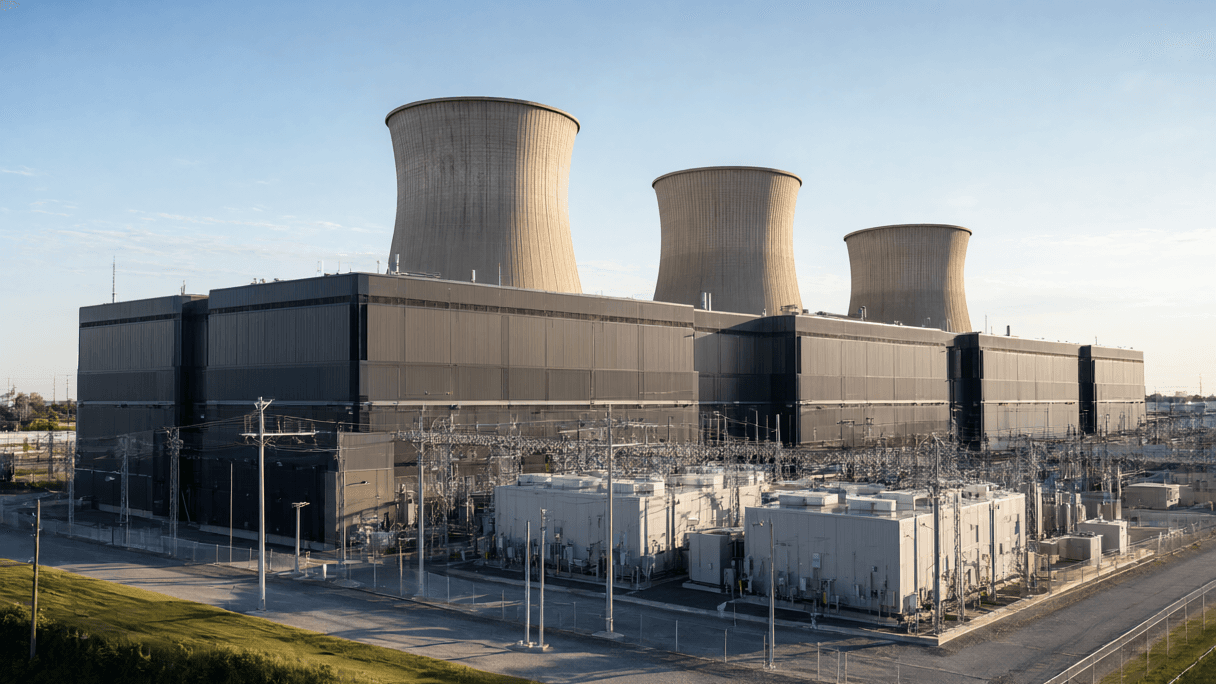
AI-generated image · US National Wire
When the world's primary chipmaker sends scouts to verify if US datacenters can actually deliver power, the AI hype cycle hits a physical wall.
In the venture-backed fever dream of the AI era, the limiting factor is usually framed as a lack of compute. But as TSMC prepares to pour billions into expansion, the company is signaling that the real bottleneck isn't the silicon—it's the soil and the socket.
As first reported by The Register, TSMC is dispatching personnel to the United States specifically to evaluate datacenter construction progress and power availability. While the Taiwanese giant is planning roughly 20 leading-edge manufacturing and advanced-packaging facilities globally over the coming years, this scouting mission suggests a growing anxiety: will the infrastructure actually exist to house the chips they are building?
From a P&L perspective, the stakes are massive. TSMC expects capital expenditure of $60 billion to $64 billion this year, with spending from 2026 to 2028 projected to exceed the total spent between 2023 and 2025. Yet, as Chairman and CEO C.C. Wei noted during a third-quarter earnings call, the company is remaining prudent heading into 2027 due to macroeconomic uncertainties and challenges in price-sensitive consumer markets.
***
**Opinion:** *The decision to send 'scouts' is a glaring red flag. For years, the AI narrative has been driven by the assumption that demand is the only variable. TSMC's move suggests that the physical reality of the US grid and construction timelines may not be able to support the CAPEX the industry is demanding. If the datacenters can't deliver the power, the most advanced 1.4 nm chips in the world are just expensive paperweights.*
***
During the earnings call reported by The Register, an analyst explicitly questioned whether growth could be throttled by power shortages, datacenter construction delays, limited high-bandwidth memory (HBM) supplies, or advanced-packaging constraints. Wei responded that TSMC integrates these factors—including cloud service provider capex and power supply—into its capacity planning. He maintained that demand currently outstrips supply and that the company is working to narrow that gap.
Despite these infrastructure concerns, TSMC's financial trajectory remains aggressive. For the quarter ending September 30, 2026, the company reported $46.72 billion in revenue, a 41.2 percent increase year-over-year. Looking toward the fourth quarter, TSMC projects revenue between $52.3 billion and $54.3 billion.
Wei is already looking toward the next horizon with the A14 process (1.4 nm), which he expects to be a larger business than the current 2 nm generation. Risk production for A14 is slated for 2027, with volume production following in 2028. But for those of us tracking the actual viability of the AI build-out, the most important metric isn't the nanometer count—it's whether the US power grid can actually handle the load.