
The Series S is Microsoft's Trojan Horse for a Subscription Future

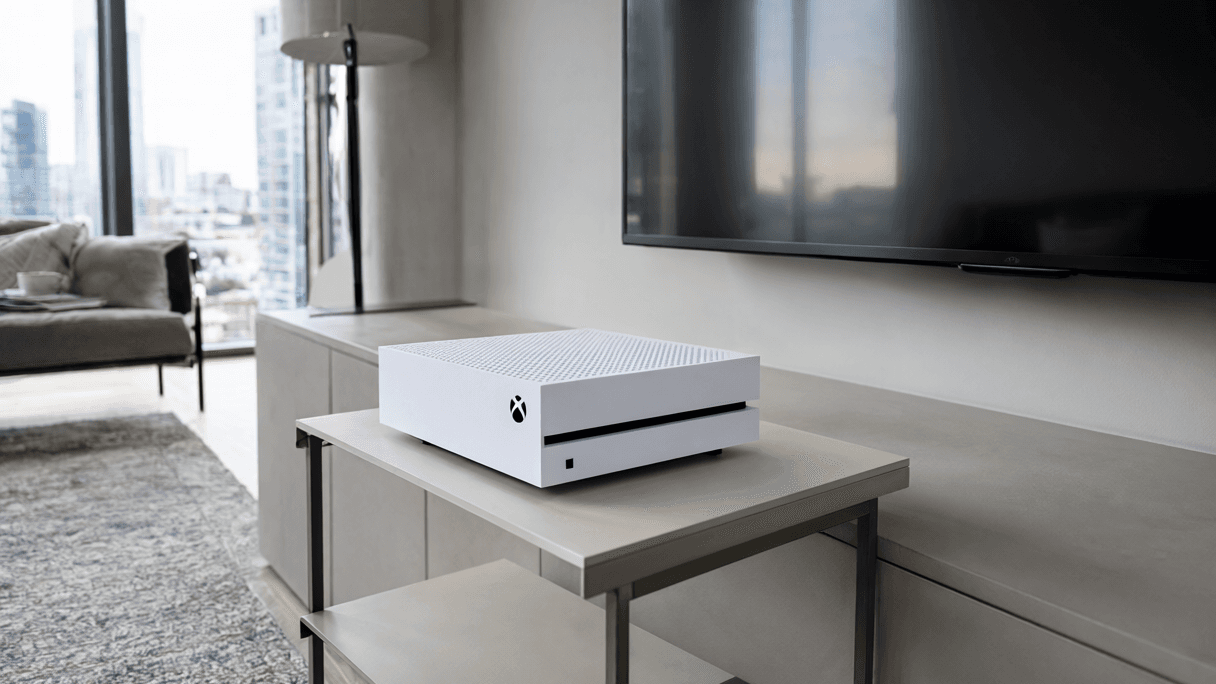
AI-generated image · US National Wire
Opinion: By stripping away the disc drive and raw power, Microsoft isn't just selling a budget box—it's decoupling the gaming experience from expensive hardware.
In the current console landscape, the price gap between Microsoft's two offerings is staggering. As Engadget first reported, the Xbox Series S starts at $500, while the cheapest model of the Series X now costs $750. On the surface, this looks like a simple tiered pricing strategy. In reality, it is a strategic gambit to shift the definition of what a console is.
For decades, the console was the center of the gaming universe—a powerhouse of proprietary hardware that dictated the quality of the experience. But with the Series S, Microsoft is effectively decoupling the ecosystem from the hardware. By offering a machine that is roughly 60 percent smaller than the Series X and lacks a disc drive entirely, Microsoft is signaling that the physical box is no longer the primary value proposition. Instead, the console has become a subscription portal.
Engadget notes that for users who plan to play largely via Game Pass, the absence of a disc drive is a non-issue. This is the crux of the strategy. When you remove the ability to buy physical media and lower the barrier to entry, you push the consumer toward a digital-first, subscription-heavy relationship. The Series S isn't designed for the 'performance purist' who demands the 12 teraflops of processing power and native 4K resolution found in the Series X; it is designed for the mass-market consumer who wants access to a library of games without a $750 investment.
Technically, the trade-offs are significant. Engadget reports that the Series S operates with only 4 teraflops of power and 10GB of RAM, compared to the 12 teraflops and 16GB of RAM in the Series X. It targets 1440p resolution rather than 4K. Yet, for a vast swath of the population, these specs are 'good enough,' especially since both machines can achieve 120 fps in compatible titles. By making the hardware 'good enough' rather than 'cutting edge,' Microsoft can expand its user base rapidly, funneling them into a recurring revenue model.
This shift is further highlighted by the current market volatility. Engadget reports that a 'RAMaggedon' crisis has driven up component prices, leading to price hikes for the Xbox line, the PlayStation 5, and the Nintendo Switch 2. In an environment where hardware is becoming more expensive to produce, the Series S serves as a vital pressure valve. It allows Microsoft to maintain a foothold in the affordable segment—tying with the Switch 2 as the most affordable modern console—while the Series X caters to the enthusiast.
Looking ahead, the hardware may matter even less. Engadget mentions 'Project Helix,' a family of devices for which Microsoft plans to send alpha hardware to developers in 2027. While we don't yet know the technical specifications of Project Helix, the trajectory is clear: Microsoft is moving away from the idea that a high-end, expensive box is the only way to enter their ecosystem.
By positioning the Series S as the accessible entry point, Microsoft is betting that the future of gaming isn't about teraflops or disc drives—it's about the subscription. The hardware is simply the key that unlocks the door.