
Apple’s 'Welcome Home' Ambition: Can a New OS Break the Walled Garden?

AI-generated image · US National Wire
Opinion: Apple is finally treating the smart home as a cohesive ecosystem, but hardware refreshes and a new hub won't be enough if the company remains closed off.
For years, Apple has treated the smart home as a collection of disparate accessories managed through a single app. With the upcoming "Welcome Home" event scheduled for October 13th in New York, it appears the company is finally attempting to pivot toward a cohesive ecosystem. However, as I see it, the real question isn't whether Apple can build a better hub, but whether they can move beyond the 'walled garden' to actually win the living room.
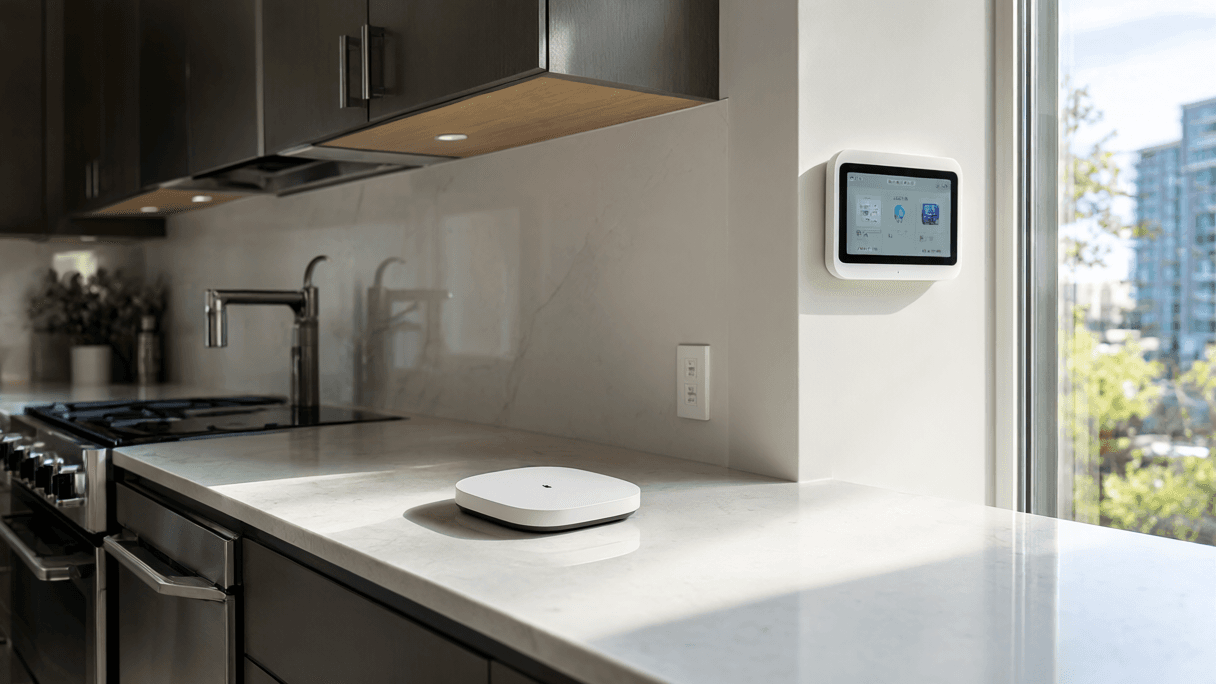
According to reporting from The Verge, as the outlet first reported, Apple is expected to debut a dedicated smart home hub—potentially named HomeView or HomePad. Mark Gurman suggests the device will feature a 6-inch square touchscreen and a unique design for the countertop model that resembles the iMac G4, utilizing an arm set into a half sphere. This isn't just a hardware play; it's a software shift. The Verge reports the possibility of a new platform called homeOS, which Gurman describes as a streamlined interface blending elements of iOS, tvOS, and watchOS.
This move toward a dedicated OS is a critical admission. By creating a specific environment for smart home applications—controlling thermostats, managing smart locks, and integrating Siri AI—Apple is acknowledging that the Home app was never enough. The integration of facial and voice recognition to surface personalized calendars and contacts suggests Apple wants this hub to be the central nervous system of the household.
But hardware and OS updates are only half the battle. The Verge notes that Apple will likely showcase partner devices, specifically mentioning leaked LG smart home products like thermostats and deadbolts. These LG devices reportedly feature "Proximity Control" via NFC and a "tap to set up without power" pairing system. While these partnerships are a start, The Verge warns that Apple is unlikely to share much of the spotlight with its partners.
This is where the risk lies. Apple is doubling down on its proprietary strengths: the N1 chip, Bluetooth 6.0, and deep integration with the iPhone's Dynamic Island. We are seeing minor refreshes to the Apple TV and the HomePod Mini—the latter receiving its first update since 2020—both of which are getting new processors to handle Siri AI. While faster navigation on the Apple TV and new colors for the HomePod Mini are welcome, they are incremental wins.
In my view, the success of the "Welcome Home" initiative depends on whether Apple views the smart home as another closed loop or as an open invitation. If homeOS is simply another way to lock users into the Apple ecosystem, it may struggle to displace competitors who prioritize interoperability. To truly win the living room, Apple needs to prove that its ecosystem is a bridge to other brands, not just a more polished fence. The hardware looks promising, but the philosophy must evolve if they want to be the default choice for the modern home.