
The 'Self-Driving' Delusion: HPE's Plan to Replace Your Network Admins with AI

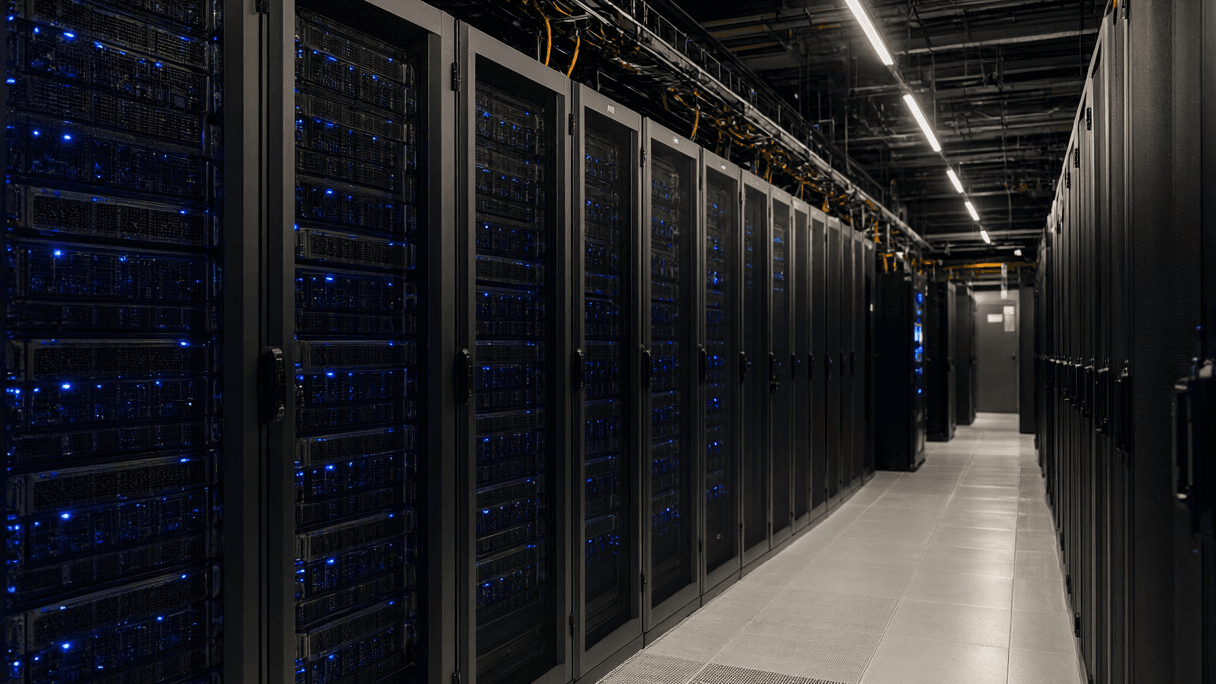
AI-generated image · US National Wire
Rami Rahim promises a future where no trouble tickets require human intervention, but the cost of this 'automation' may be a total collapse of expert support.
### Opinion: The Automation Trap
As a consumer and business advocate, I have seen this play before. A massive vendor promises that the 'magic' of new technology will solve every headache, only for the customer to discover that the 'magic' is actually a convenient excuse to slash headcount and eliminate the human experts who actually know how to fix things when the system crashes.
Now, as first reported by The Register, Hewlett Packard Enterprise (HPE) is pitching a fantasy of 'self-driving networks' that sounds less like a technical roadmap and more like a corporate cost-cutting manifesto. By promising a world where AI handles every single problem, HPE isn't just selling software; they are selling a justification for companies to fire their most experienced network administrators. When the inevitable 'hallucination' occurs or the AI hits a wall, the customers won't be greeted by a skilled engineer—they'll be trapped in a loop of automated incompetence.
### The Two-Year Countdown to Human Obsolescence
According to reporting from The Register, Rami Rahim—the president and general manager of HPE's networking business and former CEO of Juniper Networks—is betting the house on AIOps. In a recent interview, Rahim laid out a timeline that should terrify every IT professional: he believes that within two to three years, there will be "no issues that require humans" to handle trouble tickets.
Rahim claims that currently, roughly 70 to 80 percent of tickets do not require human intervention. But he isn't stopping there. His vision of the 'self-driving network' extends even to the physical layer. Rahim suggested that when hardware fails, the technology should automatically order a replacement part without the user's knowledge. In his view, a skilled network administrator is overkill for this task; he believes an "intern" can simply plug the new device in while the AI handles the configuration automatically.
### The 'Automatic Transmission' Fallacy
When questioned by The Register about why any sane network administrator would trust their career—or their company's uptime—to a machine, Rahim reached for a clumsy analogy. He compared the adoption of AIOps to the way people accepted automatic transmissions in cars, followed by cruise control and lane assist, and eventually self-driving taxis in the Bay Area.
This comparison is fundamentally flawed. If your car's cruise control fails, you pull over to the shoulder. If a corporate network fails, millions of dollars in revenue vanish per minute. Rahim's suggestion that confidence is built incrementally—starting with simple tasks like allowing AI to reboot a switch port—ignores the reality of systemic failure. He argues that AI can diagnose the root cause of the most common enterprise complaint, "the Wi-Fi sucks," faster than a human can. But in the real world, 'the Wi-Fi sucks' is often a symptom of a deeper, cascading failure that requires human intuition, not just a faster reboot script.
### Scaling the Chaos
There is a deeper irony in Rahim's vision. He argues that AI automation is mandatory because the rise of AI agents—which he describes as a new class of users—will create a volume of network traffic and complexity that no human team could possibly manage. In essence, Rahim is arguing that we need AI to manage the chaos that AI itself is creating.
This creates a dangerous feedback loop. As HPE pushes its networking portfolio—which Rahim claims is "second to none" following the July 2025 acquisition of Juniper—the goal is to integrate these 'self-driving' capabilities across the hybrid cloud portfolio. The Register reports that HPE has already integrated network fabric management with OpsRamp, its hybrid cloud observability software.
### The Bottom Line
HPE CEO Antonio Neri has stated on a recent earnings call that the company is "at the core becoming a networking company." If that transformation is built on the premise that humans are an unnecessary expense in the troubleshooting process, then the industry is heading toward a cliff.
Rahim's vision of a world where interns replace engineers and agents replace admins is a corporate dream, but it is a customer's nightmare. When the 'self-driving' network drives the company into a ditch, you can bet that the 'intern' won't be the one capable of fixing it, and the AI will be too busy generating a ticket to tell you that the Wi-Fi still sucks.