
The Repair Monopoly Ends Now: Why the Fairphone Arrival is a Wake-Up Call for Big Tech

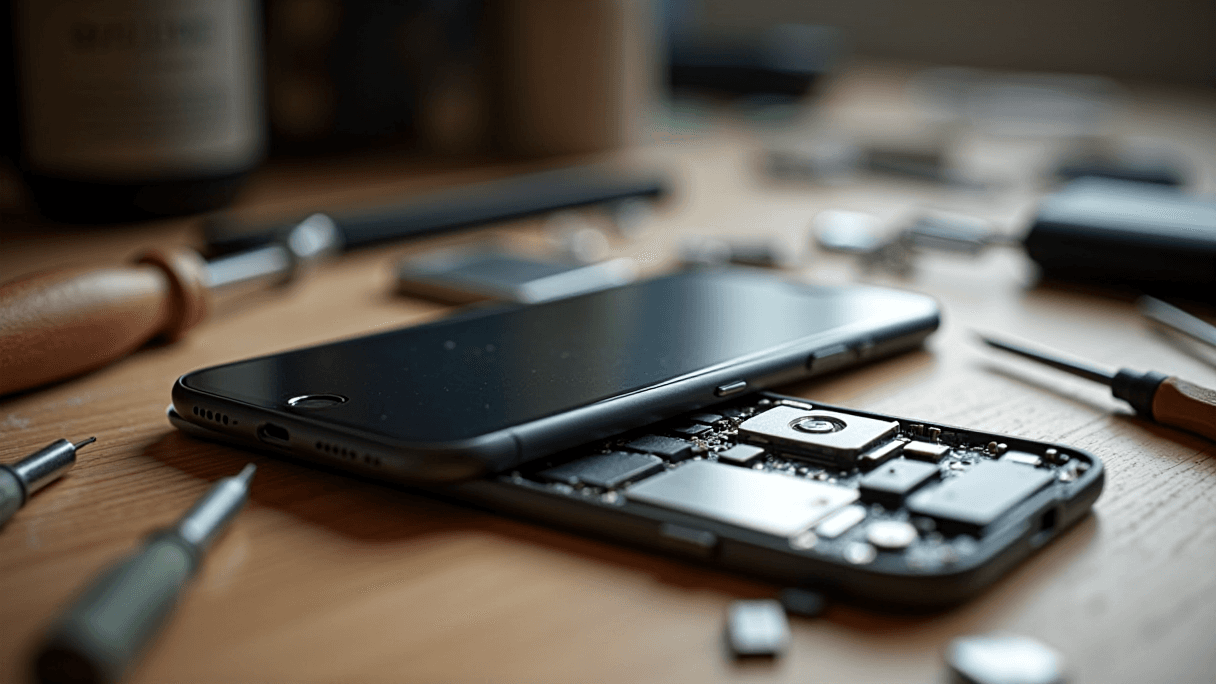
AI-generated image · US National Wire
Opinion: For too long, US consumers have been held hostage by planned obsolescence and predatory repair costs. It is time for a change.
For years, the American smartphone market has felt less like a consumer paradise and more like a hostage situation. We are trapped in a cycle of planned obsolescence and closed-box ecosystems, where the choice is usually between a yearly upgrade or a repair bill that rivals the cost of a used car.
As Wired first reported, the standard industry practice is a one-year warranty. If you break your screen on an iPhone 17, for instance, Apple may charge you roughly $329 for the replacement. This is the reality of the current US duopoly held by Apple and Samsung—a market where, as Fairphone CEO Raymond van Eck told Wired, there is very little real consumer choice.
It is about time we had an alternative that doesn't treat the user as a disposable revenue stream. Enter the Fairphone (Gen 6+), which is finally arriving in the US.
Unlike the giants that design their hardware to be inaccessible, the Fairphone (Gen 6+) arrives with a screwdriver in the box. It features 12 modular elements that users can swap themselves. The price difference is staggering: a replacement screen costs $90, a new battery is $40, and a USB-C port is just $20. According to Wired, it is the only smartphone series to earn a 10/10 repairability score from iFixit.
Beyond the hardware, Fairphone is challenging the industry's obsession with the yearly refresh. While the Gen 6+ is a modest upgrade over last year's Gen 6—adding a Qualcomm Snapdragon 7s Gen 4 processor and increasing RAM to 12 GB—Raymond van Eck has stated the company intends to stick to a two-year launch cadence rather than the yearly cycle favored by big tech. Even more impressive is the commitment to longevity: the device comes with a 5-year warranty and software updates promised through 2033.
Of course, the road to mainstream adoption in the US is treacherous. According to a 2025 report from the International Data Corporation, carriers are responsible for as many as 66 percent of smartphone sales. This carrier-centric model has already crushed competitors; Wired notes that HMD Mobile, Sony, LG Mobile, and most recently OnePlus have all exited the North American market. While the Fairphone (Gen 6+) is certified for AT&T and T-Mobile networks and available for $650 via Fairphone.com and Amazon, its ultimate success depends on whether van Eck can successfully negotiate with major carriers and mobile virtual network operators (MVNOs).
But the value proposition here isn't just about the wallet; it's about ethics. The Gen 6+ is constructed from over 50 percent recycled or fair-trade materials and is 100 percent e-waste neutral. The company is a Certified B Corp with a platinum EcoVadis rating, and the Cobalt Blue color of the phone serves as a reminder of the company's work to improve conditions for miners in the Democratic Republic of Congo.
We have been conditioned to accept that our phones are disposable. We have been told that proprietary repair monopolies are just the cost of doing business. The arrival of Fairphone proves that this is a choice, not a necessity. It is time we stopped paying the 'obsolescence tax' and started demanding phones built for the people, not the shareholders.