
The Math of Margin: How a 24-Team Playoff Reshapes Oregon's Risk Profile

AI-generated image · US National Wire
Expansion isn't just about more games; it's a fundamental shift in how many losses Dan Lanning's squad can absorb while remaining in title contention.
In the current landscape of college football, the margin for error is a razor's edge. For Oregon head coach Dan Lanning, the 2026 season has already illustrated the volatility of the 12-team College Football Playoff (CFP) era. With losses to UCLA and Oklahoma State, the Ducks currently sit unranked and on the outside of hypothetical bracket projections, as Sports Illustrated first reported.
However, the reported expansion of the CFP to 24 teams starting in the 2027 season introduces a mathematical shift in strength-of-schedule volatility. While the road to a championship remains perilous, the expanded field fundamentally alters the 'failure threshold' for a program like Oregon. Under the current 12-team structure, the Ducks are fighting for survival. But as Sports Illustrated notes, if a 24-team bracket were already in effect, Oregon could potentially keep its playoff hopes alive even after suffering a third loss.
This shift creates a paradox of pressure. On one hand, the expanded field provides a safety net that reduces the catastrophic impact of a single upset. On the other, it dilutes the stakes of the regular season. Sports Illustrated points to the Ducks' rivalry game against USC as a prime example; if both programs can comfortably secure a playoff spot regardless of the outcome, the urgency of the matchup diminishes. This dilution is already evident in the 12-team format—where a USC loss to Oregon might be mitigated by wins over Ohio State or Indiana—but a 24-team field accelerates this trend.
Beyond the bracket, the expansion introduces new scheduling constraints that impact Oregon's strength-of-schedule calculations. The requirement to play 10 Power Four opponents adds a layer of complexity, particularly as in-state rival Oregon State is now part of the Group of Six. While Oregon is meeting this 10-game Power Four threshold this season—with Oklahoma State serving as their lone non-Big Ten opponent—it will now be the standard for the Ducks to schedule another Power Four team annually.
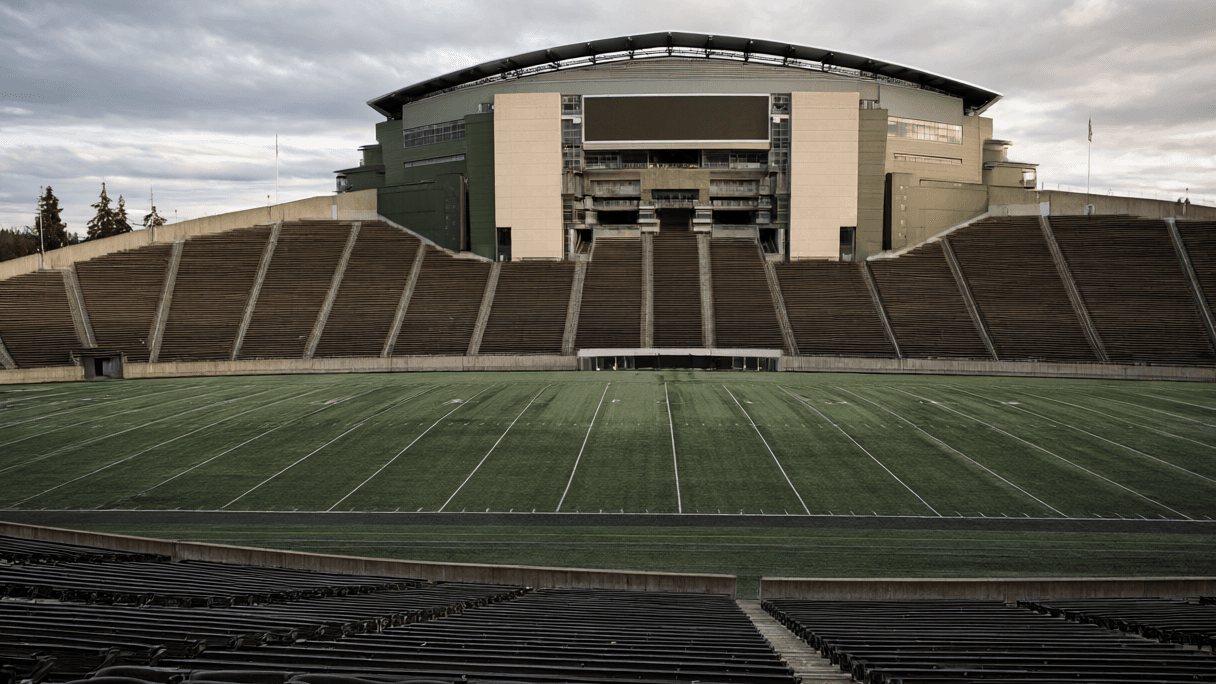
The logistical shift also moves the volatility to campus. If the 24-team format mirrors the current 12-team structure, the first two rounds would be played on campus before rotating to bowl games in the quarterfinals. For Oregon, this means the potential for high-stakes, early-round games at Autzen Stadium in Eugene.
Ultimately, the 24-team expansion transforms the postseason from a sprint where one stumble is fatal into a marathon where the highest seeds—the top eight—earn first-round byes. For Lanning, the math is simple: more breathing room in the regular season, but a longer, more unpredictable path to the trophy.