
The Legislative Hail Mary: Why the Protect College Sports Act is a Desperate Play for NCAA Leverage

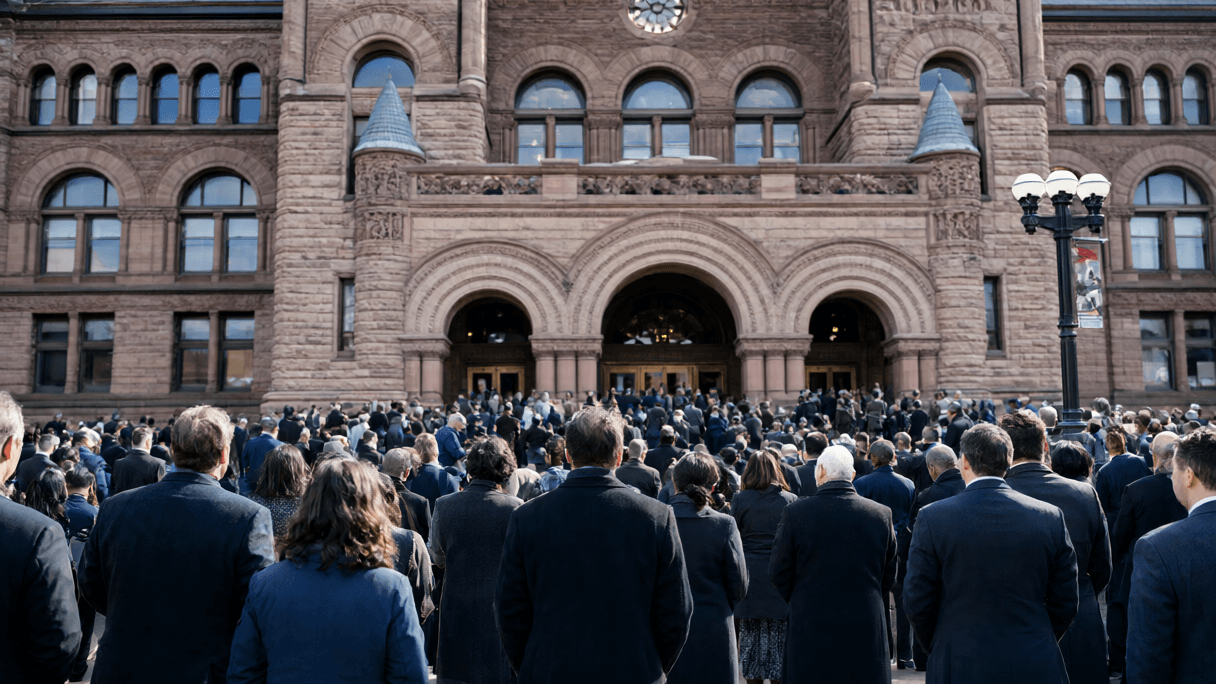
AI-generated image · US National Wire
By codifying a fragile revenue-sharing model and seeking antitrust immunity, the Senate's bipartisan bill attempts to freeze a chaotic industry in place before the courts dismantle the remaining power structures.
### The Term Sheet for Chaos
In the world of sports business, stability is the primary currency. For years, the NCAA operated on a model of absolute control until a 2025 court settlement triggered an era of "chaos," featuring football roster payrolls exceeding $40 million.
As first reported by The Guardian, the U.S. Senate has now attempted to legislate a floor under this volatility. On Monday, the Senate passed the Protect College Sports Act in a 77-22 bipartisan vote. While framed as a regulatory framework, the bill is an effort to codify a revenue-sharing model before the judiciary strips the NCAA of its remaining leverage.
### Codifying the Settlement
The Act aims to turn a court-mandated settlement into federal law, formally embedding the 2025 ruling that allows universities to pay players directly for their name, image, and likeness (NIL). To rein in costs, the legislation establishes a revenue cap, permitting schools to share up to $21.5 million with athletes.
However, the bill provides a significant carve-out: it allows an additional $27.5 million in payments via a retention fund for some schools. According to The Guardian, this provision was key to securing support from the industry's most powerful entities, the Big Ten and the Southeastern Conference.
### The Antitrust Gambit
The most critical component is legal immunity. The Act would grant the NCAA new authority over NIL payments and transfer rules, coupled with limited antitrust protections to enforce them.
Senator Cory Booker noted that power only shifted toward athletes once they began winning in court. By seeking antitrust exemptions, the NCAA is asking Congress to shield it from the very legal mechanism that forced the 2025 settlement.
***Opinion:*** *This is not a stabilization plan; it is a defensive moat. The NCAA is attempting to use the legislative branch to bypass the judicial branch, hoping to lock in a system where they retain regulatory power without the constant threat of antitrust lawsuits.*
### Market Stabilization
The bill also attempts to regulate labor movement and league structure:
* **Transfers:** It limits players to one "free" transfer over five years (with exceptions) and caps total eligibility at five years. This follows controversy surrounding LSU, which The Guardian reports had planned—though later canceled—to roster players who had participated in NFL training camps. * **Coaches & Leagues:** The law would prohibit coaches from leaving schools during the active season, cap conference size at 20 programs to prevent "superleagues," and require schools switching conferences to spend three years as an independent. * **Revenue:** To fund these payments, schools and conferences may pool TV media rights.
### The Labor Gap
Despite praise from Donald Trump—who claimed the bill would "save the colleges themselves"—and negotiations between Senators Ted Cruz (R-TX) and Maria Cantwell (D-WA), the bill faces fierce opposition.
Senator Chris Murphy (D-CT) highlighted a financial asymmetry: while student revenue is capped, there are no limits on coach salaries or athletic program donations. Furthermore, the AFL-CIO, the Congressional Black Caucus, and the NAACP oppose the bill because it fails to resolve whether athletes are employees with the right to collectively bargain. This opposition is shared by the Senate's four Black Democrats: Angela Alsobrooks, Lisa Blunt Rochester, Raphael Warnock, and Cory Booker.
### The Road to the House
The Act now faces a precarious path in the House of Representatives, which is in recess until after November and has struggled for over a year to bring a similar bill to the floor. If it does not pass both chambers by year-end, lawmakers must start over in the next Congress.