
The Valuation Play: Why the Protect College Sports Act is a Media Rights Hedge

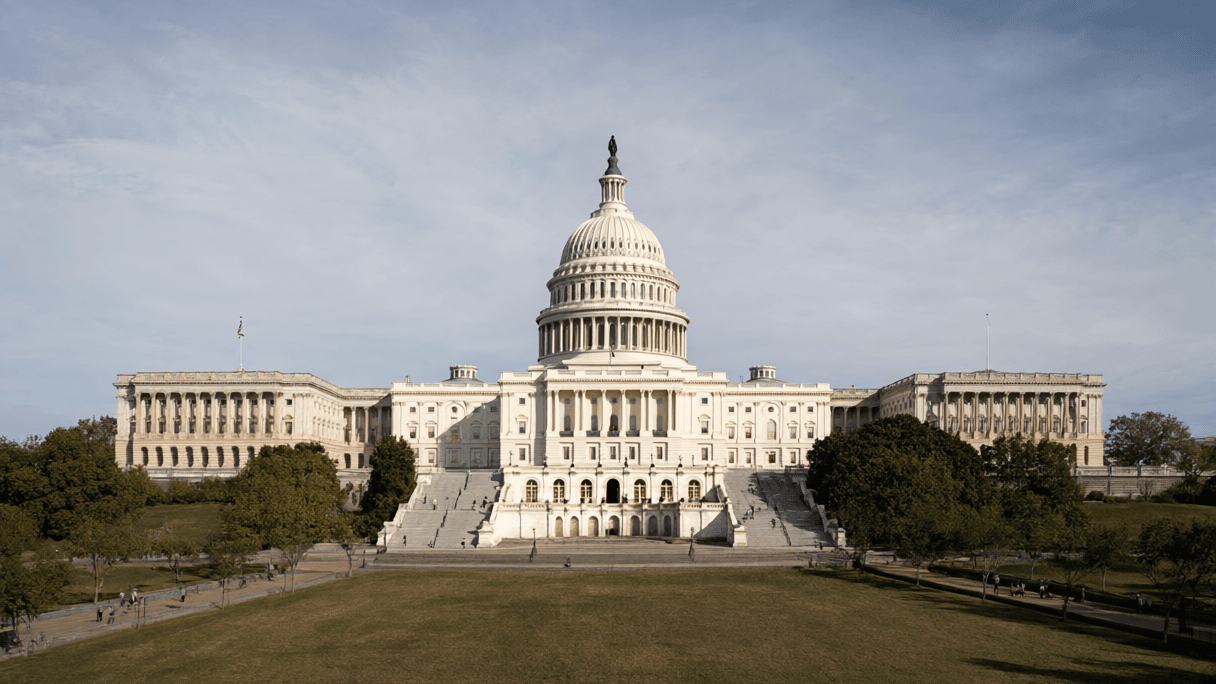
AI-generated image · US National Wire
While proponents frame the Senate's passage of the Protect College Sports Act as a win for athlete welfare, the legislation's core function is to codify a stable legal framework that protects the long-term value of collegiate sports assets.
### The Legislative Term Sheet
For over ten years, the architects of the collegiate sports industry have lobbied Capitol Hill for a specific set of protections: national regulation and antitrust exemptions. On Monday night, that effort reached a critical milestone. The U.S. Senate passed the Protect College Sports Act in a 77-22 vote, marking the first time either chamber of Congress has approved comprehensive federal legislation to govern college athletics, according to CBS Sports.
Written by Sens. Ted Cruz (R-Texas) and Maria Cantwell (D-Wash.), the bill functions as a legislative codification of the industry's current trajectory. It writes the rules of the NCAA into federal law and integrates the House v. NCAA settlement, which shifted schools toward a model of paying athletes directly.
From a business perspective, the bill is less about the spirit of the game and more about the stability of the asset. By securing a limited antitrust exemption, the NCAA and its member conferences can finally enforce eligibility and transfer rules without the constant threat of judicial reversal—a recurring problem that has plagued the industry in recent years, CBS Sports reports.
### Protecting the Product: The Super League Hedge
In the world of media rights, volatility is the enemy of valuation. The most significant threat to the current collegiate model is the potential for a "super league"—a breakaway entity funded by private equity that would strip the most valuable programs from their existing conferences.
As reported by CBS Sports, the Protect College Sports Act explicitly bans the formation of such a super league. By walling off private equity from building a breakaway league, the legislation ensures that the existing conference structures remain intact. This is a critical move for long-term media rights deals; if the most powerful programs were to exit, the remaining inventory would lose significant leverage and value.
Further evidence of this focus on structural stability appeared during the Senate floor debate. A bipartisan amendment presented by Sens. Ashley Moody (R-Fla.) and Richard Blumenthal (D-Conn.) raised the conference membership cap from 19 to 20. Additionally, the bill modifies the rules for schools jumping between power conferences, reducing the required independence period from five years to three. Six years after the law takes effect, this waiting period will be eliminated entirely. Notably, CBS Sports reports that these changes do not affect Notre Dame, which maintains its status as an independent.
### The Cost of Stability: The New Payment Model
Stability comes at a price. The bill establishes a structured payment system that significantly increases the financial obligations of member schools. According to CBS Sports, schools would be able to pay athletes via three distinct funding buckets:
* **The House Settlement Cap:** $21.6 million in revenue-sharing. * **The Retention Fund:** A new $22.5 million fund designed to reduce transfer portal churn. * **Women's and Olympic Sports:** $5 million reserved specifically for these programs.
Combined, these obligations could cost schools as much as $50 million per year, a figure that exceeds by more than double the amounts paid during the House v. NCAA settlement's first two years. Sen. Eric Schmitt (R-Mo.), a key co-sponsor, told CBS Sports in August that this reflects where the market currently sits.
To ensure these funds are used to maintain the "product," the retention fund is tied to performance metrics. CBS Sports reports that schools failing to meet academic and graduation benchmarks will lose access to these funds.
### Operational Guardrails
Beyond the macro-economic protections, the bill introduces several operational mandates designed to standardize the industry's business practices. CBS Sports reports that the legislation would:
* **Regulate Agents:** Require players' agents to register in a national database and cap their fees at 5%. * **Stabilize Coaching:** Prohibit football coaches from leaving their positions midseason for other jobs. * **Standardize Transfers:** Allow athletes to transfer once without sitting out a season, while establishing a new five-year eligibility clock. * **Protect Inventory:** Require schools to maintain baseline roster sizes, scholarships, and minimum sport offerings for women's and Olympic sports.
### The Execution Risk: The House Hurdle
Despite the Senate's overwhelming support, the bill faces a precarious path to becoming law. Sources in Washington, D.C., told CBS Sports that the bill is unlikely to reach the House floor before the Nov. 3 midterm elections. Speaker Mike Johnson has indicated that the bill likely will not be considered until the House returns to work on Nov. 9.
Time is the primary enemy. Any legislation not signed into law by Jan. 3 dies with the current Congress. Furthermore, the House is facing competing priorities, including a government funding deadline on Dec. 11.
There is also significant ideological friction. Front Office Sports reported this month that House Republicans are seeking changes, including a total ban on classifying athletes as employees and a cap on international players. Because any change in the House requires the bill to return to the Senate, these negotiations could exhaust the remaining legislative window.
Sen. Cory Booker (D-N.J.), an opponent of the bill, told CBS Sports that Democrats should have the opportunity to author a bill that corrects the current version's failings. However, with a slim Republican majority in the House, the bill cannot afford to lose Republican support to survive.
***
**Holt Lowry's Take (Opinion):** The Protect College Sports Act is a corporate restructuring disguised as a rescue mission for student-athletes. By banning super leagues and codifying the NCAA's authority, the Senate is essentially issuing a guarantee to media partners that the collegiate product will not be disrupted by private equity or judicial whims. The $50 million price tag is simply the cost of doing business to ensure the long-term viability of the media rights machine.