
The Invisible Hand: Quake AI's Bet on Machine-to-Machine Commerce

AI-generated image · US National Wire
While the industry focuses on AI agent capabilities, the real shift is toward a utility-based infrastructure that bypasses human procurement interfaces entirely.
In the current AI gold rush, the conversation typically centers on what agents can do. But for those following the money, the more critical question is how these agents will pay for the compute they consume.
Quake AI, a specialized 'neocloud' infrastructure provider, is betting that the future of cloud consumption isn't human-centric. As first reported by The Register, Quake AI—which emerged after RUM Group (the parent company formed when Rumble Inc acquired Northern Data in June) rebranded—is designing its services specifically for autonomous agents rather than 'meatbags.'
From a market perspective, this is a pivot away from the traditional SaaS model. Mike Massey, CFO of RUM Group, told The Register that 'Cloud 1.0' was defined by user interfaces and applications. In contrast, agents do not require vision or dashboards; they require highly discoverable, data-driven platforms. Massey argues that the very features designed to make GPU compute accessible to humans—such as one-click settings and model-as-a-service dashboards—are actually 'orthogonal to, if not detrimental to' what agents need.
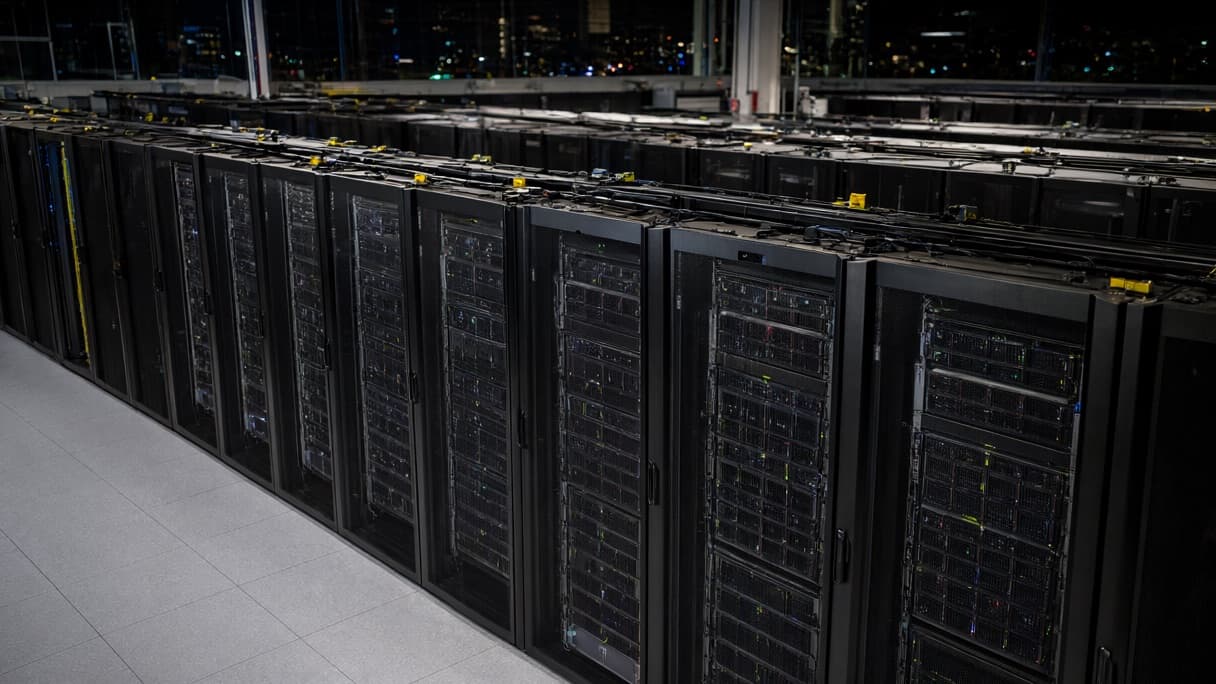
Instead, Quake AI is positioning its 22,000 GPU estate as a utility. The goal is to remove the human intermediary from the procurement process. John Hoffman, CEO of Northern Data and acting CEO of Quake AI, illustrated the inefficiency of the current model by describing an AI agent navigating a website like DoorDash. Hoffman told The Register that using compute to mimic a human clicking through a web interface is 'insanity' compared to a queryable API. He claims that moving to an API-driven interaction could reduce compute usage to one-thousandth of the current requirement.
This shift represents a fundamental change in the value chain. If compute is consumed as a raw utility via API, the 'friction' of human procurement—the browsing, the UI navigation, and the manual selection—disappears. The agent simply retrieves the answer or the resource it needs directly from the compute provider.
This strategy is a high-stakes gamble. McKinsey & Company previously reported that neocloud operators must move up the AI stack to avoid being commoditized by price competition. Simultaneously, Gartner has forecasted that consolidation in the provider market is inevitable, suggesting AI services may not generate enough revenue to cover IT infrastructure capital expenditures through 2030.
However, the volume of agentic traffic suggests a growing market. A 'State of the Bots' report from TollBit found that by the end of 2025, AI bot visits had increased to roughly one for every 31 human visits, a significant jump from the one-in-200 ratio seen at the start of the year.
By focusing on the machine-to-machine layer, Quake AI is betting that the ultimate winners in the neocloud space won't be those with the prettiest dashboards, but those who make their infrastructure the most frictionless for the bots that are increasingly taking over the internet.