
The Heavy-Duty Pivot: Why Autonomous Freight is the Real End-Game for Logistics

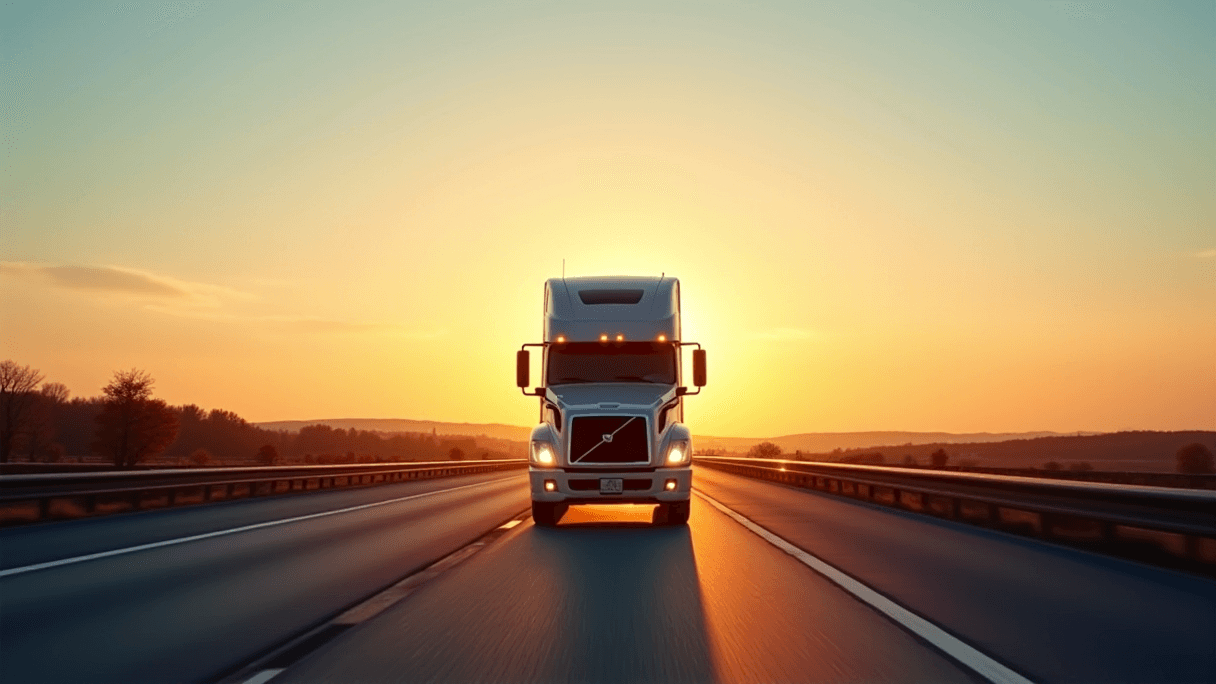
AI-generated image · US National Wire
Opinion: While passenger cars grab the headlines, the move of self-driving tech into heavy-duty trucking signals a fundamental shift toward a fully automated supply chain.
For years, the public imagination of autonomy has been captured by the passenger car—the promise of a nap on the way to work or a hands-free commute. But as a futurist looking at the long horizon, I argue that the true inflection point for the global economy isn't happening in the driveway; it is happening on the highway. The migration of autonomous technology from small passenger vehicles to heavy freight is the catalyst that will ultimately dismantle the traditional logistics hub and usher in a fully automated supply chain.
We are seeing the first cracks in the old wall right now. As TechCrunch first reported, the California Department of Motor Vehicles recently approved updated rules on April 28 that lifted a previous ban on driverless vehicles weighing more than 10,000 pounds from testing on public roads. This regulatory shift has opened the floodgates for the heavy-hitters of the industry. Specifically, TechCrunch reports that Aurora Innovation and Kodiak AI have both received permits from the California DMV to test their autonomous vehicle technology on public roads.
To understand why this is the definitive pivot, one must look at where these companies have already been operating. Because California had previously banned autonomous heavy-duty trucks, the industry shifted its gaze to Texas. In May 2025, Aurora Innovation debuted a self-driving truck service in Texas with a Dallas-to-Houston route, later expanding its reach to include paths between Fort Worth and El Paso, El Paso and Phoenix, Fort Worth and Phoenix, and Laredo and Dallas. Similarly, Kodiak AI began commercial driverless truck operations in January 2025 within the off-road environment of the Permian Basin in West Texas before expanding to on-highway operations, including the Dallas-to-Houston corridor.
Now that Kodiak AI has already begun testing with a handful of trucks around its Mountain View office, the geography of autonomy is expanding. While the current California DMV permits require a human safety operator to remain behind the wheel and restrict operations on roads with speed limits of 25 miles per hour or less (unless on a direct route), these are merely the training wheels. The trajectory is clear: once the technology moves from the remote Permian Basin and Texas highways into the heart of California's logistics network, the operational model of the supply chain changes forever.
Traditional logistics hubs are designed around the limitations of human drivers—mandatory rest stops, shift changes, and the physical constraints of human endurance. When the vehicle is no longer tethered to a human clock, the 'hub' as we know it becomes an obsolete relic. We are moving toward a world where freight doesn't just move faster, but moves with a level of algorithmic precision that renders the legacy warehouse-and-driver model inefficient.
Of course, this transition will not be seamless. The friction is already manifesting in the courts. TechCrunch reports that Teamsters California has filed a lawsuit in the Superior Court in Alameda County against the California DMV. The lawsuit alleges that the agency ignored laws requiring the public disclosure of the economic impacts of self-driving trucks and failed to account for safety risks to other motorists. This is the classic tension of the inflection point: the clash between a legacy labor model and an automated future.
However, the regulatory path is now paved. The California DMV has established permitting criteria covering vehicle registration, insurance, safety driver qualification, and safety standards. By meeting these requirements, Aurora Innovation and Kodiak AI are not just testing software; they are prototyping the death of the traditional logistics hub.
When heavy-duty autonomy scales, the supply chain ceases to be a series of disconnected hand-offs between human operators and becomes a single, continuous, automated flow. The shift from the Permian Basin to the public highways of California is the signal that the era of human-centric freight is ending. The passenger car was the experiment; the heavy truck is the execution.