
The Enceladus Pivot: Redefining the Reach of Habitable Space

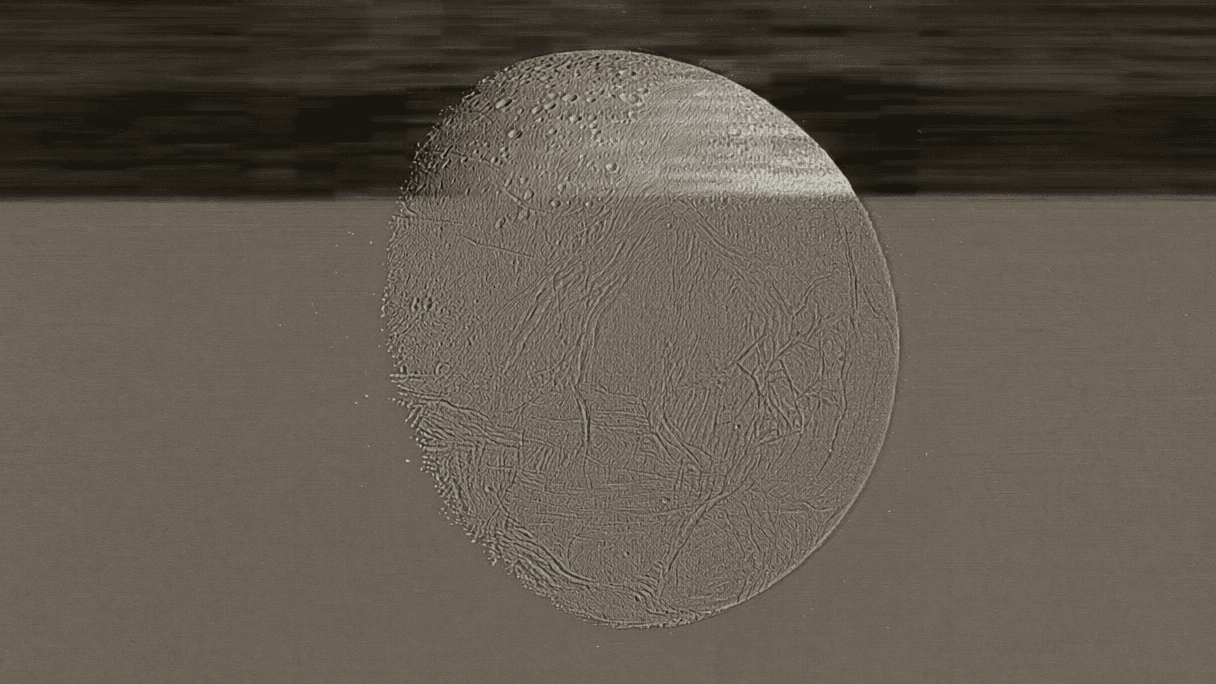
AI-generated image · US National Wire
New research into Saturn's moon suggests that the search for extraterrestrial life is no longer a theoretical exercise, but a logistical challenge of autonomous sampling.
For decades, the search for alien life has been governed by a conservative definition of 'habitable.' We looked for the Goldilocks zone—the precise distance from a star where liquid water could exist. But as we look toward the long horizon of deep-space exploration, the focus is shifting from the star to the moon. As 404 Media first reported, Saturn's moon Enceladus is emerging not just as a biological curiosity, but as the primary catalyst for a new era of autonomous discovery.
According to reporting from 404 Media, recent studies published in *Science Advances* suggest that Enceladus is 'low-hanging fruit' for astrobiologists. The moon, measuring only 300 miles in diameter, possesses a subsurface 'soda ocean'—alkaline and carbonate-rich—complete with hydrothermal vents on its seafloor. These vents are recognized as hotspots for life on Earth, and researchers led by Vanessa Helmbrecht of Ludwig-Maximilians-Universität München found that the heat-loving microbe *Methanothermococcus okinawensis* thrived in a simulated version of this environment. This discovery, per 404 Media, potentially expands the known 'habitability window' of the moon's subsurface ocean.
*Opinion: The implication here is a fundamental shift in our cosmic roadmap. If life can flourish in the dark, pressurized depths of a frozen moon, the 'habitable zone' is no longer a ring around a star, but any pocket of energy and chemistry in the void. This renders the traditional search for Earth-like planets secondary to the search for active, oceanic moons.*
Beyond the chemistry, the mechanism for discovery is becoming unexpectedly efficient. 404 Media highlights a separate study, co-led by Zenghui Zou and Frank Postberg of Freie Universität Berlin, which examined ice grains previously captured by the Cassini spacecraft during its 2006-2017 orbit of Saturn. The researchers discovered that as oceanic spray freezes slowly in space, organic molecules separate into concentrations of similar compounds. Essentially, the moon's geysers are pre-sorting potential biosignatures into ice grains.
This natural segregation means that future probes do not need to analyze the entire plume; they simply need the capacity to sample and analyze individual ice grains to find elevated concentrations of organic compounds. While the Cassini mission lacked the tools to detect biosignatures, the path is now clear for specialized autonomous hardware.
Despite this, the transition from theory to execution remains stalled. 404 Media notes that while mission concepts like the European Space Agency’s L4 mission and NASA’s Enceladus Life Finder have been proposed, neither has been formally greenlit. The science is ready; the infrastructure is the only remaining bottleneck. As we redefine what is 'possible'—much like the discovery of *Incendiamoeba cascadensis* in California's Hot Springs Creek by Beryl Rappaport of Syracuse University has shattered the known thermal limits for eukaryotic life—we are realizing that the universe is far more hospitable than our old models allowed.