
The Hardware Illusion: Why Export Bans Fail to Stop AI Proliferation

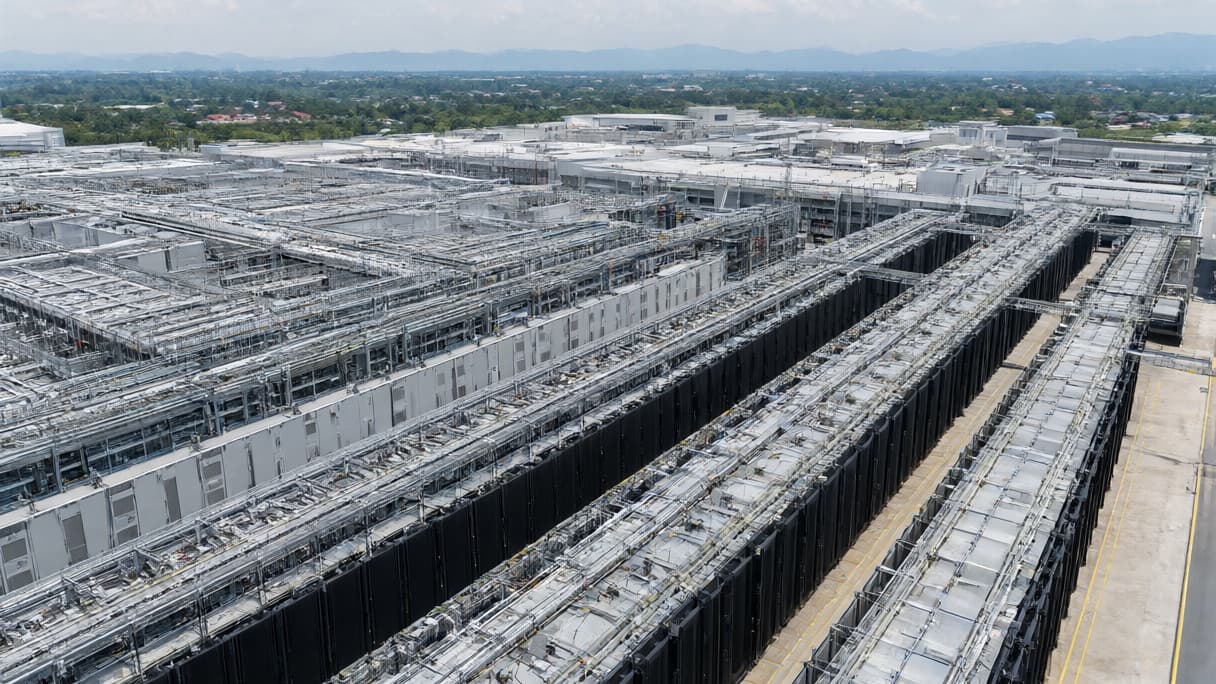
AI-generated image · US National Wire
As banned Nvidia chips surface in China's most powerful models, enterprise leaders must reckon with a global shadow supply chain that renders hardware restrictions a blunt and ineffective instrument.
For enterprise security and operations leaders, the premise of US export controls is simple: restrict the hardware, restrict the capability. However, as TechCrunch first reported, recent evidence suggests that these hardware-centric bans are a blunt instrument, failing to account for the reality of global shadow supply chains. The result is a security landscape where the most powerful AI models are developed using the very tools meant to be kept out of reach.
According to reporting from TechCrunch, research led by Will DePue of the nonprofit Unemployment Labs indicates that leading open-weight models from Chinese firms—specifically DeepSeek’s V4 models and Moonshot AI’s Kimi’s K3 releases—bear the structural fingerprints of training on Nvidia Blackwell GPUs. These chips are currently banned for export to China or Chinese-owned firms. This finding aligns with earlier statements from White House technology adviser Michael Kratsios, who cited US intelligence sources to claim Moonshot had utilized export-banned Nvidia chips.
***Opinion:*** *From an ROI and risk management perspective, relying on export bans to maintain a competitive or security edge is a flawed strategy. When the incentive for acquisition outweighs the risk of detection, shadow markets will inevitably fill the void. Enterprise leaders are left managing the fallout of a proliferation that hardware restrictions are powerless to stop.*
The mechanisms for this proliferation are diverse. Epoch AI, a nonprofit research organization, estimates that approximately two million advanced chips entered China between 2024 and 2025 via schemes designed to mask their final destination. One primary vector is the use of offshore data centers. Epoch AI estimates that 275,000 Nvidia AI accelerators were imported to Malaysia during that same period, fueling an industrial revolution in that country while providing Chinese firms a loophole to access compute. Sam Bresnick, a researcher at the Georgetown Center for Security and Emerging Technology, told TechCrunch that allowing access to chips in Malaysia while banning them in mainland China, Hong Kong, and Macau is logically inconsistent if the goal is to protect the US tech edge.
Beyond offshore centers, direct smuggling has played a role. TechCrunch reports that Megaspeed, where Alice Huang serves as an executive, has been central to this trade through its subsidiary Speedmatrix. A separate report from Bloomberg indicated that a company tied to Alice Huang was involved in the smuggling of banned Nvidia chips into a data center located in Shanghai. These revelations coincide with a corporate crisis at Nvidia; CEO Jensen Huang recently departed the company after admitting to an affair with Alice Huang, who has also been alleged to be an agent of China’s intelligence service. TechCrunch notes that Nvidia's potential corporate liability for export control violations likely influenced the decision to part ways with the CEO.
The systemic failure extends to regulatory oversight. TechCrunch reports that Secretary of Commerce Howard Lutnick could lose his job following reports that investigators were too cozy with Nvidia officials and failed to identify suspicious buyers.
While the Trump administration has permitted the export of the less powerful H200 chip via circuitous routes to claim a 25% tariff, the effectiveness of such measures is questionable. Reportedly, 600,000 H200 chips are currently stockpiled in Hong Kong. Whether these are awaiting a trade deal or are being held due to surveillance concerns, the fact remains that the hardware is present and accessible. As short-selling firm Culper argued in a report, Nvidia's "China problem" is twofold: the company is heavily reliant on Chinese demand, yet that demand may eventually shift toward domestic Chinese chip production as a direct response to US bans.