
The Nvidia Vacuum: Why Enterprise SaaS Must Hedge Against the Loss of Jensen Huang

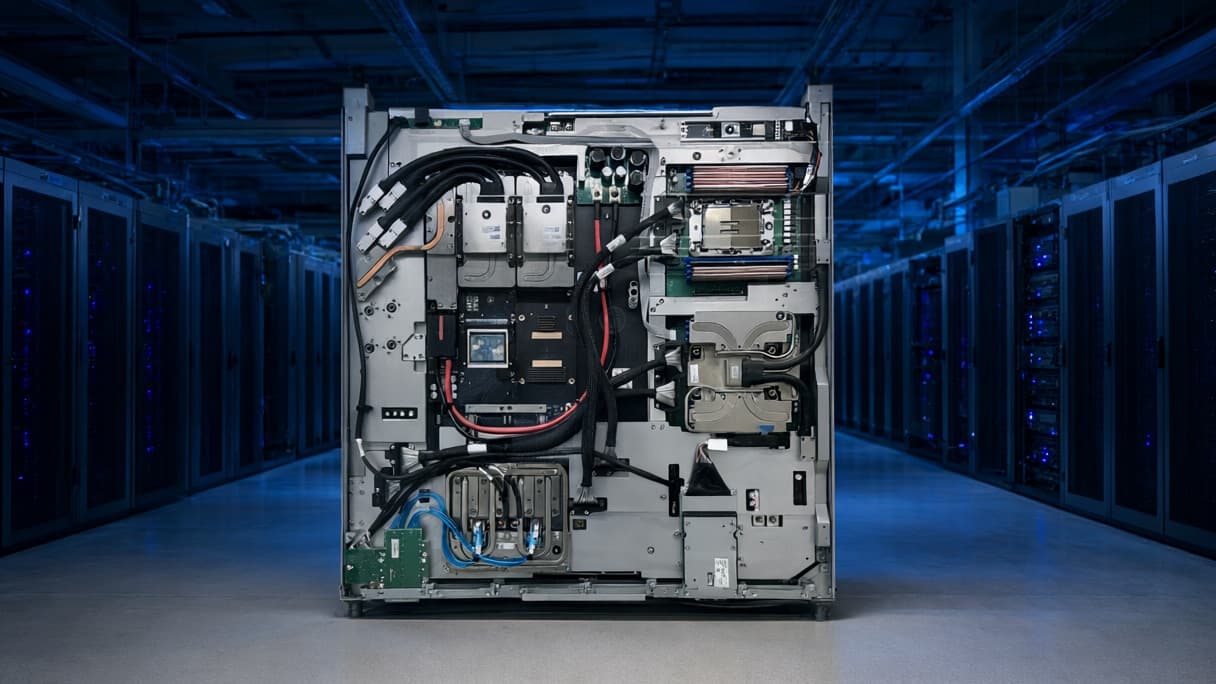
AI-generated image · US National Wire
With the departure of AI's most prominent open-source champion, the risk of vendor lock-in intensifies, potentially forcing a pivot toward infrastructure agnosticism.
For enterprise software leaders, the sudden resignation of Nvidia CEO Jensen Huang is more than a corporate scandal; it is a systemic risk to the open-source AI roadmap. Huang was not merely a vendor; he was the primary counterweight to the 'closed-model' hegemony of providers like OpenAI and Anthropic. His exit creates a leadership vacuum that could leave enterprise SaaS players dangerously exposed to catastrophic vendor lock-in.
As first reported by TechCrunch, Huang’s departure follows admissions of an affair with Alice Huang, a Megaspeed executive and alleged Chinese spy. Beyond the national security implications, the fallout threatens the strategic direction of the company that powers the modern AI stack. Huang had framed open-source AI as a vehicle for innovation, safety, and sovereignty, specifically arguing that open-weight models prevent customers from becoming locked into a single provider.
From an operational ROI perspective, Huang’s support for open source was a calculated business move. TechCrunch notes that as frontier labs like Google and OpenAI develop their own proprietary chips, Nvidia has a vested interest in diversifying its customer base. By empowering nation-states and enterprises to own their models, Nvidia ensures a broader market for its GPUs. This strategy manifested in tangible investments: the development of the Nemotron family of open-weight models for agentic AI and reasoning, a $6 billion non-exclusive license for the coding startup Poolside, and investments in startups such as Thinking Machines Lab and Reflection AI.
However, the transition to interim CEO Colette Kress introduces significant uncertainty. TechCrunch highlights that founder-driven priorities often diminish during leadership shifts. This uncertainty extends to critical infrastructure deals, including Nvidia's planned $12.9 billion acquisition of the open-source platform Hugging Face. While Hugging Face CEO Clément Delangue has vowed to continue fighting for open source, the deal remains under scrutiny from the U.S. Department of Justice regarding market competition.
**Opinion:** For the B2B operator, the risk is now binary. If Nvidia retreats from its open-source commitment under Kress, or if Washington leverages the current scandal to impose tougher restrictions on open-weight models—particularly those from China—the path to vendor-neutral AI narrows. Enterprise SaaS players can no longer rely on the benevolence of a single chip giant to keep the ecosystem open. To avoid the 'closed-model' trap advocated by companies like Anthropic and OpenAI, enterprises must pivot toward agnostic infrastructure now. Relying on a single provider's roadmap is no longer a viable strategy when the primary advocate for that openness is gone.
Without Huang's influence, the pressure from closed-model providers to restrict advanced AI for 'safety reasons' may go unchecked. As the industry moves toward long-running agentic systems, the ability to modify and run models on independent infrastructure is the only true hedge against price hikes and proprietary constraints.