
The Electrification Gap: Why Targets Aren't Infrastructure

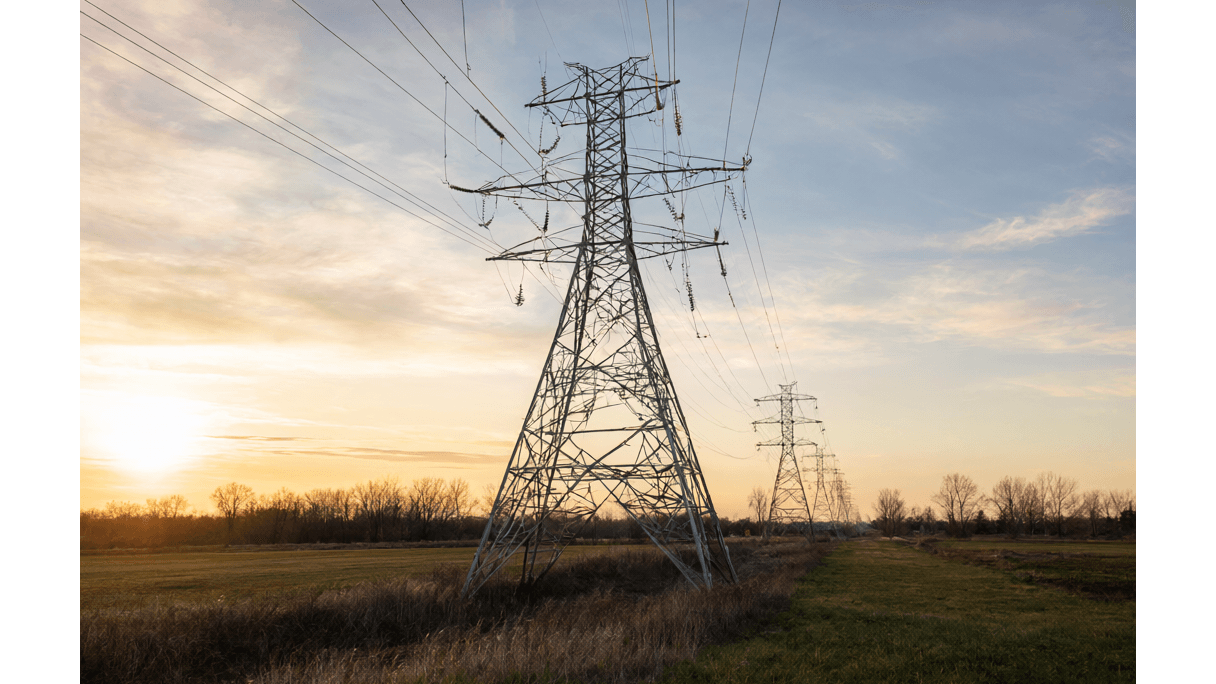
AI-generated image · US National Wire
The IEA envisions a world where cost, security, and climate goals align, but researchers warn that high upfront costs and political friction make the physical transition a brutal climb.
Setting a global target is the easy part. In June, climate policymakers meeting in Bonn, Germany, discussed a goal to reach 35 percent electrification of final energy by 2035. As first reported by Ars Technica, Fatih Birol, head of the International Energy Agency (IEA), argues that the world is reaching a tipping point where the "energy trilemma"—the balance of cost, security, and environmental impact—is finally aligning.
On paper, the pragmatic case for electrification is strong. IEA data from 2025 shows that electricity offers a massive efficiency advantage over fossil fuels: $100 of electricity can power an electric vehicle for 2,310 miles, compared to just 862 miles for a gasoline-powered car. Similarly, $100 of electricity can provide 42 days of heat pump heating, a 40 percent advantage over the 30 days provided by a gas boiler. Birol notes that energy security concerns, exacerbated by the Iran war and rising fuel prices, are further accelerating this shift.
But as a columnist focused on deployment, I have to ask: where is the actual hardware? While the IEA reports that electricity's share of final energy rose from 16.7 percent in 2000 to 23.4 percent in 2025, the path to 35 percent is not a straight line.
***
**Opinion:** We need to stop treating electrification as an inevitable trend and start treating it as a massive construction project. The gap between a policy goal and a functioning grid is filled with "brutal realities"—specifically, the staggering upfront cost of infrastructure and the political will to build it.
***
Researchers cited by Ars Technica highlight exactly why these targets often stall. Kenneth Medlock III, senior director for the Center for Energy Studies at Rice University’s Baker Institute for Public Policy, argues that the substantial initial price tag of constructing these systems is frequently underestimated by those advocating for electrification. He points out that while wind and solar have low operating costs, they are expensive to install.
This infrastructure hurdle is even more acute in developing economies. Chuks Okereke, a professor of global climate governance and public policy at the University of Bristol, notes that in places like Nigeria, polluting development often makes more short-term economic sense because of these high upfront costs. Okereke argues that for the transition to be a net-positive for Nigeria, international organizations and wealthy nations must provide direct assistance.
Beyond the balance sheet, there is the friction of deployment. David Victor, a professor at the University of California, San Diego, suggests that trade barriers—such as countries avoiding Chinese solar panels to protect domestic production—could slow the rollout. He also notes that heavy trucks, aircraft, and maritime transport remain difficult to electrify.
Finally, there is the human element. Emily Grubert, an energy systems researcher at the University of Notre Dame, argues that the transition isn't happening naturally because the people setting the targets aren't the ones making the final decisions. In many regions, including the United States, decision-makers may prioritize the profits of entrenched coal, oil, and natural gas industries over the shift to cleaner power.
If we want to hit that 2035 target, we have to move past the optimism of the "trilemma" and start solving the physical and political bottlenecks of the grid.