
The Carbon Cost of Scale: Amazon's Texas Power Play Exposes the AI Sustainability Myth

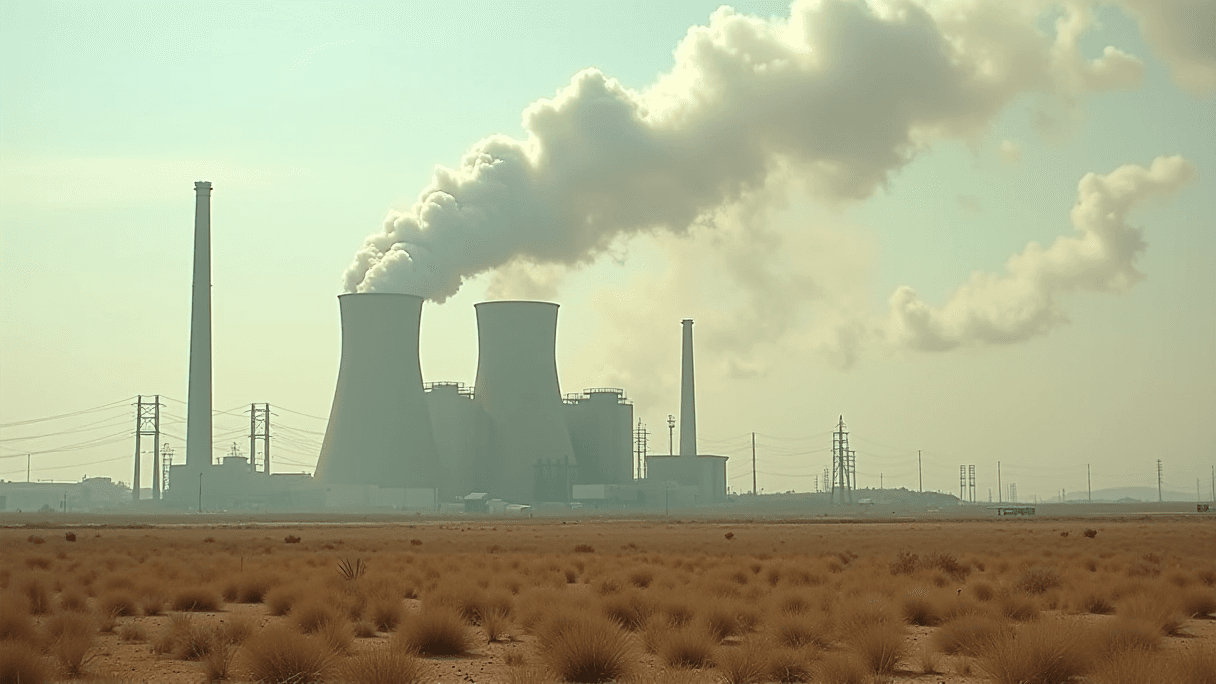
AI-generated image · US National Wire
Amazon's plan for a natural gas plant in Pecos County suggests the company's 2040 climate pledge is being traded for the raw power needed to fuel the AI arms race.
In the venture world, we talk about 'scaling' as the ultimate virtue. But when you look at the P&L of the planet, Amazon's current scaling strategy looks less like innovation and more like a regression.
As TechCrunch first reported, citing The New York Times, Amazon is investing in an on-site power plant for a planned data center in Pecos County, Texas. The facility would utilize natural gas and has been permitted to emit 33 million tons of carbon dioxide each year. To put that in perspective, The New York Times reports this would make the facility the largest source of climate pollution in the United States.
**Opinion: The Creative Accounting of 'Climate Pledges'**
For years, Amazon has leaned into its public image as a sustainability leader, specifically pledging to eliminate its carbon emissions by 2040. However, the numbers tell a different story. TechCrunch reports that Amazon's own data shows carbon emissions rose 16% last year, a spike driven significantly by the demands of artificial intelligence.
When the growth of the product (AI) directly contradicts the stated mission (carbon neutrality), the mission becomes a marketing expense rather than a corporate mandate. The Pecos County project is the physical manifestation of this contradiction. You cannot claim to be chasing zero emissions while simultaneously permitting the most polluting power plant in the country to keep your servers humming.
When pressed on this discrepancy, an Amazon spokesperson told TechCrunch that "the world looks different now than when we co-founded the climate pledge," though they maintained that the company's "commitment hasn’t changed." This is the classic corporate pivot: acknowledging the reality of the situation while insisting the original goal remains intact, despite the fact that the current trajectory makes that goal mathematically impossible.
**The Political Shield**
Amazon is framing this move not as a climate gamble, but as a community benefit. A spokesperson confirmed to TechCrunch that the data center will be supported by new on-site generation specifically to ensure it "won’t raise electricity costs for Texas families."
This is a calculated move. Data centers are currently facing mounting political opposition, largely because their massive energy requirements threaten to drive up costs for residential consumers. By building its own gas-fired power plant, Amazon isn't just solving a technical power problem; it is insulating itself from the political fallout of the energy crisis it is helping to accelerate.
**The AI Power Trap**
We are seeing a broader trend across the sector where the hunger for AI compute is overriding every other corporate KPI. TechCrunch notes that Amazon is not alone in this, as various tech companies are backing the development of massive natural gas plants to sustain their power-hungry infrastructure.
From a VC perspective, the 'cloud scale' narrative is seductive because it promises infinite growth. But the Pecos County project proves that this growth isn't free. It is being subsidized by the environment. If Amazon's path to AI dominance requires the creation of the U.S.'s biggest climate polluter, then the 2040 pledge isn't a target—it's a relic.
Amazon is betting the farm on the idea that AI growth justifies any environmental cost. For those of us tracking the actual costs of these operations, the math simply doesn't add up.