
The AI Power Grab: Turning Marginalized Neighborhoods Into Sacrifice Zones

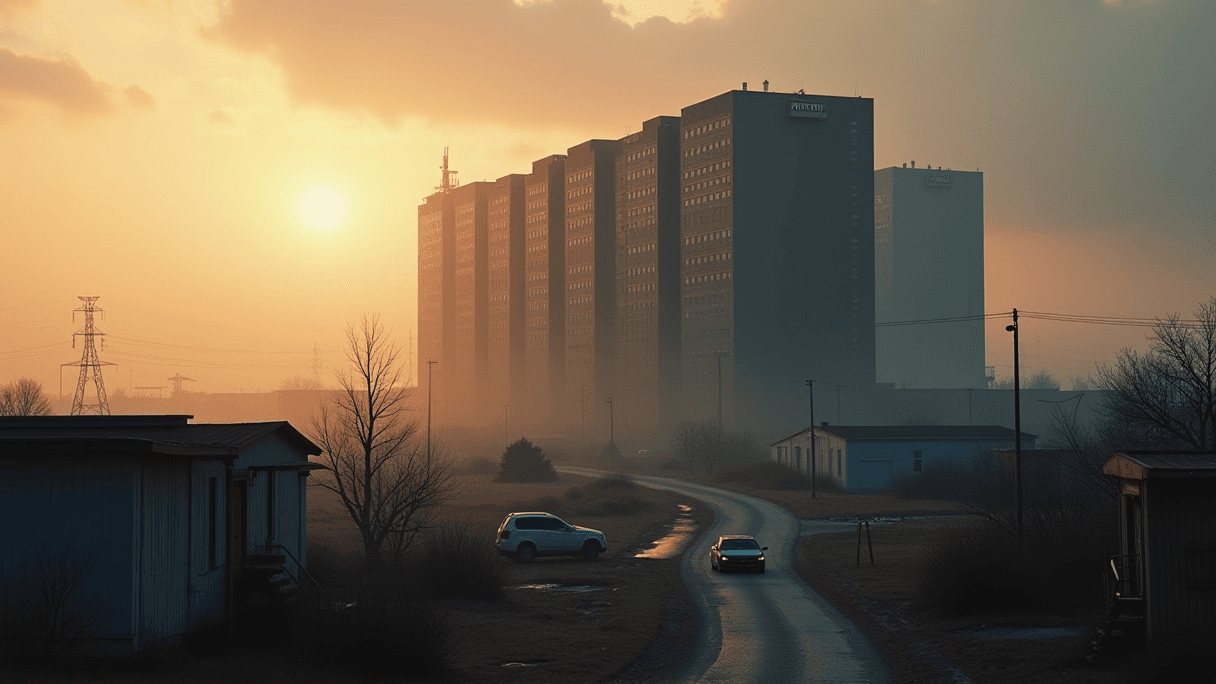
AI-generated image · US National Wire
As Big Tech races for AI dominance, the cost of 'innovation' is being offloaded onto communities already scarred by industrial pollution.
OPINION: The current gold rush for artificial intelligence is being marketed as a leap forward for humanity, but for those living in the crosshairs of data center expansion, it looks like a rebranding of industrial exploitation. Big Tech is not innovating so much as it is identifying the path of least resistance, targeting marginalized urban corridors as disposable sacrifice zones for its energy-hungry infrastructure.
Nowhere is this pattern more evident than in Philadelphia. As TechCrunch first reported, city officials have identified two potential sites for data center construction: one in Northeast Philadelphia and another in the Grays Ferry neighborhood of Southwest Philadelphia. For residents of Grays Ferry, this is not a theoretical debate about economic growth; it is a matter of survival. Shawmar Pitts, managing co-director of the environmental justice group Philly Thrive, grew up in the shadow of the East Coast’s largest oil refinery, which operated until a 2019 explosion. Pitts told TechCrunch that he only realized the scale of the refinery's impact after seeing a list of illnesses provided by Philly Thrive in 2018, noting that nearly every house in his neighborhood had someone suffering from those conditions.
This is the blueprint of the AI boom: placing high-impact infrastructure in areas already weakened by corporate negligence. While data center operators promise jobs, Philly Thrive board president Sonya Sanders told rally attendees on Monday that these promises are hollow and that the community does not want the noise and pollution. Sanders, whose husband died of a rare bone cancer in 2020—a death she attributes to refinery emissions—described the pursuit of profit as a form of silent murder.
The environmental toll of this 'innovation' is staggering. TechCrunch reports that BloombergNEF predicts U.S. data centers will consume more natural gas by 2035 than Japan and Germany combined, a projection that has nearly doubled in just nine months. This demand is expected to generate an additional 1 million metric tons of greenhouse gas pollution daily, representing roughly 12% of current U.S. greenhouse gas emissions.
Furthermore, the infrastructure itself poses a direct threat to local air quality. Annie Fox, an attorney for the Clean Air Council, noted at a recent rally that planned Pennsylvania data centers often include hundreds of diesel engines. While intended for emergencies, Fox warned that government guidance suggests using these engines during heat waves to avoid overstressing the electrical grid, which will only exacerbate climate change and increase the frequency of such heat waves.
These are not isolated concerns. Residents like Donna Greenberg have expressed fears to TechCrunch regarding surveillance, the misappropriation of water and electricity, and general pollution. The pushback is growing. New York Governor Kathy Hochul has signed an executive order pausing permits for large projects, stating that progress should not come at the cost of noise pollution or deleted water supplies. Similarly, cities including Reno, Asheville, Charlotte, Indianapolis, and Denver have approved data center moratoriums.
When Big Tech speaks of 'scaling' AI, they are talking about a physical footprint that consumes massive amounts of natural resources and spews pollutants into the air. If this infrastructure is consistently routed through neighborhoods like Grays Ferry, it proves that the AI revolution isn't about progress—it's about who is considered expendable in the pursuit of profit.