
The AI Power Binge: Infrastructure Boom or Climate Mirage?

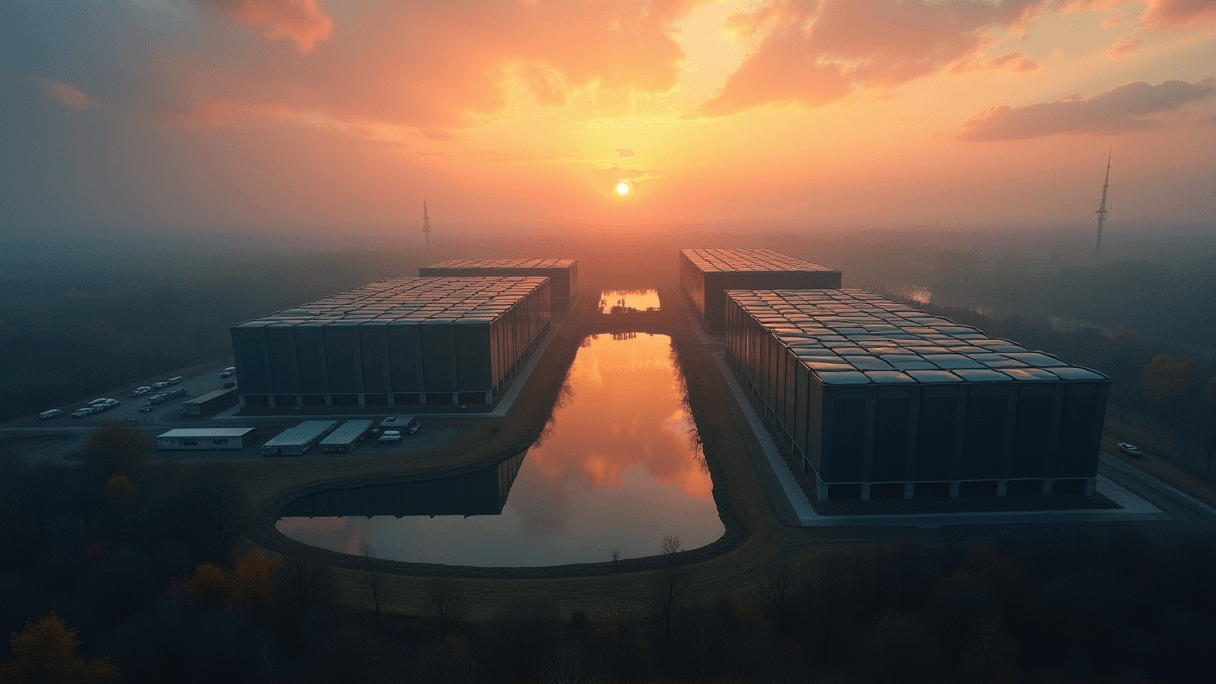
AI-generated image · US National Wire
Opinion: While venture capital is flooding into low-carbon datacenters, we must distinguish between genuine grid-scale acceleration and a speculative bubble driven by the compute race.
For the better part of a decade, the climate tech narrative has been one of steady, if sometimes sluggish, evolution. But the first half of 2026 has introduced a jarring new variable: the AI power binge.
As The Register first reported, citing data from investment tracker Currence, climate tech venture funding surged to $26.1 billion in the first six months of 2026—a 55 percent increase year-over-year. On the surface, this looks like the windfall the sector has been praying for. In reality, it is a concentrated bet on the infrastructure required to keep artificial intelligence running.
As a pragmatic observer of deployment, I find the headline numbers seductive but the underlying distribution alarming. We are witnessing a fundamental shift in where the money is going, and it is not necessarily toward the broad decarbonization of the economy. Instead, the capital is chasing compute.
Currence notes that the 'built environment' category has grown by more than eight times, effectively overtaking 'energy' as the largest investment vertical in climate tech. This shift is so profound that Currence has actually rewritten the boundaries of what constitutes climate tech to include datacenter developers who prioritize sustainability or rely on clean power.
When we look at the specifics, the concentration is staggering. Low-carbon datacenter developers now account for 34 percent of all climate venture funding, a massive leap from just 3 percent the previous year. Two deals alone—DayOne's $4.5 billion round and Nscale's $2 billion Series C—represent roughly a quarter of all investment in the sector.
This is no longer traditional venture capital; as Currence observes, this concentration of capital is pushing climate venture funding closer to infrastructure finance.
From a deployment perspective, there is a silver lining. The 'speed-to-power race' is forcing a realization that clean, firm generation is a competitive advantage. This appetite is driving early-stage investment into advanced nuclear, geothermal power, and long-duration energy storage. The Register reports that investors are writing massive checks to nuclear startups years before they are expected to produce a single watt of electricity, betting that the long-term power needs of AI will eventually validate these high valuations.
Similarly, we are seeing a surge in ancillary technologies. Funding for Earth observation has tripled to provide the real-world data needed for AI training, and robotics startups focused on simulation platforms and foundational models have raised nearly four times as much as the next largest innovation category.
However, this is where the risk of a speculative bubble becomes acute. While the 'AI-adjacent' sectors are booming, the broader climate transition is being starved of attention. The Register reports that carbon-related equity funding has plummeted 61 percent, marking its weakest first half since 2020.
Furthermore, the overall health of the ecosystem is precarious. While total funding is up, the actual number of deals has fallen by 25 percent. The fact that the ten largest rounds account for 42 percent of all investment suggests a 'winner-take-all' dynamic that favors massive infrastructure plays over the diversified innovation needed to solve the climate crisis.
We must ask ourselves: is this capital surge actually accelerating the transition to a low-carbon grid, or is it simply inflating the cost of the hardware needed for the next generation of LLMs?
If the goal is genuine grid-scale deployment, we cannot rely on the 'accidental windfall' of the AI boom. The danger is that we create a narrow corridor of highly funded, AI-dependent infrastructure while the essential, less-glamorous work of decarbonization—such as carbon removal and general energy efficiency—withers from neglect.
AI's appetite for power is seemingly endless, and while that appetite is currently funding the next generation of nuclear and geothermal projects, it is doing so on the back of speculative valuations. If the AI bubble were to pop, the infrastructure being built today might be left as a series of expensive, half-finished monuments to a compute race that went too far, too fast.
Investment is a signal of priority. Right now, the signal is clear: the market values the ability to power a datacenter far more than it values the ability to remove carbon from the atmosphere. Until the capital distribution shifts back toward a broader climate mandate, this 'boom' is less a victory for the planet and more a victory for the server rack.