
AI Power Hunger Drives Divergent Energy Strategies

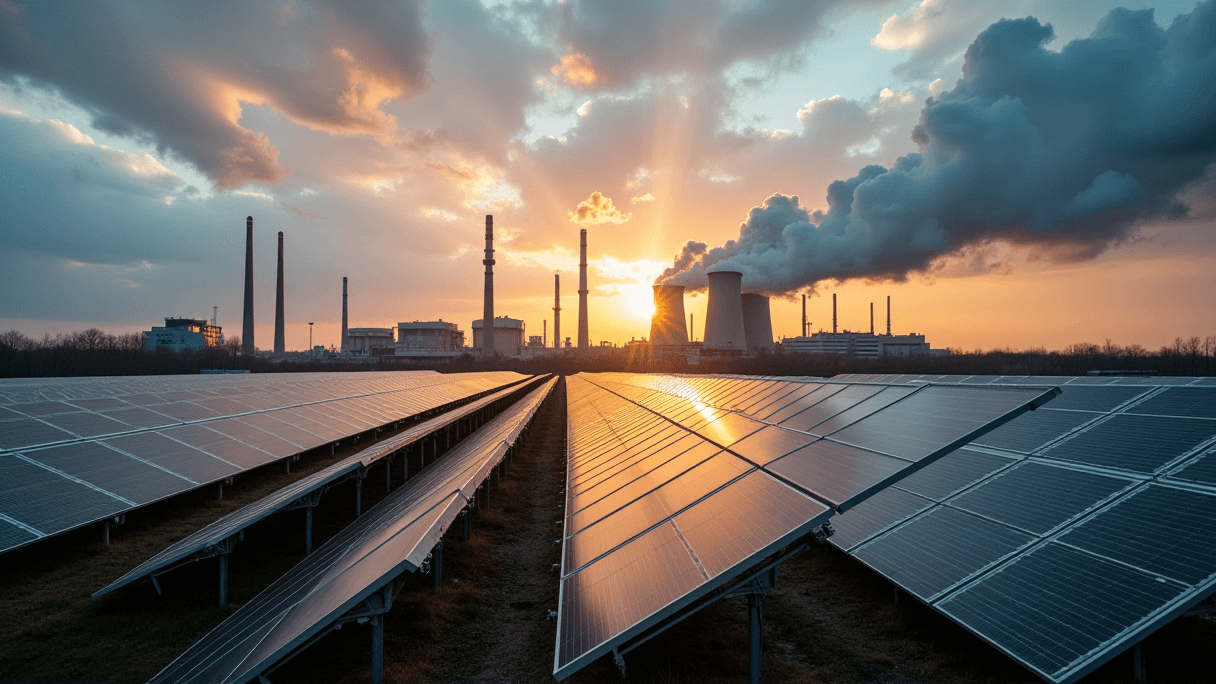
AI-generated image · US National Wire
Google's massive solar bet in Arkansas highlights the stark contrast with xAI's unpermitted gas turbines in Mississippi.
The race to power AI data centers is manifesting as a choice between long-term clean energy infrastructure and immediate, high-emission capacity, as TechCrunch reported.
Google is doubling down on renewables with the Steel River Energy Center in Arkansas. Developed alongside Cypress Creek Energy, the project is slated to become the largest solar facility in the U.S. The first two phases, backed by $3.5 billion in financing, will provide 1 gigawatt of solar capacity and 1.9 gigawatt-hours of battery storage, which Google reports will cover roughly 6% of the state's peak demand. The project is expected to reach a total capacity of 1.8 gigawatts of solar and 2.9 gigawatt-hours of battery storage by 2029, according to TechCrunch.
Conversely, Elon Musk's xAI is prioritizing speed over permits. Reuters reports that xAI is operating nearly 60 natural gas turbines in Mississippi without federal clean air permits to power its Colossus data centers. Reuters further notes that pollution from this facility is impacting predominantly Black neighborhoods. Musk has continued to lean into fossil fuels, recently acquiring modular natural gas power plant developer APR Energy, TechCrunch reports.
While Google has deviated from its clean-energy focus once to build a 933-megawatt gas plant in West Texas with Crusoe, the company is largely pursuing hourly clean power matching. The divergent paths illustrate the tension in the sector: the ability to deploy nearly 2 gigawatts of solar in three years versus the immediate, though unpermitted, availability of gas.