
The AI Gold Rush is a Stress Test for a House of Cards

AI-generated image · US National Wire
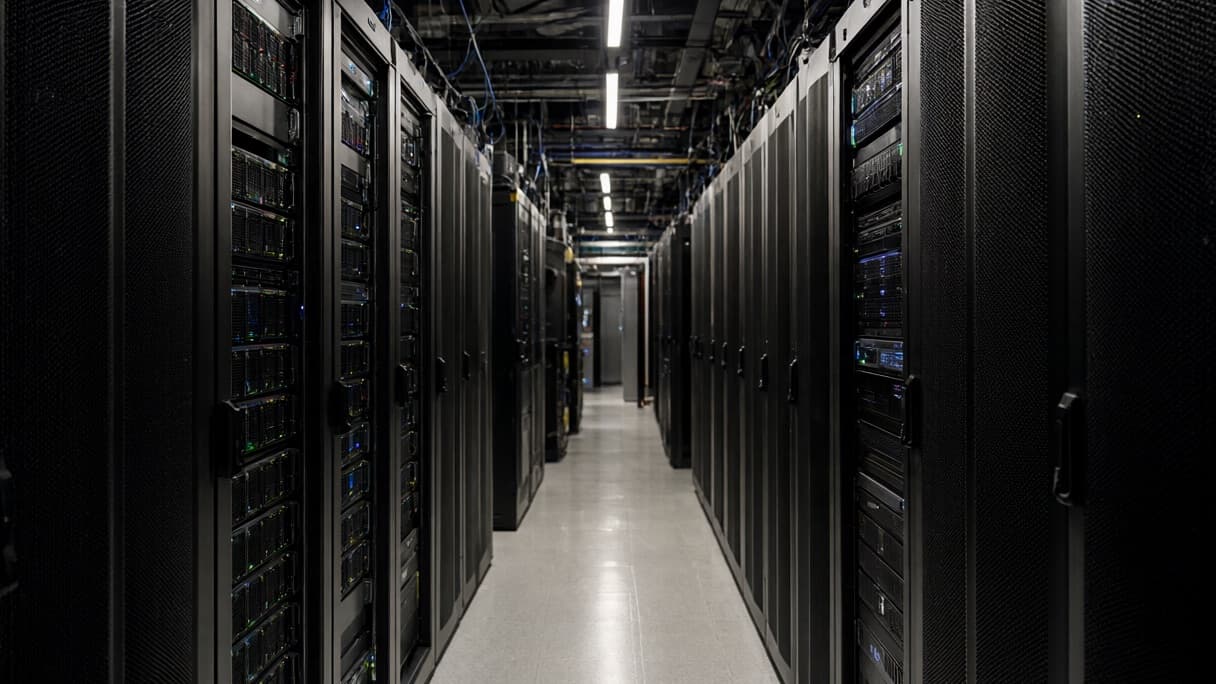
The 'PHP-ocalypse' reveals a terrifying truth: the internet's foundational architecture is held together by 'glue and dreams,' and AI is the catalyst that will finally bring it down.
OPINION: The current obsession with artificial intelligence is framed as a leap forward in productivity and innovation. But if you look beneath the surface of the hype, AI isn't just building the future; it is acting as a high-velocity stress test for a digital infrastructure that was never built to last. We are discovering, in real-time, that the internet is not a polished monolith of engineering, but a rickety collection of legacy systems waiting for a reason to collapse.
Case in point: the recent 'PHP-ocalypse.' As first reported by TechCrunch, a series of severe vulnerabilities were discovered in PHP (Hypertext Preprocessor), a decades-old open-source programming language. The fallout was immediate and chaotic. Website owners were told to patch their sites instantly or, if they lacked the capacity to update, simply take their websites offline to ensure safety. This wasn't a minor glitch; it was a systemic crisis that saw governments taking down websites and popular platforms disappearing briefly to stem the tide of attacks.
To understand the scale of the fragility, one must understand the role of PHP. Kirsten Korosec of TechCrunch notes that PHP is a core ingredient for content management systems like Drupal and WordPress, which together power roughly 70% of websites—amounting to tens of millions of sites. Many of these owners are not even aware that their sites are running on PHP. This is the 'bone level' of the internet, and as Sean O’Kane told TechCrunch’s Equity podcast, that level is effectively 'held together by glue and dreams.'
What makes the PHP situation particularly damning is the timeline. According to Anthony Ha of TechCrunch, these vulnerabilities were not new; they had existed in the PHP language for decades. They remained hidden in plain sight until the advent of large language models (LLMs) and AI agents changed the math of discovery. While human researchers participating in the 'Hack the Planet' initiative—led by OpenAI and Wiz (a company now owned by Google)—were the ones who actually found the bugs, they utilized AI to exploit them.
This creates a lethal paradox. The very tools we are using to advance technology are now being used to map the ruins of our existing architecture. Once a vulnerability is identified via LLMs, the window for patching closes almost instantly. The disclosure of the PHP bug triggered a frantic race; Cloudflare CEO Matthew Prince reportedly posted about seeing millions of attempted hacks of the 'PHP2Shell' shortly after the vulnerability became known.
Sean O’Kane’s analysis on the Equity podcast highlights a terrifying trajectory. For a decade, the internet has survived through the grace of individual hobbyists maintaining tiny repositories who occasionally catch nefarious activity before the system crumbles. Now, multiply that risk by a billion. We are entering an era where AI agents can be tasked with a single-minded goal: finding and exploiting these foundational cracks.
We are not just talking about a few broken websites. Kirsten Korosec expressed concerns on the Equity podcast regarding a 'next level of prepper doom,' noting that the exploitation of banks and the resulting data and privacy concerns could reach a scale that is simply too big to fix. Furthermore, the 'cure' is almost as destructive as the disease. Because many owners cannot patch these legacy systems, they are simply shutting them down. This leads to what 404 Media describes as 'link rot,' where pieces of digital history and government resources vanish permanently because the underlying software is too decayed to save.
The industry's response has been equally clumsy. O’Kane pointed to the 'chest beating' performed by OpenAI in its announcement of the vulnerabilities and noted that a breach of the release embargo only served to accelerate the hacker set's efforts. In a traditional cybersecurity environment, a company can disclose a bug discreetly. But when the vulnerability is as fundamental as PHP, there is no discreet way to notify the world. You announce it, and you trigger a gold rush of exploitation.
This is the reality of the AI era. We are building skyscrapers of generative intelligence on top of a foundation of decades-old, open-source software that no one fully understands or maintains. The PHP-ocalypse is not an isolated incident; it is a warning. If a vulnerability that existed for decades can suddenly be weaponized by AI, we must ask: what other 'bad software' is currently holding the internet together? The AI gold rush isn't just creating new tools; it is exposing the fact that our digital world is a house of cards, and the wind is starting to blow.