
The AI Bill Comes Due: Big Tech's $740 Billion Gamble Hits a Wall of Fiscal Reality

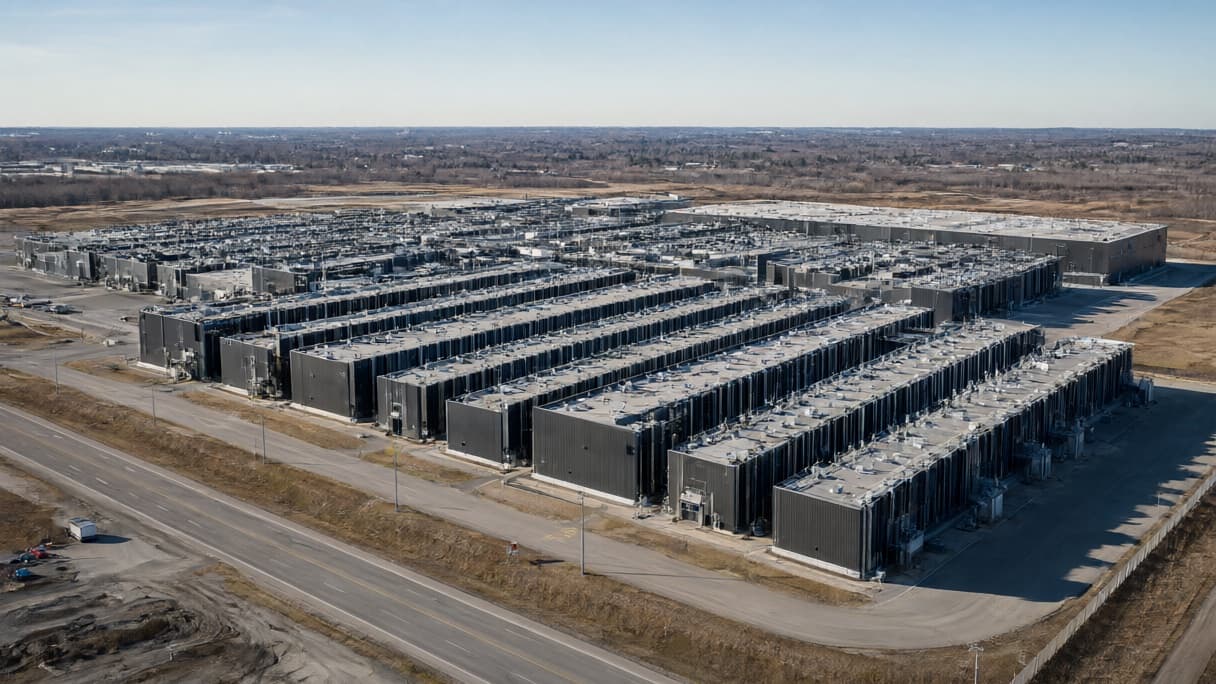
AI-generated image · US National Wire
As Alphabet, Amazon, Meta, and Microsoft double down on infrastructure spending, investors are beginning to question if the AI gold rush is cannibalizing the very core businesses funding the boom.
### The High Cost of Confidence
For the better part of the AI boom, Wall Street viewed massive capital expenditures as a badge of honor—a signal of confidence in the growth potential of generative artificial intelligence. But as the industry enters the fourth quarter of 2026, that enthusiasm is curdling into anxiety. As TechCrunch first reported, the giants of the sector are no longer just investing; they are spending at a rate that threatens to outpace their ability to generate cash.
TechCrunch reports that Alphabet, Amazon, Meta, and Microsoft have projected combined capital expenditures exceeding $740 billion for the current year. This spending, which encompasses chips and data centers, is increasingly being viewed through a lens of risk rather than reward. The market's reaction has been swift and severe. On a single Friday, the Nasdaq dropped 2.9%, while chip-sector heavyweights took a drubbing: Nvidia fell 4%, Broadcom dropped more than 5%, and Qualcomm plummeted 11%.
### The Free Cash Flow Crisis
The central tension is no longer about whether the technology works, but whether the business model is sustainable. Investors are now fixated on negative free cash flow—the phenomenon of spending more cash than a company brings in—and the mounting debt required to sustain the AI arms race.
Alphabet provides the most stark illustration of this volatility. TechCrunch reports that Google's parent company saw its market value wiped out by $500 billion in a single day last Thursday, with the stock plummeting 12%. The company reported negative free cash flow of $9.1 billion in the third quarter, representing its second straight single-quarter deficit. This comes even as quarterly capital expenditures climbed to $51.4 billion. Alphabet expects its total spending for the year to reach up to $205 billion, with projections indicating that spending will continue to rise into 2027.
Amazon is facing a similar fiscal cliff. The company reported negative free cash flow of $42.4 billion over the last 12 months, a staggering reversal from the $14.8 billion in positive cash flow seen in the prior year. Despite a 39% growth rate in its AWS cloud business, Amazon's stock tumbled 7% following its earnings report. The company expects its total capital expenditures for the year to hit $220 billion.
Meta is also feeling the burn. The company reported negative free cash flow of $2.1 billion in the third quarter, as its capital expenditures outpaced its operating cash. Meta is guiding toward as much as $145 billion in spending this year. CEO Mark Zuckerberg has explicitly noted that Muse, the company's new free personal AI agent, is a "money pit" because it is "very compute-intensive to run." While Meta's ad revenue grew by 26%, the stock still suffered a 10% hit last week.
### The Cannibalization Paradox
Perhaps the most alarming trend for investors is the possibility that AI is not just an expensive addition to these businesses, but a threat to their existing revenue streams. Alphabet is currently walking a precarious tightrope: it is spending billions on AI technology that may undermine the very search business that funds its operations.
TechCrunch notes that AI Mode—Google's AI-powered chatbot integrated into Search—has seen wild success, but it is eating into the company's primary money-maker. Google's search advertising business, which accounts for roughly half of its total revenue, saw growth slow to 12%, the weakest pace in five quarters.
### Debt-Fueled Ambitions
To bridge the gap between profits and expenditures, the Big Tech firms are turning to the credit markets. The funding for this infrastructure is not coming solely from operational profits; it is being bolstered by aggressive stock and bond sales.
Based on data from S&P Global Market Intelligence, a combined $326 billion in debt was raised in 2026 by Oracle, Meta, Amazon, Alphabet, and Microsoft. This figure is triple the amount of debt these companies raised in the previous year, highlighting a growing reliance on borrowed capital to maintain the pace of the AI race.
Microsoft remains the sole outlier regarding immediate cash flow. In its latest quarter, the company recorded $18.6 billion in positive free cash flow, with capital expenditures totaling $45.2 billion—falling short of its $50 billion projection. However, Microsoft clarified that this was not a strategic pullback from AI spending, but rather the result of capacity delays from third-party providers. This admission had a ripple effect, causing shares of smaller AI computing rental companies to sink.
### The Ripple Effect: IPOs and Infrastructure
The instability at the top of the food chain is beginning to trickle down to the startups that rely on these hyperscalers. Anthropic, which filed to go public earlier this week, finds its path to a successful IPO complicated by these muddied waters. Because Anthropic's growth is dependent on securing massive amounts of compute, its financial viability is tied to the stability of the giants.
Reporting from the Financial Times indicates that Blackstone has warned investors that Anthropic might not qualify for an investment-grade rating following its IPO. This would leave the AI company more reliant on third parties and hyperscalers to fund its infrastructure ambitions, further tightening the loop of dependency between the startups and the Big Tech firms currently struggling with their own balance sheets.