
OpenAI's Robotics Retreat is a Calculated Play for the Model Layer

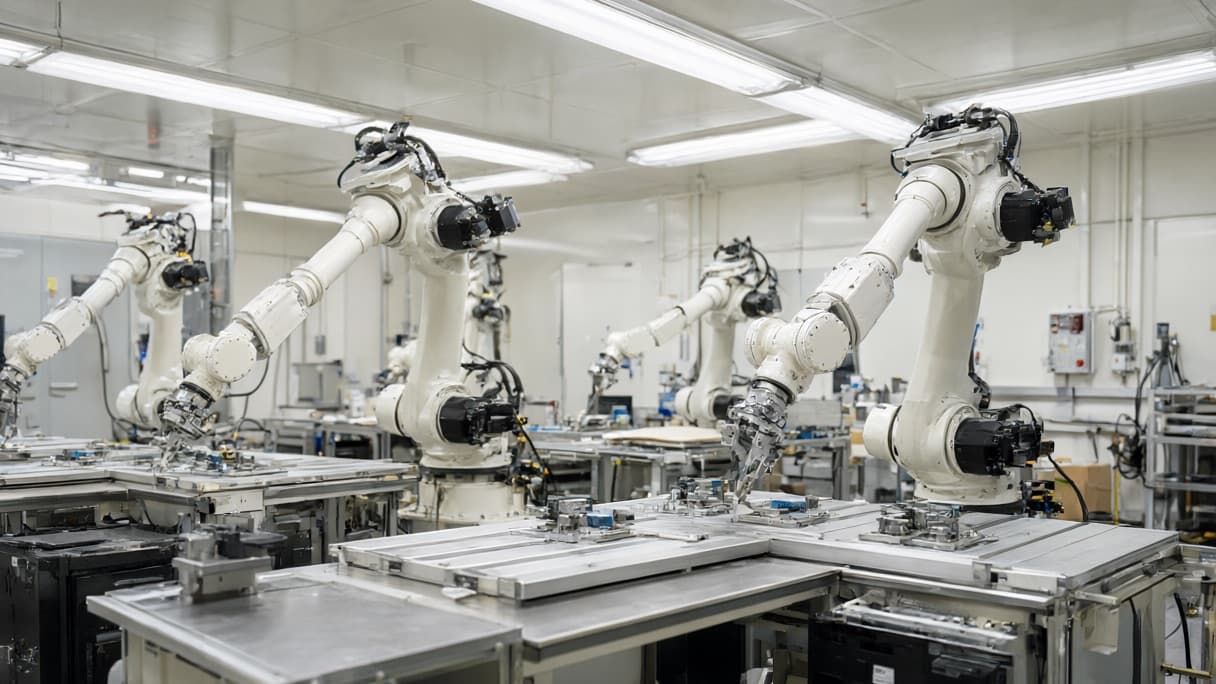
AI-generated image · US National Wire
Opinion: By disbanding its specialized robotics unit, OpenAI is signaling a shift away from vertical hardware integration toward a licensing-heavy strategy powered by general-purpose intelligence.
OpenAI's recent decision to disband its stand-alone robotics team is not a retreat from the field, but a strategic pivot in how the company intends to capture the robotics market. As Fortune first reported, this reorganization signals that OpenAI is abandoning the pursuit of vertical integration—building both the brain and the body—in favor of becoming the essential licensing layer for the entire industry.
According to reporting from Fortune, OpenAI has reassigned its robotics researchers to the main research team under Chief Research Officer Mark Chen, while moving applied robotics and hardware teams into the Applied organization led by President Greg Brockman. This move follows a pattern of consolidation. As Fortune reports, CEO Sam Altman previously urged the company to abandon "side quests" to focus on core products and curb heavy operating losses, which reportedly hit $10.9 billion during the most recent quarter. With a potential IPO targeted for early 2027, the company cannot afford the capital-intensive burden of specialized hardware development.
Instead, OpenAI is betting that robotics is "no longer a special problem," a sentiment echoed by Guanya Shi, an assistant professor at Carnegie Mellon University’s Robotics Institute, in Fortune's reporting. The company's internal logic, as shared with Fortune, is that general-purpose frontier models—specifically GPT-6 Astra—can be applied directly to robotics. This effectively renders specialized robotics AI models redundant. The data supports this shift: Fortune notes an Nvidia study where an Astra-powered agent achieved a 74.8% success rate on a simulated manipulation benchmark, significantly outpacing the 51.0% success rate of the best specialized robotic models.
By integrating robotics into its general AI research, OpenAI is positioning itself to be the "digital brain" for any hardware manufacturer. This is a far more scalable business model than building a proprietary humanoid robot—a project Altman previously targeted for a 2027 demonstration. Rather than competing with hardware startups on the factory floor, OpenAI can license its general-purpose intelligence to them.
This strategy directly challenges the valuation premises of many robotics startups that have raised billions on the belief that robots require specialized "brains." While Russ Tedrake, CEO of Walden Robotics and an MIT professor, told Fortune that hardware companies maintain an edge through real-world deployment data, that data actually becomes more valuable when paired with a powerful foundational model.
OpenAI is essentially applying the same logic to robotics that it has to coding, legal, and financial tools: build one massive, general-purpose engine and let the downstream applications handle the specifics. By shifting the robotics burden to the Applied organization and the main research team, OpenAI is optimizing for margins and scalability over the prestige of owning the hardware. In the race to AGI, the most profitable position isn't owning the robot; it's owning the intelligence that makes the robot work.