
Legato’s AI Glasses: Clinical Breakthrough or Just Another Wearable?

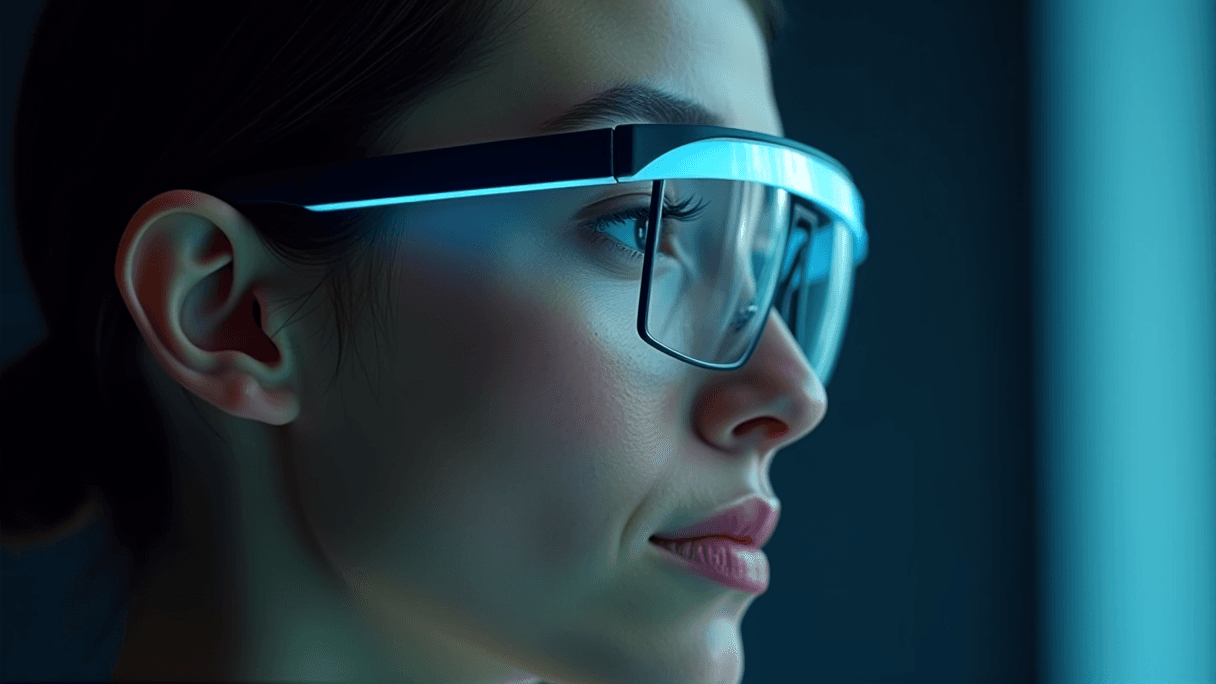
AI-generated image · US National Wire
Opinion: While Legato promises to disrupt hearing care with AI-powered eyewear, the startup must prove its frames offer genuine clinical efficacy rather than just a discreet consumer gadget.
Legato is entering the market with a bold premise: that hearing assistance should be as ubiquitous and effortless as wearing a pair of prescription glasses. Emerging from stealth with $12 million in funding from Neotribe Ventures, Listen, and Village Global, the startup is betting that the intersection of smart eyewear and AI can solve the accessibility gap for the estimated 50 million adults in the U.S. suffering from hearing loss.
On paper, the pedigree is impressive. Co-founders Mehul Trivedi and Steve Romine are veterans of the field. Trivedi previously led the creation of Bose Frames and spearheaded smart eyewear efforts at EssilorLuxottica, including work on Meta Ray-Bans. Romine, meanwhile, ran the hearing aids division at Bose and served as COO of Audicus. Together, they have developed the Legato Frames, which integrate a proprietary acoustic system and signal-processing stack into the arms of standard-looking eyewear.
As reported by TechCrunch, Legato is targeting the mild to moderate hearing loss segment—the largest portion of the affected population—by addressing the cost, stigma, and comfort issues associated with traditional hearing aids. The company claims its AI-powered system differentiates between background noise and voices to amplify the latter, avoiding the "cognitively draining" experience often linked to directional microphones used in traditional devices.
However, as a health tech observer, I find the "discreet gadget" angle concerning. Legato’s pitch leans heavily on the aesthetic and the effortless: a product with "no controls that you need to fiddle with" that looks like regular glasses. While reducing stigma is a noble goal, there is a precarious line between a medical-grade assistive device and a piece of expensive consumer electronics.
To truly disrupt the industry, Legato must provide evidence that its AI-driven approach to voice amplification offers superior clinical outcomes compared to established hearing aid form factors. The company notes that better hearing can reduce risks of depression and dementia, yet the current narrative focuses more on the "no-brainer" nature of the eyewear form factor than on rigorous clinical validation.
Furthermore, Legato’s plan to sell through eye-care providers—potentially utilizing vision insurance—is a clever business move to lower the cost barrier. But the shift from a clinical audiology model to an eye-care retail model raises questions about the quality of fitting and long-term hearing health management. If these frames are marketed as a "fraction" of the cost of traditional aids, we must ask what is being sacrificed in terms of precision and personalized care.
The company expects the Legato Frames to hit the market later this fall. Whether they represent a genuine leap in hearing health or simply a well-designed wearable depends on whether the company can prove that its AI does more than just filter noise—it must prove it actually improves lives in a way that traditional, clinically-backed hearing aids cannot. Until then, it remains a polished piece of hardware in search of clinical proof.