
Google’s New Health Guardian: Proactive Monitoring or High-End Guesswork?

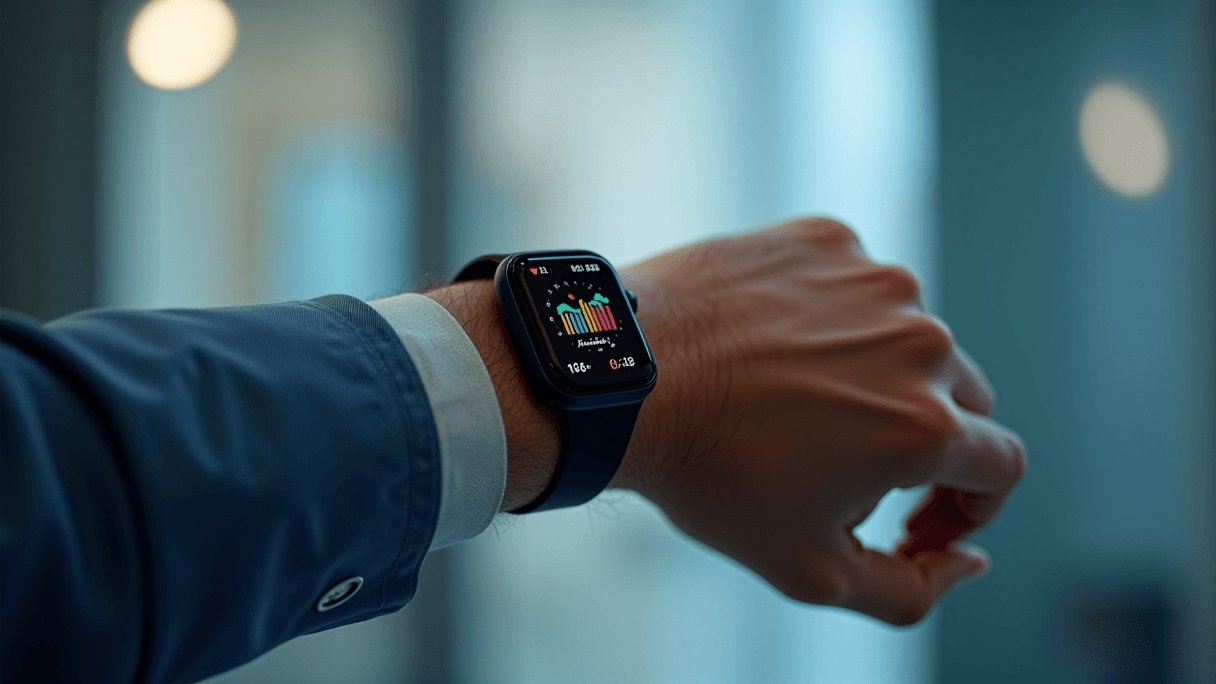
AI-generated image · US National Wire
The Pixel Watch 5 introduces breathing emergency detection and metabolic trends, but medical experts warn that cuffless monitoring still lacks clinical validation.
Google is betting heavily on "proactive monitoring" with the launch of the Pixel Watch 5 and its accompanying Health Guardian suite. While the tech is ambitious, the gap between consumer-grade data and clinical validation remains a significant hurdle.
**The New "Health Guardian" Suite** According to Google, the Pixel Watch 5 debuts a set of tools designed to help users stay ahead of health issues. A primary addition is Breathing Emergency Detection, which uses an AI-based algorithm and sensors—including a barometer, accelerometer, and PPG—to detect persistent drops in oxygen saturation. Francis Hoe, a product manager on Google's Pixel Watch team, told Wired that the feature can be triggered by choking, accidents, severe pneumonia, or drug toxicity, and can automatically call emergency services and share the user's location.
However, this feature has not been cleared by the FDA and is currently unavailable in the U.S., launching only in select European Union markets. Google also notes the tool is not intended for those with preexisting respiratory conditions nor designed to treat or diagnose medical conditions.
**Metabolic and Blood Pressure Trends** Beyond emergencies, Google is introducing trends for insulin resistance and blood pressure into the Google Health app. These will be available later this fall for users of the Pixel Watch 5, Watch 4, Watch 3, and Fitbit Air. Sandeep Waraich, Google's senior director of Wearables, told Wired that these capabilities are the result of long-term investments in heart rate accuracy and raw signal quality.
Rishi Chandra, vice president for Google Health, explained that by using opt-in PPG signal data from Fitbit users, Google can identify unique signatures associated with elevated blood pressure and match them to arm cuff predictions.
**The Evidence Gap** Despite Google's confidence, medical authorities remain skeptical of wrist-based diagnostics. Daniel Jones, former president of the American Heart Association (AHA), told Wired that the AHA does not recommend any wrist devices for blood pressure monitoring, noting that arm cuffs remain the gold standard for diagnosis. While the AHA acknowledged that cuffless devices show "great promise," they are not yet a replacement for clinical tools.
Similarly, Barbara Eichorst, vice president of Health Care Programs at the American Diabetes Association, noted in an email to Wired that there are no current recommendations for monitoring insulin resistance trends via consumer wearables. While she noted that such monitoring can be valuable if it supports diabetes management, she emphasized that the critical question is whether the data is "clinically meaningful."
**Opinion: The Vaporware Risk** In my view, Google is leaning too heavily into the "proactive" label without providing the peer-reviewed validation necessary to move these tools from the realm of wellness into healthcare. Until Google provides rigorous evidence that these insulin resistance and blood pressure trends correlate accurately with clinical outcomes, this isn't medical monitoring—it's high-end wellness guesswork.
**Hardware and Integration** On the hardware side, Google reports that the Pixel Watch 5 is powered by a Qualcomm Snapdragon W5 Gen 2 Accelerated processor, featuring 50% more RAM and a 12% CPU boost over previous models. The company also claims its GPS route tracking is now twice as accurate as previous generations, which it asserts outperforms the Garmin Fenix 8 Pro and Apple Watch Ultra 3.