
Google's Motion Assist: A Software Band-Aid for a Hardware Headache

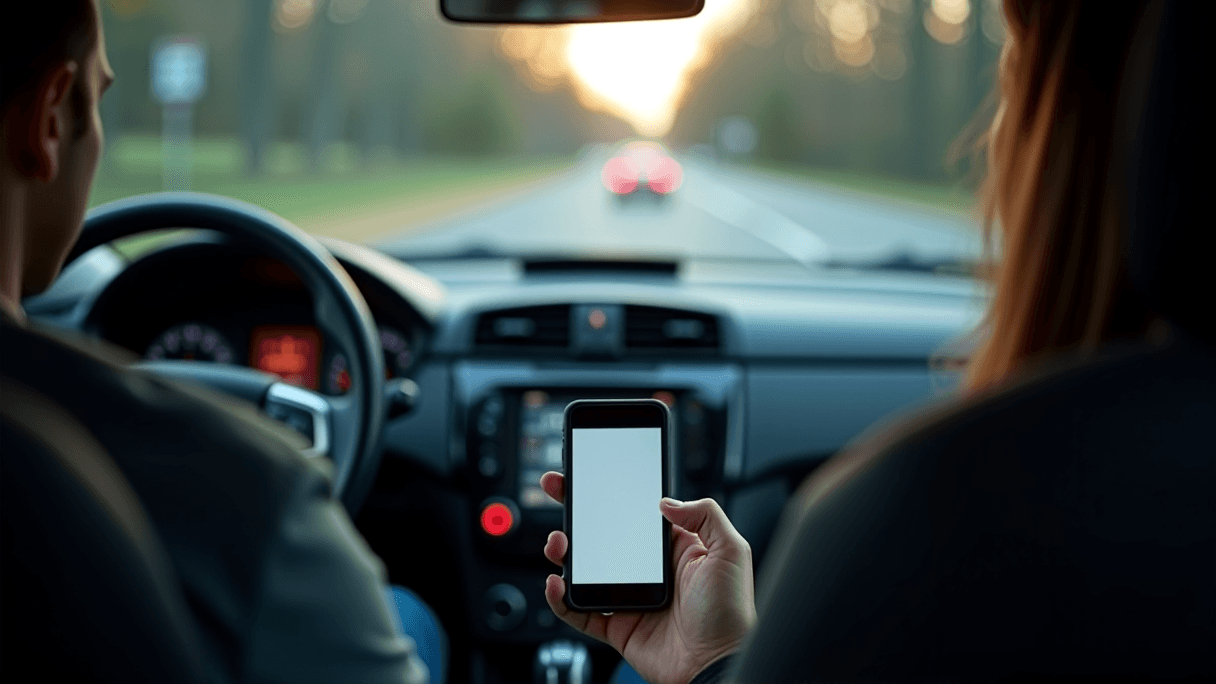
AI-generated image · US National Wire
Android 17 introduces 'magic dots' to fight car sickness, but as a reviewer who trusts hands-on experience over spec sheets, I'm skeptical that a few periphery pixels can solve a biological conflict.
Let's be clear: I don't trust a spec sheet to tell me how a device actually feels in my hand, and I certainly don't trust a software update to cure a biological reaction.
Google is currently rolling out a feature called "Motion Assist" for Android 17, as first reported by The Verge. On paper, it sounds like a desperate attempt to patch a fundamental hardware problem. The premise is simple: you're staring at a static screen while your inner ear is screaming that the car is turning, braking, or accelerating. To bridge this sensory gap, Google is introducing what some might call "magic dots."
According to reporting from The Verge, Motion Assist utilizes the device's gyroscope and accelerometer to place dots around the edges of the display. These dots are designed to move in harmony with the vehicle's motion. Specifically, the dots sweep to the left when the car turns right, and they slide forward if the vehicle brakes.
***
**Opinion: The Software Delusion**
Here is where I step in with a reality check. As someone who spends a lot of time testing gadgets in the real world, I find the idea that a few shifting dots on the periphery of a screen can "eliminate" motion sickness to be highly suspect. We are talking about a software overlay attempting to trick the human vestibular system. To me, this feels less like a breakthrough and more like a desperate software patch for the fact that we've designed these devices to be stared at intently, regardless of whether we're stationary or hurtling down a highway at 70 mph.
I'm betting that for anyone who actually suffers from severe car sickness, these dots will do absolutely nothing. The gap between "static display" and "physical motion" is a canyon that a few colored shapes likely cannot bridge.
***
Google isn't the first to try this. The Verge notes that this feature is very similar to Apple's "Motion Cues," which debuted in 2024. While The Verge's Thomas Ricker claims the tech works for him and his wife during their van-life travels, I remain unconvinced that a UI tweak is the answer to a physiological struggle.
From a technical standpoint, Google is giving users some customization options. According to The Verge, users can adjust the opacity of these motion indicators and select from various colors and shapes. The feature can also be set to trigger automatically when the device detects it is in a moving vehicle, or users can toggle it manually via a Quick Settings tile.
As for the rollout, Android Authority reports that the feature is arriving in phases, with some Google Pixel phones receiving the update first. If you're looking for it, The Verge reports it can be found in Google Settings under "Your Profile" and "All Services," though it may not be available on all devices yet.
Ultimately, Motion Assist is a curious addition to Android 17. But until I can put a Pixel in my hand and feel the nausea vanish—which I highly doubt will happen—it remains a software curiosity rather than a cure.