
GM's 'New Experience' is a Trojan Horse for Proprietary Control

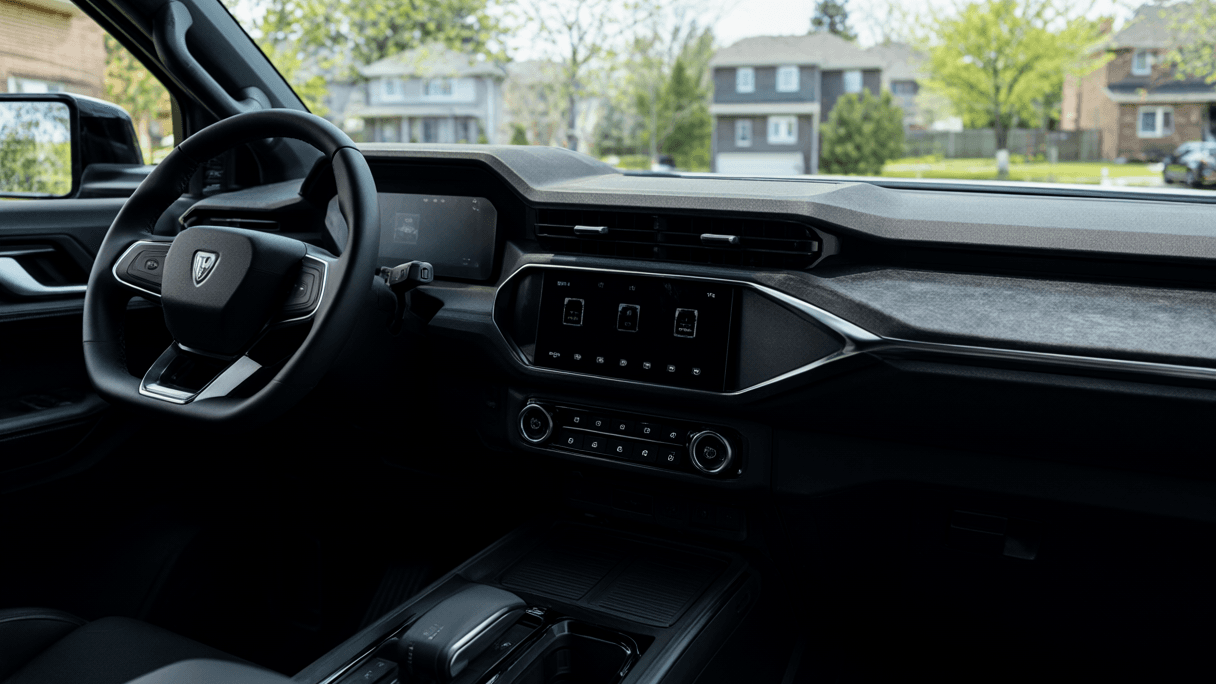
AI-generated image · US National Wire
By attempting to blur the line between phone mirroring and native software, GM is trying to steer users away from open standards and into a closed ecosystem.
Let's be clear: GM is trying to sell us a 'new experience' that is actually a calculated move to erode the open standards we rely on. As The Verge first reported, the automaker recently unveiled a software interface for the GMC Sierra and Chevy Silverado trucks that introduces picture-in-picture upgrades for Apple CarPlay and Android Auto. While some outlets, including Yahoo Finance and Apple Insider, characterized this as an "about-face" or a sign that GM "cave[d]" on its previous stances, the reality is far more insidious.
For three years, GM has aggressively purged phone mirroring from its electric vehicle lineup. As reported by The Verge, this means no CarPlay or Android Auto in the Chevy Bolt, Blazer, Equinox, and Silverado EVs, as well as the GMC Hummer SUV and Truck EVs, and the Cadillac Optiq, Lyriq, Vistiq, and Escalade IQ. In their place, GM has installed Google software products, including Gemini and Maps, built on Android Automotive (often referred to as Google Automotive Services or GAS).
Now, GM is attempting to rebrand this shift as a seamless integration. Colin McCormick, GM's group product manager for projection, profiles, and Google built-in, told The Verge that GM's goal is to eliminate the need for customers to choose between projection and a native system. According to McCormick, GM wants to reach a "sweet spot" where these are not "two competing systems."
But make no mistake: this is not about customer convenience. It is about control. By attempting to merge the familiar, dependable interface of phone mirroring with its own native OS, GM is laying the groundwork to eventually kill the mirroring systems entirely. We have already seen the playbook. In October 2025, GM CEO Mary Barra defended the ban on CarPlay in EVs during an appearance on Decoder and suggested this policy would eventually extend to gasoline-powered vehicles. While GM later clarified to various outlets that CarPlay and Android Auto would remain in gas-powered vehicles "for the foreseeable future," the intent is clear.
Consumers prefer phone mirroring because it is familiar and generally more reliable than the "trash" native software found in most modern vehicles. Even industry leaders like Tesla and Rivian struggle with basic native functions like messaging and profile logins. GM knows that users hate native systems, so they are attempting to wrap their proprietary ecosystem in the skin of a "new UI design" to make the transition less painful.
GM isn't learning to co-exist with open standards; it is attempting to absorb them. By convincing users that the native system and phone projection are one and the same, they can eventually flip the switch and lock us into a proprietary environment where the automaker—not the user—controls the experience.