
Fusion's New Deal: Equity for Awards

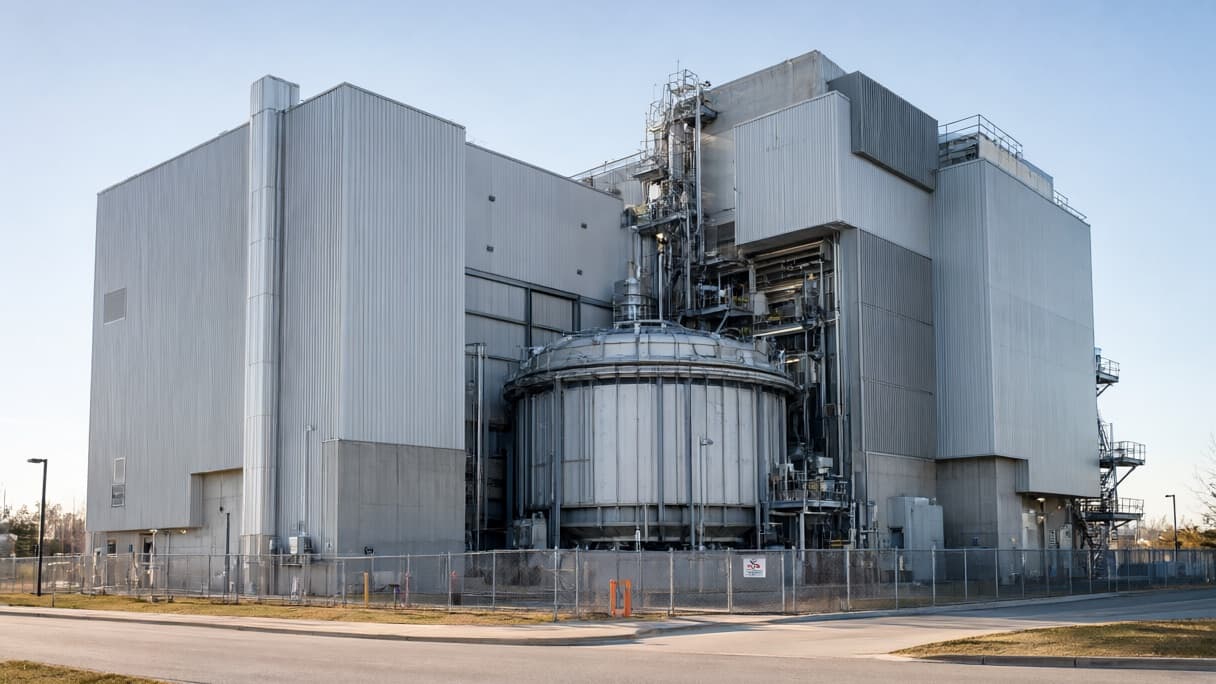
AI-generated image · US National Wire
As the U.S. government trades cash for shares in fusion startups, the line between strategic innovation and state-backed bailouts blurs.
Q: What is the latest development regarding U.S. government funding for fusion energy startups?
A: As TechCrunch first reported, the Department of Commerce has awarded a total of $260 million to two companies—Helion and Commonwealth Fusion Systems (CFS)—under the 2022 CHIPS and Science Act. These funds are designated for the development of advanced semiconductors to control and power their reactors. Helion received $175 million, while CFS was awarded $85 million.
Q: Why is this specific funding round different from previous government support?
A: Historically, government support consisted of nondilutive capital, which increased a company's cash reserves without reducing the ownership percentages of existing investors. However, TechCrunch reports that the Trump administration has pushed to change this. In this instance, Helion and CFS have agreed to give the U.S. government nonvoting shares in exchange for the awards.
Q: How significant are these awards relative to the total capital these companies have raised?
A: In the grand scheme of their balance sheets, the awards are relatively small. TechCrunch notes that CFS has raised approximately $4 billion, and Helion has nearly $3.2 billion in total committed funding. The broader private sector has bet more than $14 billion on the industry's ability to bring power plants to the grid.
Q: What are the specific equity stakes involved in these deals?
A: For Helion, the government will receive nonvoting equity valued at $175 million based on a Series G round that valued the company at $15.5 billion, resulting in a stake of roughly 1%. While CFS confirmed the government's stake will also be nonvoting and based on its most recent valuation, TechCrunch reports that CFS has not shared that valuation publicly, leaving the exact size of the government's stake unknown.
Q: Is this equity-for-funding model unique to the fusion sector?
A: No. TechCrunch highlights several other examples of the government taking stakes in exchange for capital. MP Materials gave the government a 15% stake for a $400 million investment and a $150 million loan. USA Rare Earth gave up a 10% stake for a $277 million award and a $1.3 billion loan. Additionally, the Trump administration converted $8.9 billion in previously awarded funds into a roughly 10% stake in Intel.
Q: How do the companies and industry groups justify this shift?
A: A spokesperson for CFS told TechCrunch that the equity stake allows taxpayers to share in the "upside" of commercial success while funding R&D to compete with China. David Kirtley, CEO and co-founder of Helion, stated that the structure aligns the interests of the company with the U.S. taxpayer. Meanwhile, the Fusion Industry Association—a trade group CFS belongs to—had previously called for a $10 billion infusion (with $5.4 billion for startups) to accelerate the industry, though a person familiar with the matter told TechCrunch that the group's lobbying did not include discussions about equity stakes.
Q: Are all fusion companies following this equity-sharing model?
A: Not necessarily. TechCrunch reports that Pacific Fusion, Avalanche Energy, and Thea Energy have all received federal contracts, awards, or partnered with federal labs without giving up equity. Internationally, however, the trend exists; Proxima Fusion confirmed to TechCrunch that the European Union and the German government are on its cap table, and it has received investments from government-backed funds such as DCTF (Deutsche Climate Tech Fonds) and SPRIND.