
WindBorne's Air Force Win: A Strategic Pivot Toward Defense Intelligence

AI-generated image · US National Wire
A non-competitive $49 million contract provides the Redwood City startup with the capital and validation to evolve from a weather data provider into a scalable defense asset.
From a deals perspective, the recent contract awarded to WindBorne Systems by the U.S. Air Force, as TechCrunch first reported, represents more than just a revenue boost; it is a fundamental shift in the company's valuation trajectory. By securing a deal worth up to $49 million, WindBorne is transitioning from a niche provider of atmospheric data into a critical intelligence asset for the U.S. government.
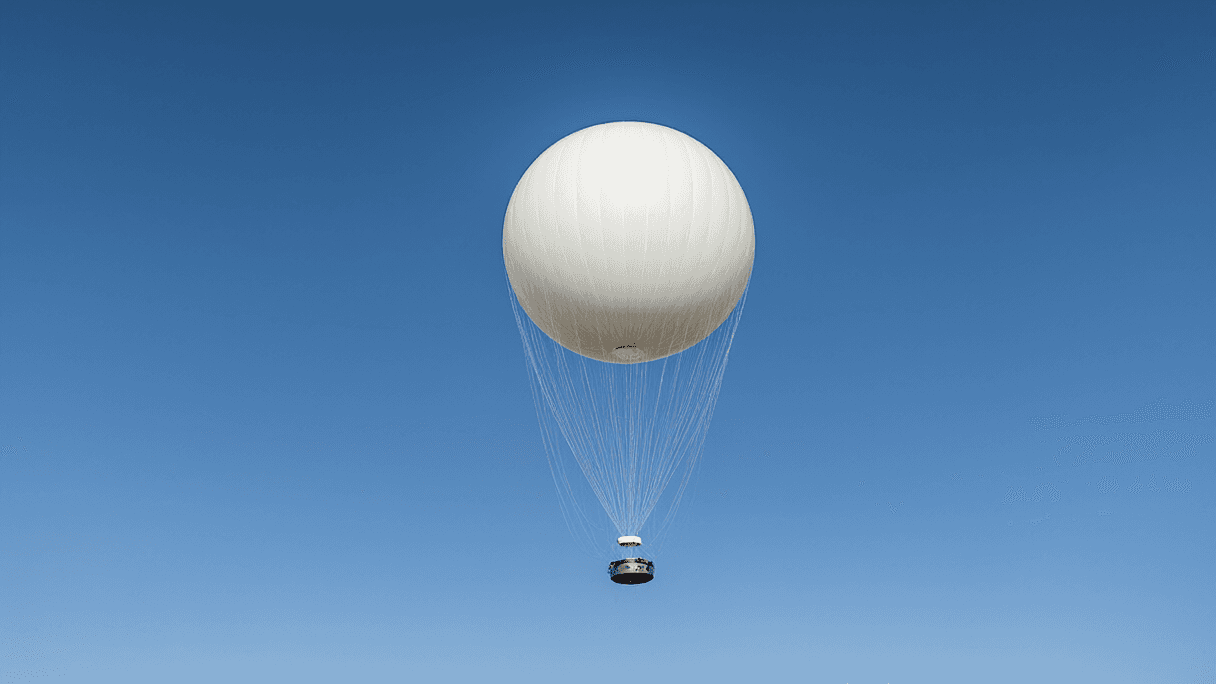
According to reporting from TechCrunch, the contract allows the Air Force to purchase data collected by WindBorne's fleet of approximately 700 autonomous weather balloons. The agreement is structured as a flexible vehicle: the Air Force pays as needed, placing orders for specific regions and times. While the total ceiling is $49 million, TechCrunch reports that the Air Force has ordered $1.7 million to date, with executives expecting further orders.
Two factors make this deal a significant catalyst for WindBorne's scalability. First, the contract was awarded without competitive bidding. WindBorne co-founder and CTO Andrey Sushko told TechCrunch that this was a government determination that WindBorne was the only company capable of providing global data collection that met the specific operational needs of the Air Force.
Second, the contract supports the expansion of the company's hardware constellation and ongoing research and development. This allows WindBorne to refine its unique navigation system—which steers unpowered balloons by adjusting altitude, bleeding air, or dropping sand ballast—and integrate it with its proprietary AI. The company recently released WeatherMesh 6, a forecasting model that WindBorne claims is more accurate than the physics-based simulations used by the European Centre for Medium-Range Weather Forecasts (ECMWF).
In my view, this positioning makes WindBorne a prime target for acquisition by a major defense contractor. The company has already demonstrated a high-stakes operational capability; in August, it became the first organization to use an unpowered flight system to collect data inside the eye of a typhoon. As Sushko noted to TechCrunch, this was one of the first instances where a deep-learning model drove actual operational decisions.
With a $37 million Series B round already in the bank, as confirmed by CEO John Dean to TechCrunch in August, WindBorne has the venture backing to scale. However, the Air Force contract provides the institutional validation necessary to move beyond the startup phase. By proving it can deliver empirical data into deep-learning models for military application, WindBorne is no longer just a weather company—it is a scalable intelligence platform.