
Toyota’s Scion Revival: A Low-Cap Hedge Against Legacy Stagnation

AI-generated image · US National Wire
By repurposing a defunct brand as a 'mobility incubator,' Toyota is shifting toward high-iteration, niche utility experiments to test American market appetites.
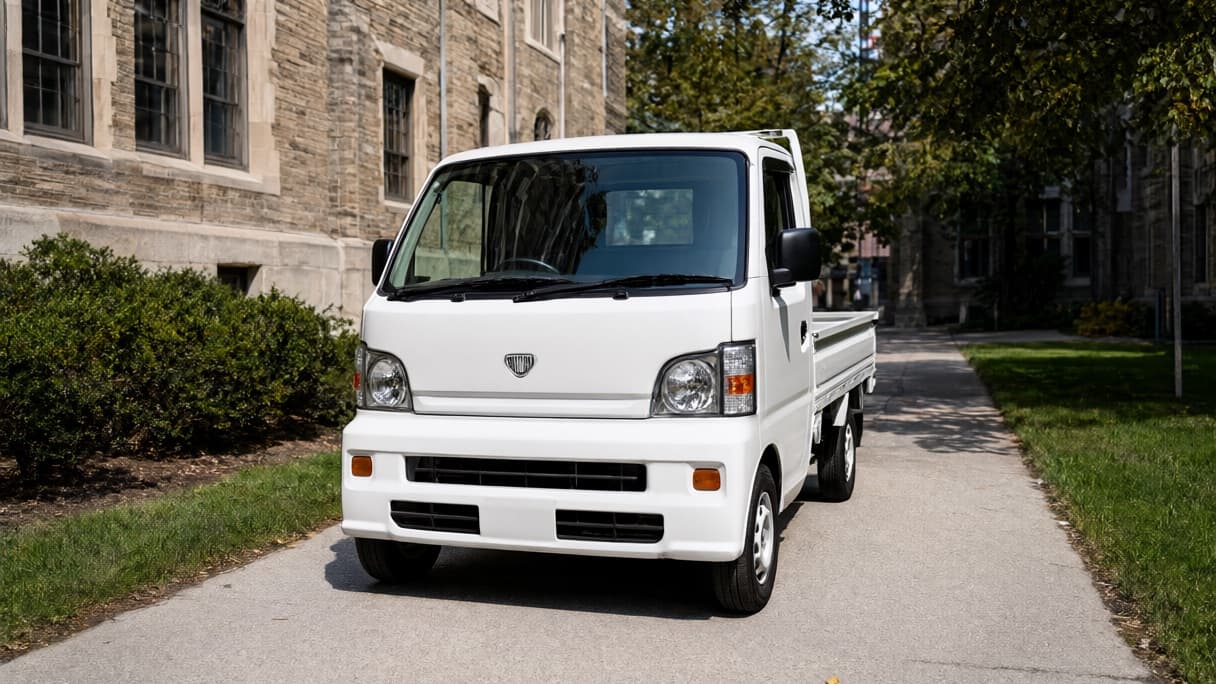
Toyota is reviving the Scion badge, but the strategic objective has shifted from youth-market volume to experimental agility. As first reported by The Verge, the automaker is positioning "Scion by Toyota" as a mobility incubator designed to test utility, customization, and outdoor adventure concepts that do not align with Toyota's core model lineup.
This pivot is evidenced by the brand's first offering: the KEI-01. Described by The Verge as an authentic Japanese-style kei truck, the vehicle is engineered for American fleets rather than the general consumer retail market. The KEI-01 is a low-speed vehicle (LSV) capped at 25 mph, featuring a 660cc three-cylinder gas engine and a continuously variable transmission. Its design prioritizes a minimal footprint—roughly 11 feet long and under 5 feet wide—allowing it to operate in narrow spaces like campus pathways and barn aisles.
From a capital expenditure lens, the venture is relatively low-risk. The Verge reports that Toyota is investing $34 million into its Princeton, Indiana, manufacturing plant to establish local assembly, a move expected to add approximately 50 jobs.
Opinion: This approach signals a move toward a high-iteration venture model. By utilizing the Scion brand as a sandbox, Toyota can hedge against the stagnation of legacy automotive segments. The KEI-01 is not a mass-market retail product; it is a fleet-focused pilot program targeting municipalities, farms, corporate campuses, and delivery operators, distributed via a specialized group of Toyota dealerships.
The broader strategy extends beyond the KEI-01. The Verge notes that Toyota has introduced two additional concepts: the BKE Concept for modular personal mobility, and the SxS Concept, a high-speed off-roading vehicle with a hybrid turbo setup exceeding 300 horsepower. The KEI-01 is scheduled for production in the second half of 2027.