
The 'Untenable' Manager: Why Premier League Firings Defy the Data

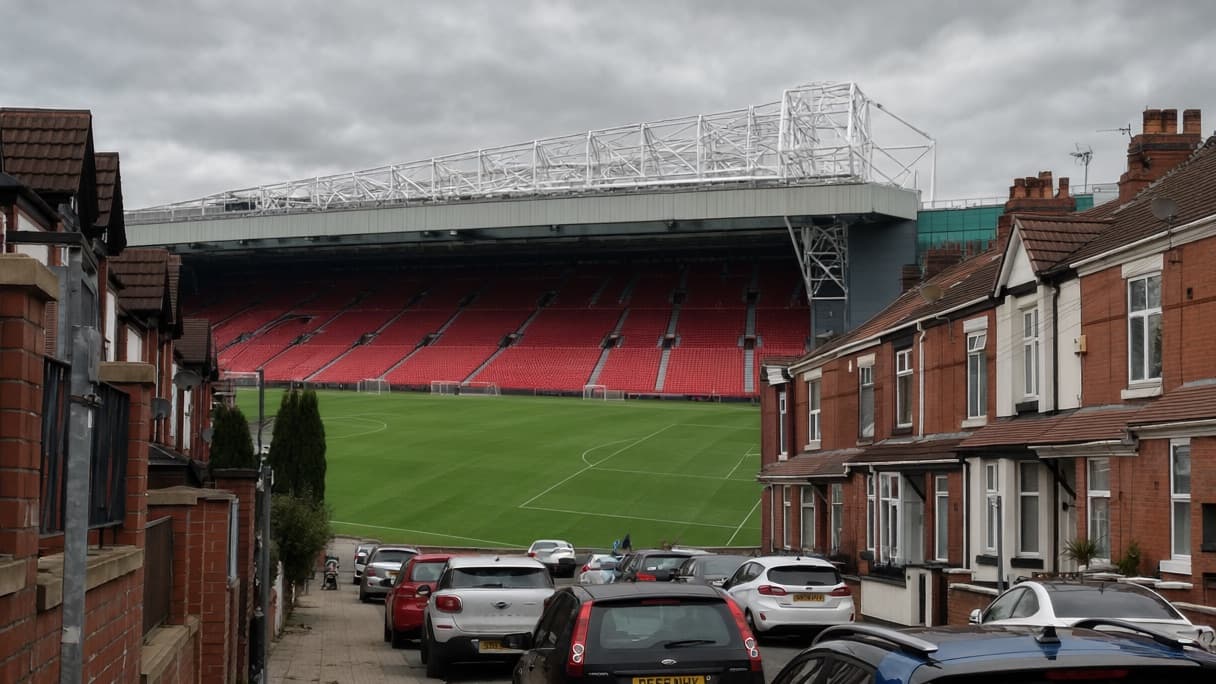
AI-generated image · US National Wire
As Manchester United faces a potential split from Michael Carrick, the league's pattern of sacking managers suggests a reliance on 'vibes' over performance metrics.
The prevailing narrative surrounding the dismissal of Premier League managers often centers on the idea that a position has become "untenable." However, as The Guardian first reported, the actual formula for these decisions is frequently an unscientific mixture of results, available alternatives, and the need for a scapegoat rather than a logical application of analytics.
This tension is currently evident at Manchester United. Manager Michael Carrick is under significant pressure as the club experiences its first dip into the relegation zone since 1986. Despite this, The Guardian notes a broad consensus that the club's failures are systemic and structural, effectively absolving Carrick of personal blame. Yet, the discourse has shifted; the same poise and skill set that saw Carrick succeed as a caretaker manager are now viewed as deficiencies, with critics claiming he is overwhelmed by the schedule or outsmarted by opposing managers.
Data suggests that the threshold for firing is inconsistent. The Guardian highlights a social media graphic indicating that Carrick has actually performed slightly better in his first 27 league matches than Mikel Arteta did during his early tenure at Arsenal. While Arteta faced calls for replacement after a 5-0 loss to Manchester City in the 2021-22 season and further pressure in late 2024 and early 2026, he was granted the leeway to evolve. In contrast, modern managers are rarely afforded the time to learn from mistakes—a luxury granted to Sir Alex Ferguson, who survived a poor 1988-89 season and nearly faced sacking in January 1990 before his eventual success.
This volatility extends across the league. The Guardian identifies several managers currently in precarious positions: Crystal Palace's Pierre Sage, who is described as sacked but not yet sacked; Newcastle's Matthias Jaissle; and Manchester City's Enzo Maresca, who is no longer viewed as the ideal successor to Pep Guardiola. Others, such as newly promoted Sunderland's Régis Le Bris, Tottenham's Roberto De Zerbi, Bournemouth's Marco Rose, and Fulham's Álvaro Arbeloa, remain safe for now, though their status can shift rapidly based on a single result.
Ultimately, the process of hiring and firing often mirrors a cycle of contradictions. Ruben Amorim, Carrick's predecessor, was hired for his dogmatic approach, only to be fired because that same dogmatism was deemed too time-consuming to implement. This suggests that the "deep deliberation" projected by clubs is often a veneer for guesses and gambles.