
The Turf War: NFL's Corporate Fairy Tale vs. Player Reality

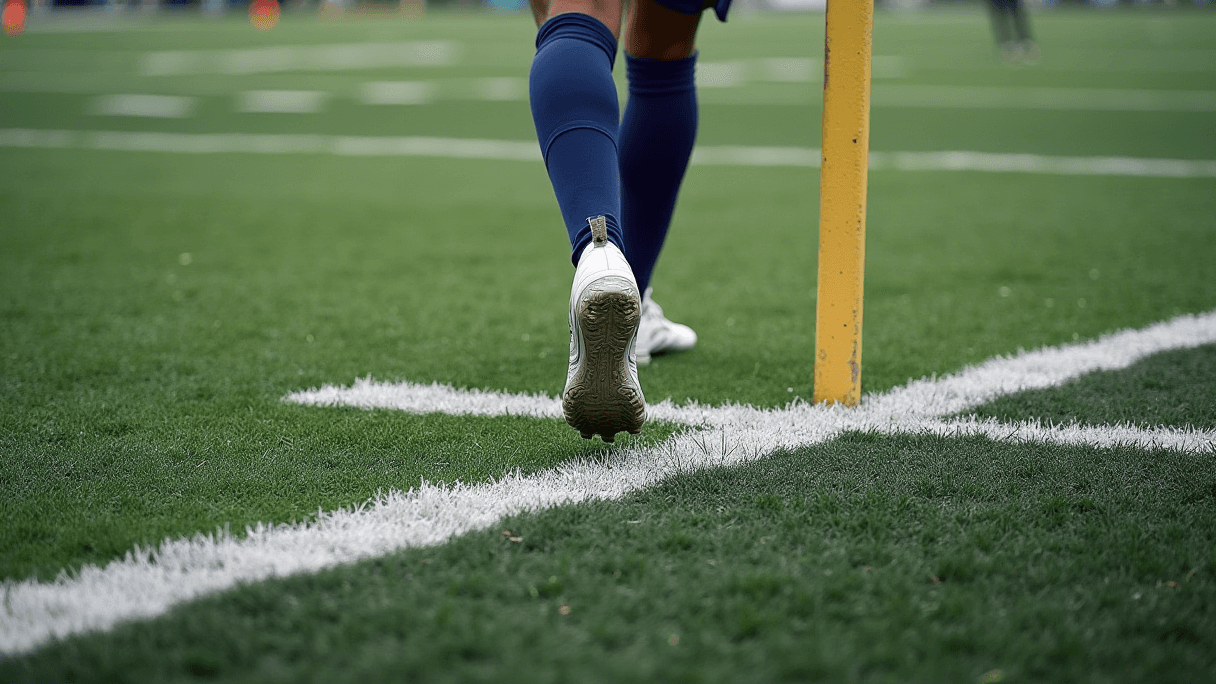
AI-generated image · US National Wire
The league claims injury data is a wash, but the NFLPA and players point to a history of higher non-contact injuries and a desperate need for natural grass.
OPINION: The NFL's insistence that artificial turf is just as safe as natural grass is a corporate fairy tale. It is a narrative designed to protect the bottom line while ignoring the screams of the players' joints and the grim reality of the training room.
According to reporting from CBS Sports, the battle lines are drawn. On one side, the NFL Players Association (NFLPA) is leading a movement to push the league toward full adoption of natural grass. The catalyst for this renewed push is the 2026 FIFA World Cup, which saw several NFL stadiums swap turf for grass, proving to the athletes that the transition is feasible. San Francisco 49ers tight end George Kittle estimated this summer that 90% of players prefer grass, suggesting the league could make the switch if team owners actually cared.
Some owners are already proving it can be done. Las Vegas Raiders owner Mark Davis told the Las Vegas Review-Journal that he viewed natural grass as the only option when moving his team from Oakland, noting that safety was his primary driver. Davis demonstrated that league-approved grass can be maintained even in a desert indoor stadium, a feat the Arizona Cardinals have achieved for two decades using a retractable field tray.
The data supports the players' anxiety. CBS Sports reports that NFLPA executive director JC Tretter cited league data from 2012-18 showing a 28% higher rate of non-contact lower extremity injuries on turf. Within that dataset, non-contact knee injuries were 32% higher on turf, while foot and ankle injuries climbed 69%. Players further claim that turf increases force on the legs, leading to greater soreness and longer recovery times.
In response, the NFL is attempting to rewrite the script. NFL field director Nick Pappas told The Dan Patrick Show that the league no longer views this as an injury issue, claiming that when looking at the severity of injuries—such as ACL tears and extended time-loss—the split between grass and turf is negligible. The league has pointed to 2021 and 2025 as years where injury rates were nearly identical.
However, CBS Sports notes that these figures appear cherry-picked. The NFLPA discovered in 2023 that the 2021 dip in turf injuries was an outlier; non-contact injuries occurred at a higher rate on turf in each of the nine preceding years and rebounded immediately after 2021.
The league's reluctance to pivot is rooted in economics. Artificial turf requires less maintenance and allows stadiums to host non-football events more easily and at a lower cost. Rather than converting the remaining 14 or 15 stadiums to grass, Pappas told CBS Sports the league is chasing "innovation" to make turf feel more like grass regarding energy return and surface hardness.
With the current CBA expiring after the 2030 season, this clash between corporate convenience and player health is poised to be a major sticking point in future negotiations.