
The Toy Logic: How the Wii’s Architecture Outlasted the Power Race

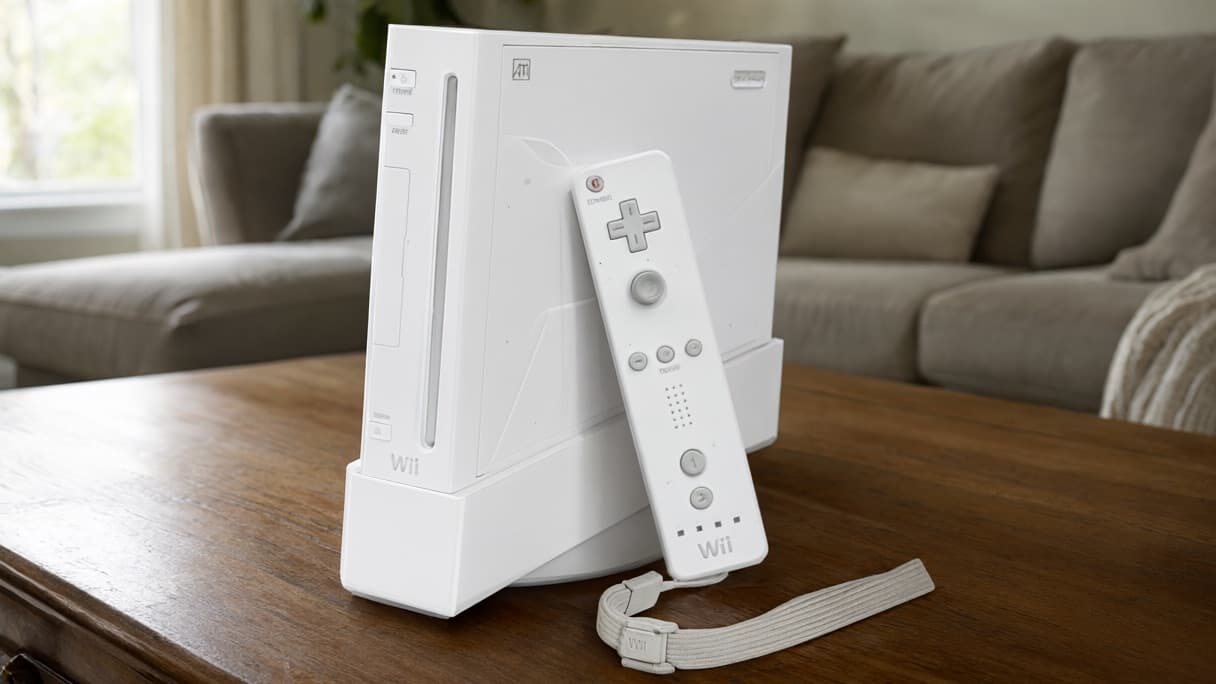
AI-generated image · US National Wire
While competitors chased raw teraflops, Nintendo’s reliance on the ArtX chipset created a durable, flexible foundation that continues to fascinate developers and hackers years after its release.
In the history of the living room console wars, the prevailing narrative usually centers on the 'power' philosophy—the relentless pursuit of higher fidelity and raw processing strength. However, the legacy of the Nintendo Wii suggests a different victory: the 'toy' philosophy. By prioritizing accessible hardware and efficient architecture over cutting-edge specs, Nintendo created a system whose longevity is measured not just in sales, but in its enduring utility to the enthusiast community.
Central to this durability is the Wii's underlying hardware architecture. As Virtually Fun first reported, the Wii utilized the 'Vegas' chipset (and a subsequent revision known as 'Bollywood'), which were direct successors to the 'Flipper' integrated chipset found in the Nintendo GameCube. These chipsets were designed by ArtX, a company later acquired by ATI. This lineage extends further into the Wii U, which utilized the 'Latte' chipset, cementing a consistent architectural thread across three generations of Nintendo hardware.
This architectural consistency is what allows the Wii to transcend its original purpose as a motion-control gaming machine. In a recent technical project detailed by Virtually Fun, a developer known as Rairii demonstrated the surprising flexibility of this hardware by porting classic Mac OS to the Wii. Rairii, who began the project on June 22, 2025, successfully booted Mac OS 7.6 and Mac OS 9.2.2 on the console.
The project highlights the intrinsic compatibility between the Wii's PowerPC-based architecture and the legacy of Apple's computing. Rairii noted that the work involved porting OpenBIOS—leveraging some drivers from a Mac OS X port for the Wii created by a developer named Goldfish64—to establish a 'Trampoline' bootloader. The process required significant patching to address assumptions the original Mac OS made regarding physical address space and memory-mapped I/O (MMIO), but the result proved that the Wii's hardware could support operating systems far removed from its intended gaming environment.
From a business and culture perspective, the Wii's success was rooted in this refusal to engage in the traditional arms race. By utilizing the ArtX-designed chipsets, Nintendo focused on a system that was 'good enough' to deliver its specific vision of interactive entertainment. This approach didn't just lower the barrier to entry for consumers; it created a stable, well-understood hardware target that remains viable for hobbyists today.
// OPINION: The Wii's true genius wasn't the Wii Remote, but the decision to build a console that functioned more like a durable appliance than a fragile piece of bleeding-edge tech. When we look at Rairii's ability to boot a 1990s desktop OS on a 2006 game console, it becomes clear that the 'toy' philosophy is actually the more sustainable engineering path. By not over-extending into the 'power' philosophy, Nintendo built a machine that is easier to reverse-engineer, easier to modify, and ultimately, more immortal.
Technical hurdles remained, as Rairii described the need to develop specific disk drivers for the EXI bus—a term used by Nintendo and Macronix for SPI. This included the 'SD Gecko,' a through adapter for GameCube memory card slots, and an 'EXI-IDE' driver. The project also required navigating the complexities of the Wii U, specifically a component of the Radeon R7xx GPU called 'HDP' used for mapping physical memory.
Despite these challenges, the project underscores a fundamental truth about the Wii: its hardware was robust enough to be repurposed in ways Nintendo never imagined. Rairii explicitly noted that the project was undertaken for fun and learning, eschewing the use of AI or coding agents to ensure the authenticity of the reverse-engineering process.
Ultimately, the Wii's legacy is a testament to the idea that hardware doesn't need to be the most powerful in the room to be the most influential. By sticking to a reliable, integrated architecture, Nintendo created a piece of technology that continues to serve as a canvas for innovation long after the 'power' consoles of its era have been relegated to the scrap heap.