
The Simulation Shift: Why Rivian's Third Dimension Bet Redefines Autonomy

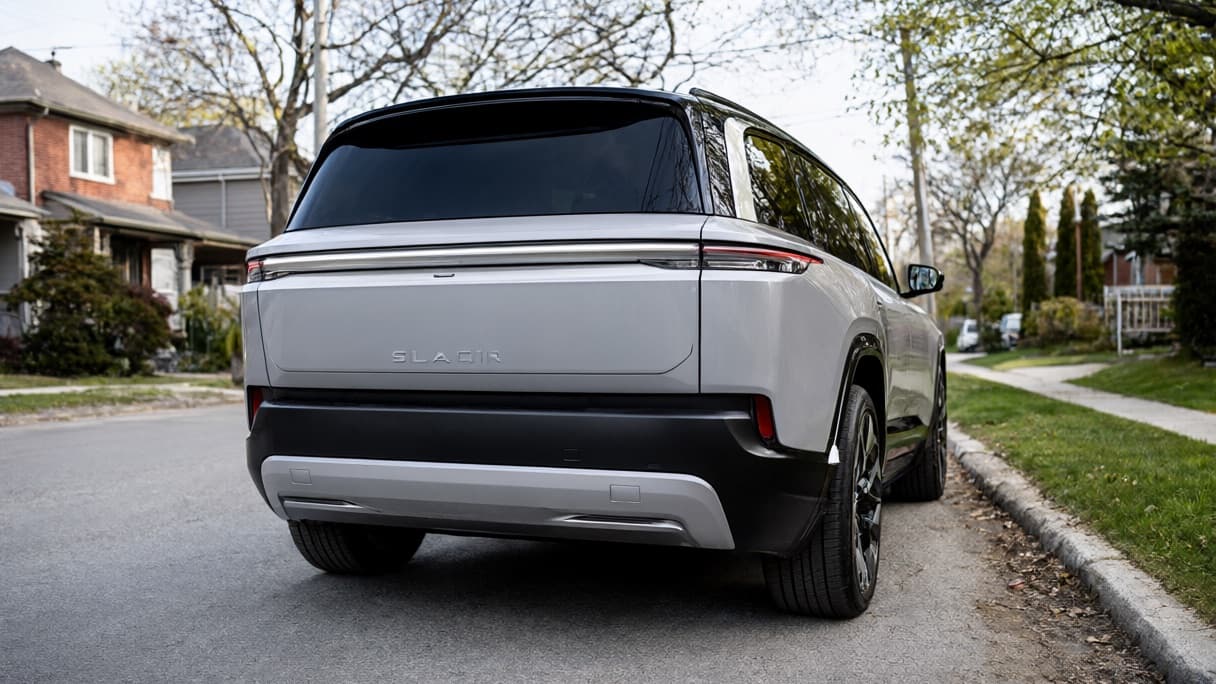
AI-generated image · US National Wire
Opinion: By moving beyond static data to AI-generated 3D worlds, Rivian is signaling a future where the simulation is the primary engine for self-driving intelligence.
For years, the race toward full autonomy has been a war of attrition fought with data. The prevailing logic was simple: feed the machine more real-world footage, and eventually, it will learn to drive. But as Rivian's recent acquisition of Third Dimension suggests, we are hitting the limits of that approach. In my view, this move isn't just about adding a new tool to the kit; it is a fundamental pivot toward the era of synthetic world-models.
As reported by TechCrunch, Rivian has acquired Third Dimension, a startup based in the U.K. which was established in 2024 by Piotr Sokólski and CEO Tolga Kart. The startup specializes in using AI to transform images and videos into lifelike 3D worlds. While the technology was originally designed to accelerate video game development, its application in the automotive sector represents a shift in how AI learns.
Historically, as TechCrunch notes, simulators relied on video game engines and synthetic data. These environments often suffered from a quality gap when compared to the physical world. The industry's response was to simply throw more data at the problem. Rivian is certainly capable of that; James Philbin, who leads Rivian's autonomy and AI team, told TechCrunch that the company receives over 400,000 sequences daily from its fleet of R1S pickup trucks, R1S SUVs, delivery vans, and R2 SUVs (provided owners enable camera sharing).
However, the sheer volume of data is not the victory—the *transformation* of that data is. By integrating Third Dimension’s AI, Rivian can turn those reams of real-world footage into dynamic 3D environments. This allows the company to move away from static training and toward a world-model where the simulation mirrors the physical world's complexity.
This is the critical leap. As Philbin explained to TechCrunch, this technology enables Rivian to simulate complex driving conditions without needing to wait for rare, real-world 'edge cases' to happen organically. When the simulation becomes a high-fidelity mirror of reality, the engine of progress is no longer the number of miles driven, but the number of scenarios imagined and tested in a synthetic space.
Rivian's ambitions here are clear. The company intends to use these 3D worlds to advance its driver-assistance features and develop the self-driving systems for the robotaxis it plans to provide to Uber. By absorbing Third Dimension's 15-person team into its AI division and expanding its London hub, Rivian is positioning itself to outpace competitors who are still relying on traditional rendering engines.
Third Dimension previously raised $7 million in seed funding from firms including Solari Capital, Soma Capital, MVP, and Abstract Ventures. Now, as Tolga Kart told TechCrunch, the team can focus exclusively on the scale of the autonomy problem.
In my opinion, the industry is watching a transition from 'data collection' to 'world generation.' If Rivian can successfully bridge the gap between captured video and a navigable 3D world, the simulation ceases to be a mere testing ground—it becomes the primary engine for intelligence. The future of autonomy won't be won by the company with the most footage, but by the company that can most accurately simulate the world that footage represents.