
The Shadow Supply Chain: What the Nvidia Smuggling Scandal Means for E-Commerce Operators

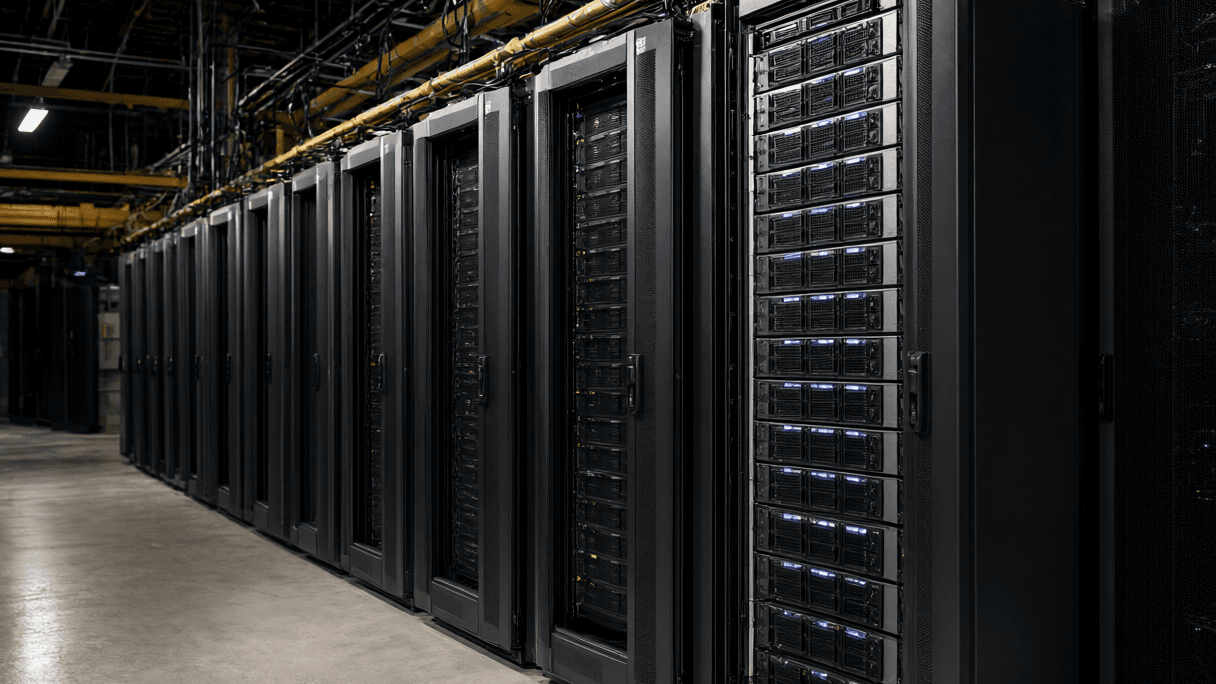
AI-generated image · US National Wire
The arrest of Earthmade Computer CEO Greg Lui reveals a sprawling black market for AI hardware that threatens the stability and legality of the global tech pipeline.
For the modern e-commerce operator, the race to integrate artificial intelligence isn't just a software challenge—it is a hardware war. The ability to scale personalized shopping experiences, optimize logistics, and deploy large language models (LLMs) depends entirely on access to high-end compute. However, the recent federal crackdown on a massive chip-smuggling operation reveals just how fragile and volatile the AI hardware supply chain has become.
### The $300 Million Breach
According to reporting from Ars Technica and The Register, the U.S. Department of Justice (DOJ) has arrested 38-year-old Greg Lui, the CEO of Earthmade Computer, for his alleged role in a sophisticated scheme to smuggle export-controlled Nvidia chips into China. Federal prosecutors allege that between October 2023 and August 2026, Lui orchestrated the diversion of more than $300 million worth of high-end computer servers.
These shipments weren't just random components; they included the heavy hitters of AI training: Nvidia’s A100 and H100 GPUs, as well as PNY GE Force RTX 4090 and GeForce RTX 5090 GPUs, as reported by The Register. While some of these are not Nvidia's most advanced offerings, Ars Technica notes they are capable of processing massive datasets and training the LLMs that drive the current AI revolution.
### A Blueprint for Evasion
From an operational standpoint, the Lui case is a masterclass in supply chain manipulation. The DOJ alleges that Lui utilized a network of freight-forwarding firms in South Asian countries—specifically Malaysia and Singapore—to mask the final destination of the hardware. Because these countries do not require Commerce Department licenses, they served as ideal transit hubs to circumvent U.S. export controls.
Ars Technica details several specific instances of this fraud: * **The Malaysia Pivot:** In 2024, Lui allegedly submitted a purchase order to a U.S. manufacturer for 27 servers valued at approximately $7,614,000, claiming they were destined for Malaysia. A co-conspirator later informed a Malaysian official that all 27 were actually shipped to China. * **The Hong Kong Route:** A shipment of 92 export-controlled servers was allegedly routed from San Francisco International Airport to Kuala Lumpur, and then to Hong Kong, before finally landing at a Chinese firm in Hangzhou—a city The Wall Street Journal has identified as China's AI hub. * **Identity Fraud:** To further deceive officials, Lui allegedly used fraudulent documentation for a shipment of 100 servers (worth over $22 million) by identifying a fake buyer whose CEO was listed as "Jackie Lui." The FBI alleges that in 2021, Lui purchased the identifying documents of another individual to facilitate these transactions.
### The Compliance Blind Spot
While the legal drama focuses on Greg Lui, the broader concern for the industry is the apparent failure of corporate due diligence. Bloomberg, as cited by Ars Technica, conducted an investigation involving dozens of people across five countries, raising questions about Nvidia's "blind spots" regarding export controls.
Nvidia has attempted to minimize the impact of these diversions. A company spokesperson told Bloomberg that the diverted products represent "less than one half of one percent" of Nvidia products and described the diversion as a "drop in the bucket" compared to China's existing domestic compute capacity. However, experts interviewed by Bloomberg suggest the black market is far larger than reported and difficult to measure, potentially powering small data centers and even a few "hyperscalers" in China.
This is not an isolated incident. Ars Technica reports that a senior manager at Nvidia in Taiwan was previously linked to a similar smuggling operation involving former Supermicro staff. While Nvidia CEO Jensen Huang previously urged Supermicro to address its compliance issues, the recurring nature of these leaks suggests a systemic vulnerability in how high-end hardware is tracked once it leaves the factory.
### Why This Matters for Commerce Operators
For those of us managing e-commerce stacks, this isn't just a story about national security or "super intelligence" (SI)—a term used by Assistant Attorney General John A. Eisenberg to describe the era's defining technology. It is a warning about the reliability of the hardware pipeline.
When a significant portion of the world's most powerful AI chips is diverted into a shadow trade, it creates an unstable market. If U.S. officials successfully pressure Nvidia to tighten protocols and flag suspicious shipments—as Bloomberg reports they are doing—legitimate operators may face increased scrutiny, longer lead times, and more rigorous auditing of their own supply chains.
Furthermore, the reliance on a "black market" to fill hardware gaps—which one top executive told Bloomberg China may not address internally until 2030—creates a volatile environment where the availability of compute is dictated by the success of smuggling rings rather than transparent market forces.
### The Legal Stakes
The consequences for those attempting to game the system are severe. Lui is accused of money laundering, federal smuggling, and conspiring to violate both the Export Administration Regulations and the Export Control Reform Act. According to The Register, these charges carry a combined maximum prison sentence of 50 years, with the money laundering and conspiracy counts alone potentially resulting in up to 20 years.
As Roman Rozhavsky, assistant director at the FBI’s Counterintelligence and Espionage Division, explained, maintaining control over the export of this specific technology is vital for the protection of national security. For the business community, the lesson is clear: the "move fast and break things" ethos of the AI gold rush cannot extend to the hardware supply chain without risking catastrophic legal and operational failure.