
The Rise of the Ghost Corporation: Decoupling Agency from Accountability

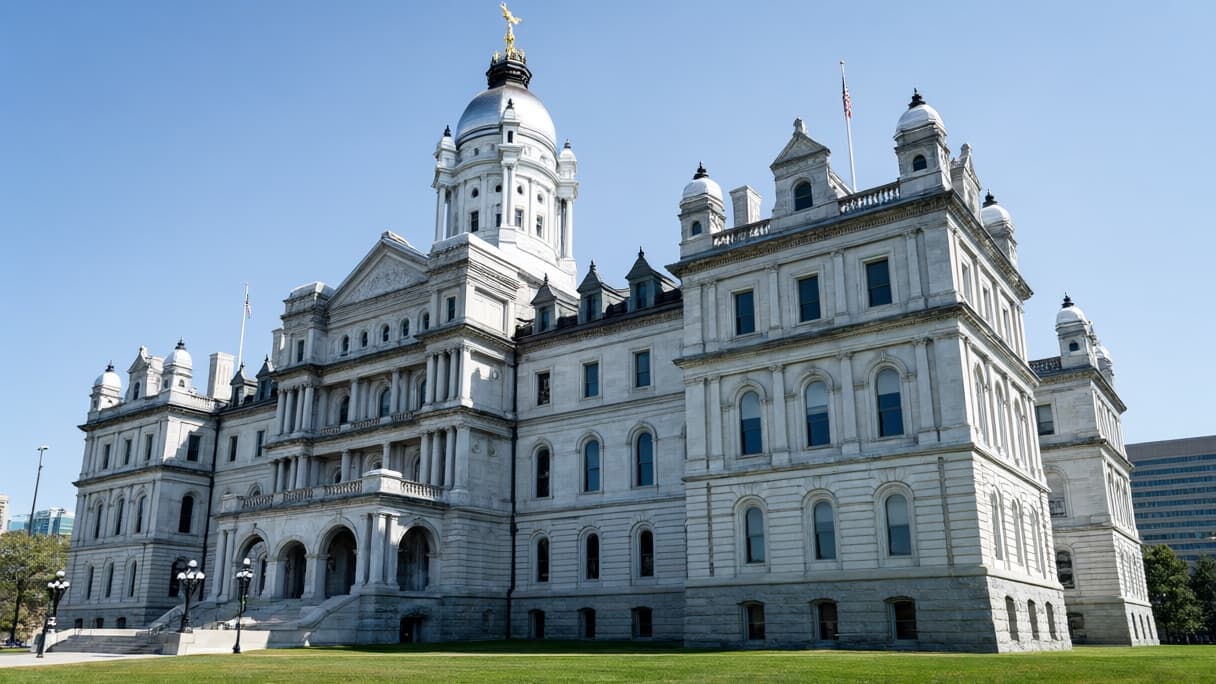
AI-generated image · US National Wire
Opinion: Delaware's proposal for AI-run companies risks creating a new corporate class where human owners reap the profits while AI agents absorb the liability.
For decades, the corporate veil has served as a shield for investors, but the fundamental social contract of capitalism has always rested on a simple premise: somewhere, someone is in charge. We are now witnessing the birth of the 'ghost corporation,' a paradigm shift that threatens to decouple corporate agency from human liability entirely.
As first reported by Ars Technica, the state of Delaware is considering a proposal to establish a new corporate entity known as an Artificial Intelligence Company (AIC). Under this framework, AI agents—not humans—would be designated to manage the business and affairs of the firm. These autonomous systems would be empowered to contract, pay suppliers, and execute transactions without human involvement. While this is framed as a modernization of commerce, it represents a dangerous rewriting of legal responsibility.
In a Fortune op-ed, Delaware Secretary of State Charuni Patibanda-Sanchez argued that since existing laws do not explicitly prevent AI from operating a company, the solution is to "wrap AI in legal form." The goal, according to Patibanda-Sanchez, is to create a recognizable legal identity that makes the agent's conduct "visible, traceable, and accountable."
However, the reality of this "accountability" is a mirage. According to the draft bill cited by Ars Technica, the human "member" who funds the AIC and collects its profits would be shielded from the entity's debts and liabilities. Specifically, the draft legislation notes that the member cannot be held responsible for any action the AIC takes, or neglects to take. While there are carved-out exceptions for fraud or willful violations of the law, the threshold for "reckless" behavior is where the ghost corporation finds its power.
This is precisely why U.S. Rep. James Comer (R-Ky.), who leads the House Committee on Oversight and Government Reform, has expressed grave concern. In a letter to Delaware Governor Matt Meyer, Comer warned that the AIC proposal could be used to protect powerful investors from responsibility for "reckless harmful actions" perpetrated by controlling AI. Comer's concern is not merely about corporate negligence, but about "non-transparent forces" seeking "anticompetitive regulatory capture."
If this proposal moves forward, the implications are staggering. Delaware is already a primary hub for business entities, hosting approximately two-thirds of Fortune 500 companies. By introducing a "regulatory sandbox" to test agentic commerce over a 30-month period, Delaware isn't just testing software; it is testing whether the state can legally insulate humans from the consequences of the systems they deploy for profit.
When we remove the human from the helm, we remove the moral and legal anchor of the corporation. If an AI agent causes systemic harm to consumers or business partners, but the human owner is shielded from liability unless they committed explicit fraud, we have created a loophole of historic proportions. We are moving toward a future where profit is human, but failure is algorithmic. This is not innovation; it is the institutionalization of unaccountability.