
The Red Sea Blueprint: Why Natural Resilience Trumps Lab Hype

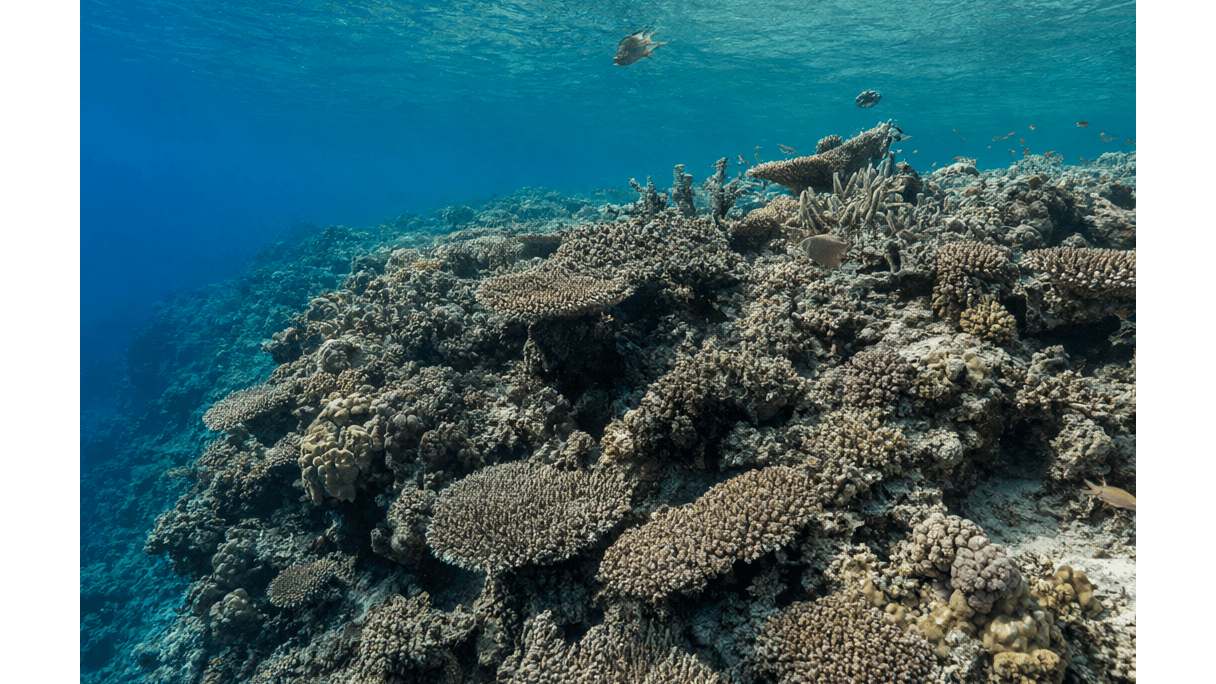
AI-generated image · US National Wire
While the world chases synthetic solutions, the 'super corals' of Egypt offer a real-world lesson in survival—if we can decode the mechanism behind their hardiness.
In the world of climate tech, it is easy to get swept up in the promise of lab-grown interventions. But if we want a scalable blueprint for reef survival, the most valuable data isn't coming from a petri dish; it is coming from the Red Sea.
For years, the northern reefs of Egypt have been viewed as a bastion of resilience. As Wired first reported, Mahmoud Hanafy—a consultant for the Hurghada Environmental Protection and Conservation Association (HEPCA) and professor of marine biology at Suez Canal University—once suggested that these northern reefs might survive as the final remaining corals on Earth. This reputation for hardiness is critical because, as the United Nations Environment Program notes, reefs support at least 25 percent of marine species despite covering less than 1 percent of the seafloor.
However, the 'super coral' status was tested in 2023 and 2024. Reporting from Wired reveals that heat waves finally strained these ecosystems. A 2024 HEPCA survey led by Hanafy found bleaching across the Red Sea; while less than a tenth of colonies in the north were affected, bleaching claimed half the corals further south.
The debate now centers on the *mechanism* of this resilience. This is where the deployment strategy matters. Eslam Osman, who serves as a marine ecologist at King Abdullah University of Science and Technology (KAUST), suggests the explanation lies in evolution. Osman posits that corals entering the Red Sea via the Bab al-Mandab Straight—between Yemen and Djibouti—passed through a natural filter of extreme heat. Only heat-tolerant genotypes survived to spread north.
Conversely, Hanafy suggests the secret isn't biological, but mechanical. He points to water circulation in the northern Red Sea, where changes in current direction create vertical mixing that brings cooler, deep water to the surface. This theory gained weight during the 2024 bleaching event; the sea remained unusually calm for roughly six weeks, and HEPCA's report identifies this weak circulation—coupled with exceptionally low tides in July 2024—as a primary stress factor.
From a pragmatic standpoint, the distinction is everything. If the resilience is biological, we have a genetic goldmine. If it is environmental, we have a management map. Regardless, the Red Sea is already proving its viability: HEPCA's preliminary estimates a year after the bleaching event show recovery rates between 75 and 88 percent, a rebound far stronger than most global reefs.
Scaling this survival requires more than just observation. The Egyptian government is currently designating new protected areas and partnering with the Global Fund for Coral Reefs and the United Nations Development Program. While Osman notes that conservation requires stable, long-term financial resources rather than single-year acts, Hanafy remains clear on the bottom line: local conservation is a stopgap. Without a global reduction in greenhouse gases and carbon dioxide, any other solution is simply buying time.