
The Physical Cost of Virtual Intelligence

AI-generated image · US National Wire
Opinion: As Microsoft clashes with protesters and power grids, the battle for AI infrastructure is moving from the boardroom to the streets.
For years, the expansion of Big Tech has felt like a digital abstraction—a series of cloud updates and software iterations. But as the hunger for AI infrastructure accelerates, the friction between corporate ambition and local reality is no longer a policy debate. It is becoming a physical battlefield.
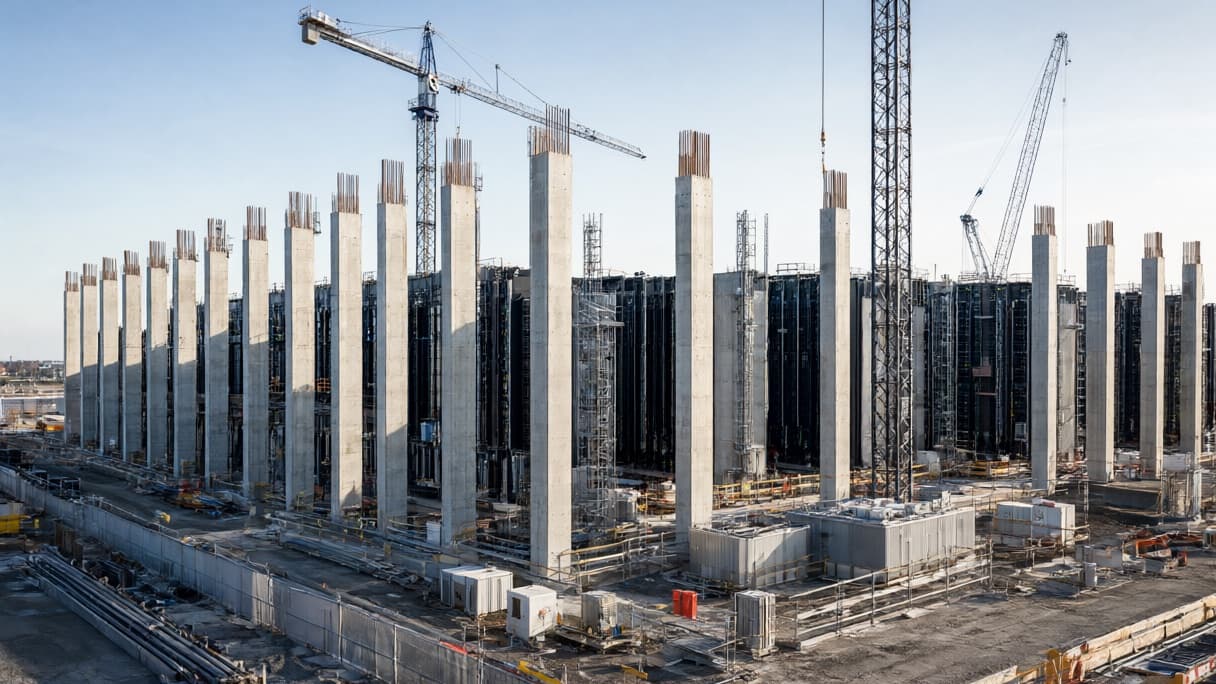
We are seeing this play out in real-time with Microsoft. As The Verge first reported, protesters recently broke into a construction site for a new Microsoft data center in Amsterdam. The scene was visceral: roughly 100 people entered the site, some scaling a crane to hoist a "fuck AI" banner. Organized by the group Geef Tegengas, the protest targeted the construction of three 85-meter towers.
What makes this clash particularly pointed is the sense of defiance. The Verge reports that Amsterdam had banned new data centers until 2030, following a temporary stop announced in late 2023. Yet, this project—developed by British firm Pure Data Centres—is proceeding because it was planned as far back as 2016 and utilized specific loopholes to reach the construction stage. When companies use legal technicalities to bypass community-driven environmental bans, the community stops using the ballot box and starts using the crane.
This isn't an isolated incident of local zoning friction; it is a broader geopolitical and ethical eruption. The Amsterdam protesters didn't just target the environmental footprint; they unfurled banners claiming "Microsoft powers genocide" and chanted "free Palestine." This mirrors a wider trend of activism targeting the company's infrastructure. Just days earlier, activists set up a mock Israeli military checkpoint outside a Microsoft data center in Dublin, according to The Verge.
Even within Microsoft's own walls, the tension is boiling over. The Verge reports that employees have disrupted Satya Nadella’s keynote at the Build developer conference and interrupted the company's 50th anniversary party, where one protester labeled AI CEO Mustafa Suleyman a "war profiteer." The company's response has been swift, including the firing of two employees who occupied the president's office.
Beyond the political protests, there is the hard reality of physics and power. The Verge reports that Microsoft recently abandoned the largest data center project in the UK because local electricity grid officials stated the site could not be supplied with power until the 2030s. Similarly, voters across the US have recently rejected the unrestrained development of data centers due to community impact concerns.
In my view, these events signal a critical inflection point. The tech industry has operated on the assumption that the world's power grids and local governments would simply bend to the needs of the AI revolution. But between the grid failures in the UK and the breached fences in Amsterdam, it is clear that the "cloud" is actually made of concrete, steel, and electricity—and the people living next to those materials are starting to fight back.