
The Noise of the Trade Machine: Why NBA Drama is Masking Soccer's American Ascent

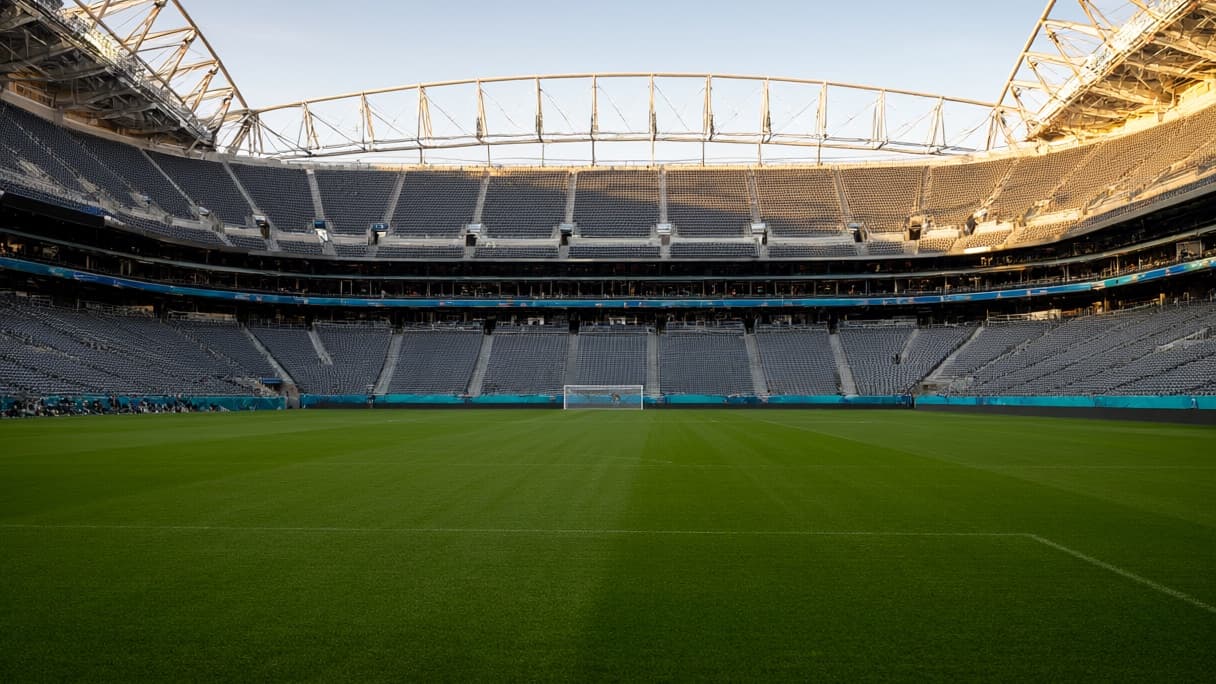
AI-generated image · US National Wire
Opinion: While the sports world obsessively tracks the New Orleans Pelicans' struggle to move Dejounte Murray, a critical vacuum of attention is forming around the growth of soccer in the U.S.
There is a specific kind of vertigo that comes with following the modern American sports landscape. It is a dizzying cycle of trade requests, cap figures, and the endless shuffling of superstar assets. Right now, the sports media machine is humming with a very particular frequency: the New Orleans Pelicans and the looming shadow of Dejounte Murray.
As Sports Illustrated first reported, the Pelicans are currently entangled in a high-stakes game of basketball musical chairs. According to reporting from ESPN's Shams Charania, Murray has requested a trade, leaving agent Rich Paul and New Orleans officials to scramble for a resolution. The drama is palpable. We are treated to a granular autopsy of Murray's value—his $32.8 million cap figure this season, his $30.8 million player option for 2027-28, and the statistical decline that has seen him averaging 13.4 points and four assists over nine games. We are told, via Sports Illustrated, that the Pelicans' net rating plummeted by 10.6 points when Murray was on the court compared to when he was absent during the opening 12 games of the season.
This is the same cycle we have seen for decades. We obsess over the 'organizational sabotage' mentioned in Murray's deleted social media posts. We analyze the failed pairing of Murray and Jeremiah Fears, who posted a minus-11.3 net rating in 148 shared minutes. We question the decision-making of Joe Dumars and the legacy of David Griffin. We treat the trade of a single guard as a tectonic shift in the sporting universe.
But here is the problem: while we are staring into the abyss of the Pelicans' roster construction, we are missing the actual revolution happening right outside the arena doors.
I am talking, of course, about soccer.
For years, the narrative has been that soccer is the 'sleeping giant' of American sports. But the giant isn't sleeping anymore; it is waking up, stretching, and beginning to claim its territory. Yet, the oxygen in the room is still being consumed by the NBA's obsession with individual star power and the constant threat of the trade request.
Consider the contrast. On one hand, you have the New Orleans Pelicans trying to navigate the 'obstacles' of trading a player shooting a mere 29.6 percent from three-point range. On the other, you have a sport that is fundamentally transforming the American athletic identity. Soccer is not about the singular movement of one asset from New Orleans to another city; it is about a systemic explosion of interest, infrastructure, and talent across the entire country.
When the sports world focuses its lens on whether Joe Dumars can 'preserve valuable assets' or avoid 'another burdensome contract' in the wake of the Derik Queen trade, it ignores the broader shift in how Americans are consuming sport. The NBA's current model—one where stars hold the leverage and front offices play a perpetual game of risk management—is captivating, yes. But it is also a closed loop. It is a conversation about the same few dozen players and the same few dozen cities.
Soccer, by contrast, is an open frontier. It is the beautiful game's American moment. It is a sport that doesn't rely on the drama of a 'public breakdown' or a deleted tweet to generate interest. Its growth is organic, driven by a generational shift in preference and a global connectivity that the NBA, for all its international reach, cannot replicate in the same way.
It is a tragedy of attention. We spend hours debating if an acquiring team will assume 'considerable risk' by taking on Murray's contract, yet we barely scratch the surface of the cultural impact soccer is having on the American youth. We are so preoccupied with the 'recovery from a ruptured Achilles' and the 'unsuccessful pairing' of guards in New Orleans that we are missing the forest for the hardwood.
Don't get me wrong: the drama of the NBA is a product. It is designed to be a soap opera. The tension between Murray and the Pelicans' front office is a compelling narrative. But when that narrative becomes the primary lens through which we view American sports, we lose sight of the actual evolution of the game.
If the Pelicans fail to find a 'willing partner' for Murray, or if they are forced to accept 'unwanted money' to move him, the world will keep spinning. The NBA will find another star to shuffle. But the window for soccer to fully integrate into the American sporting consciousness is open right now. Every minute we spend analyzing the 'insufficient return' of a veteran guard is a minute we aren't talking about the rise of the most popular sport on the planet in the most influential sports market on earth.
It is time to stop treating the NBA's trade machine as the only story in town. The Pelicans' struggle to manage Dejounte Murray is a footnote in the larger story of American athletics. The real headline isn't who is being traded in New Orleans—it's that the beautiful game is finally arriving in America, and we're too busy checking the salary cap to notice.