
The Monetization of Glitch: Engram's Bet on 'Curated Chaos'

AI-generated image · US National Wire
While the AI industry spends billions trying to eliminate hallucinations, Thoughtful Things is launching a hardware device that sells them as a premium feature for experimental creators.
In the broader race for generative AI dominance, 'hallucinations' are typically viewed as a failure state—a bug to be patched or a liability to be mitigated. However, as first reported by The Verge, music startup Thoughtful Things is attempting to flip this narrative, positioning AI instability not as a defect, but as a high-value creative tool.
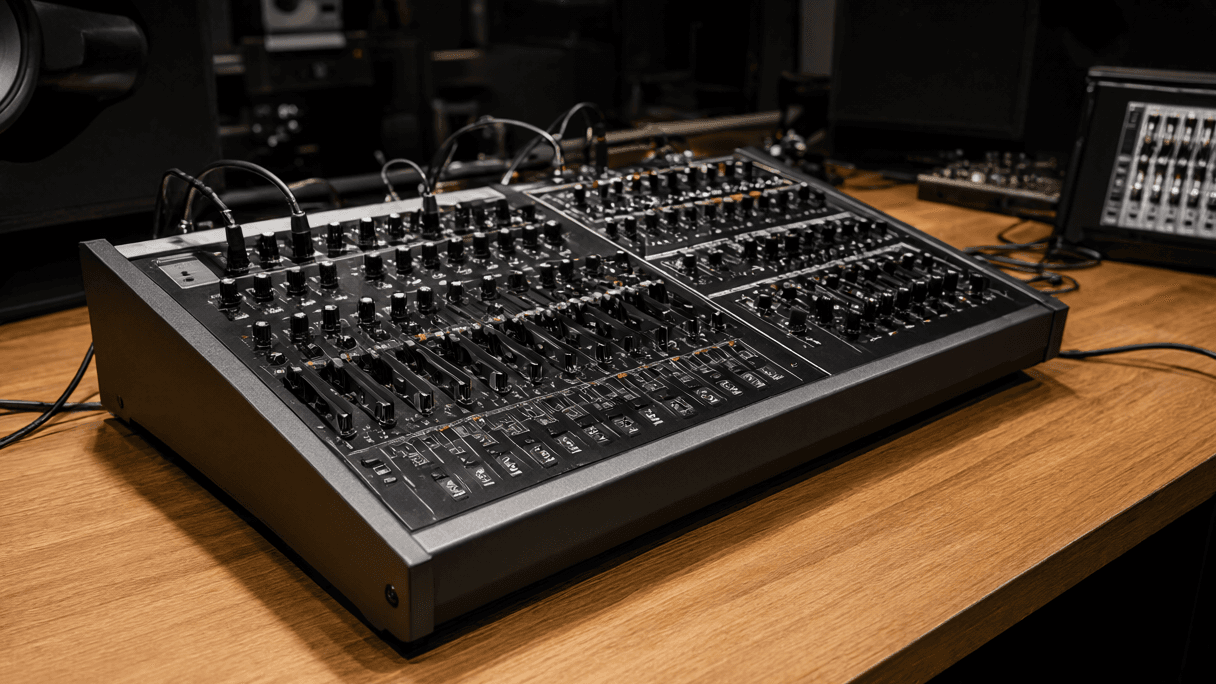
Thoughtful Things has launched a Kickstarter campaign for Engram, a sampler and groovebox designed specifically to mangle audio and generate hallucinations. By doing so, the company is carving out a niche in the creator economy that avoids the 'push-button' song generation associated with platforms like Suno. Instead of targeting the top-40 radio market, Engram is aimed at experimental sound designers and musicians who want to push audio models beyond their intended limits.
From a monetization perspective, the strategy is clear: move away from the software-as-a-service (SaaS) model of infinite generation and toward a premium hardware play. The device is not connected to the internet; it runs a custom-trained 'tiny AI' locally. This architectural choice allows Thoughtful Things to market the device as a 'field recorder for latent space,' a phrase used by founder Evan King in the campaign video. By treating the AI model as a physical circuit to be manipulated—drawing inspiration from the practice of circuit bending—Engram transforms the unpredictable nature of AI into a tactile, artisanal experience.
Follow the money, and you see a calculated approach to the current legal minefield surrounding AI training data. The Verge reports that Thoughtful Things has trained its audio models exclusively on open datasets containing audio licensed for commercial use (CC-BY or similar). The company has explicitly stated it has not used, and will never use, pirated, non-commercial, or stolen data. This commitment to clean data is likely a strategic move to avoid the copyright litigation currently plaguing the industry, such as the lawsuits involving Suno and UMG.
The pricing strategy further signals that Engram is targeting a professional or enthusiast 'prosumer' market rather than the casual consumer. The Kickstarter campaign offers a limited run of devices starting at $675. While a final retail price has not been officially announced, The Verge notes that the $675 pledge represents a 30 percent discount, suggesting a future retail price point between $850 and $900.
Beyond the hardware itself, Thoughtful Things is building an ecosystem of openness to attract the creator community. The company plans to open the firmware for Engram, allowing users to tweak the system or upload their own custom models. This creates a value proposition based on flexibility and ownership—a sharp contrast to the closed-loop systems of many major AI platforms.
In the campaign video, the mechanism of 'curated chaos' is on display: when Evan King asks the device for 'piano,' the result is not a clean recording, but something described as glitchy and vaguely piano-like. For the average user, this is a hallucination. For the Engram target market, it is the product.
Ultimately, Thoughtful Things is betting that there is a sustainable market for AI that doesn't try to be perfect. By commodifying the 'broken' parts of artificial intelligence and housing them in a high-end hardware shell, Engram is attempting to turn a technical limitation into a premium luxury for the avant-garde music community.