
The Modular Myth: Why the eGPU is a Solution in Search of a Problem

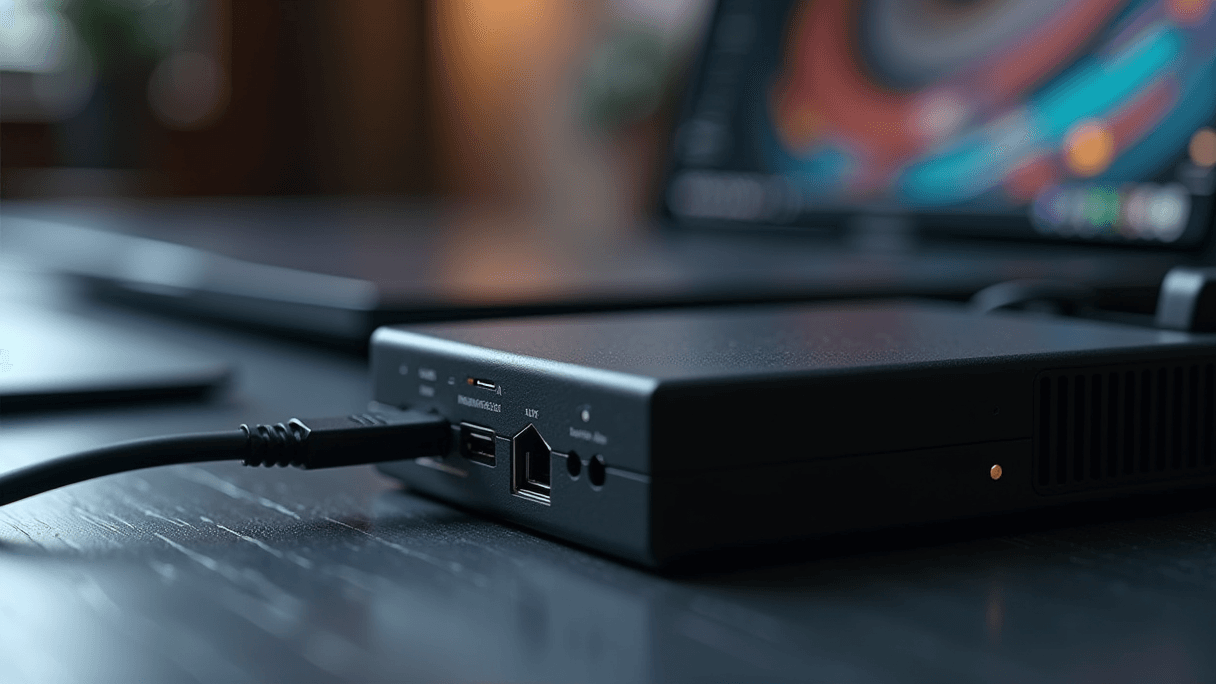
AI-generated image · US National Wire
Grant Ishida argues that despite new hardware from Razer and Framework, the external GPU remains a compromised middle ground losing the war to integrated efficiency.
Opinion: For years, the tech industry has been enamored with the dream of modularity, but as Engadget reports, the external graphics processor (eGPU) is increasingly proving to be a solution in search of a problem. While these devices promise the portability of a thin-and-light laptop combined with desktop power, they exist in a state of perpetual compromise.
At its core, the eGPU is a battle against bandwidth. A Thunderbolt 4 port provides 40Gbps, with Intel allotting only 32Gbps for PCIe data—a mere eighth of the bandwidth of a standard desktop PCIe 4.0 x16 slot. Notebookcheck found that an RTX 2080 Ti in an enclosure suffered performance deficits between 7 and 32 percent compared to a desktop. Even with newer standards, the ceiling remains low; Razer’s Core X V2 connects GPUs via PCIe 4.0 x4 (64Gbps), meaning faster cards are simply more restricted by the cable. PC Gamer's testing of the RTX 4070 Ti and 4090 confirmed that upgrading to the 4090 yielded smaller gains over Thunderbolt and OCuLink than it would on a desktop.
Cost and friction further erode the value proposition. The Razer Core X V2 is a bare $350 enclosure requiring a separate ATX PSU and a Thunderbolt 5 dock (starting at $390 for the Mercury version) for I/O. At that price, investing in a budget gaming PC is a more logical choice. While Framework is attempting to bypass this with an OCuLink Dev Kit for the Laptop 16—offering a 128Gbps eight-lane PCIe connection—it sacrifices the "one-cable" convenience and does not power the host machine.
The industry's trajectory confirms this irrelevance. Apple abandoned eGPU support in 2020 during its transition from Intel. While Apple recently approved TinyGPU—a driver extension from the tinygrad project—it is restricted to AI workloads with no display output for gaming.
When factoring in the stuttering and lower 1 percent lows noted by PC Gamer, the eGPU stops being a tool and starts being a chore. If you want portability, buy a gaming laptop; if you want power, build a desktop. The eGPU is a fascinating piece of engineering, but as a consumer product, it is a relic of a modularity obsession the market has already outgrown.