
The Metric Trap: Why Samsung's Galaxy Watch9 Prioritizes Data Over Utility

AI-generated image · US National Wire
Opinion: By flooding users with 'health scores' and expanded wellness metrics, Samsung is confusing data volume with clinical value.
In the current arms race of wearable technology, there is a growing, dangerous assumption that more data automatically equals better health. Samsung's latest offering, the Galaxy Watch9, is a textbook example of this fallacy. While the device is marketed as a leap forward in wellness tracking, it is, in reality, an exercise in metric-bloat that prioritizes the appearance of health insight over actionable clinical utility.
As Wired first reported, the Galaxy Watch9 arrives with an expanded suite of wellness metrics, including the Fitness Index, Daily Cardio Load, Heart Health Score, Vitals, and sleep apnea detection. On paper, this looks like a comprehensive health command center. In practice, as Wired's Boutayna Chokrane notes, these features can feel like "data overload."
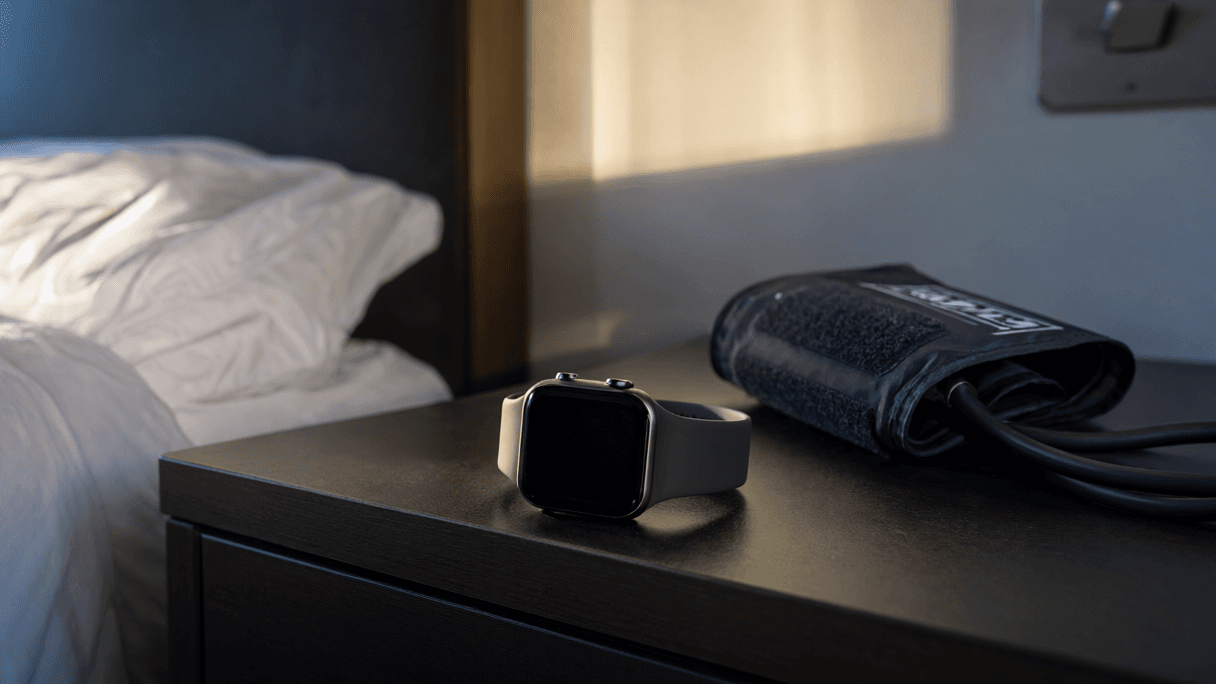
This is the central problem with the modern smartwatch: the transition from tracking (which is useful) to scoring (which is often arbitrary). When Samsung introduces a "Heart Health Score," it isn't providing a medical diagnosis or a clear clinical pathway; it is providing a number. Furthermore, this specific metric is hampered by a significant friction point: according to Wired, the Heart Health Score requires the use of a blood pressure cuff. For a device marketed on the convenience of wrist-based tracking, requiring external hardware to validate a "score" undermines the very premise of the wearable.
Then there is the issue of the "Vitals" feature. Wired reports that Vitals monitors skin temperature, respiratory rate, heart rate, heart rate variability (HRV), and overnight blood oxygen saturation (SpO2). While these are legitimate physiological markers, the utility of presenting them as a bundled "vital" snapshot is questionable if it doesn't lead to a specific, actionable health intervention. When we move toward "Fitness Indexes" and "Cardio Loads," we are moving away from objective health data and toward proprietary algorithms that tell the user how to *feel* about their day, rather than how to *improve* their health.
This obsession with adding more metrics also comes at a tangible cost to the user experience. Wired notes that while Samsung slightly increased the battery capacity—moving the 40-mm model to a 390-mAh battery from 325 mAh, and the 44-mm model to a 445-mAh cell from 435 mAh—this hasn't translated into better battery life. In fact, Wired suggests this increased capacity is likely being consumed by the power requirements of the expanded health suite. Samsung claims up to 30 hours of battery life, but Wired's testing averaged closer to 25 hours with the Always-On Display enabled.
We are seeing a scenario where the hardware is working harder to provide data that the user may not even need, resulting in a device that requires more frequent charging. To make matters worse, the charging speed is lagging; Wired reports a full recharge takes about 100 minutes, significantly slower than the 45 minutes required for the Pixel Watch 5.
From a hardware perspective, the Galaxy Watch9 is a modest update. It features the Qualcomm Snapdragon Wear Elite platform for improved CPU and GPU performance and runs Wear OS 7. It also introduces "raise-to-talk" for Gemini, a feature Wired notes the Google Pixel Watch has already possessed for two generations. While the AMOLED display is bright (reaching 3,000 nits) and the build is durable—boasting IP68 and 5ATM ratings along with MIL-STD-810H certification—none of these refinements address the core issue: the software is drifting toward a "more is more" philosophy that lacks a clinical North Star.
Samsung is selling the Watch9 at $380 for the 40-mm model (available at Samsung and Best Buy), but for those already owning a Galaxy Watch8, the upgrade is negligible. The addition of more numbers on a screen does not constitute a meaningful health intervention. Until wearable companies prioritize the *interpretation* of data over the *accumulation* of it, devices like the Watch9 will remain expensive accessories that tell us a lot about our rhythms, but very little about our actual health.