
The Mechanical Cost of Greatness: Why LeBron's Philly Gamble is a Medical Question

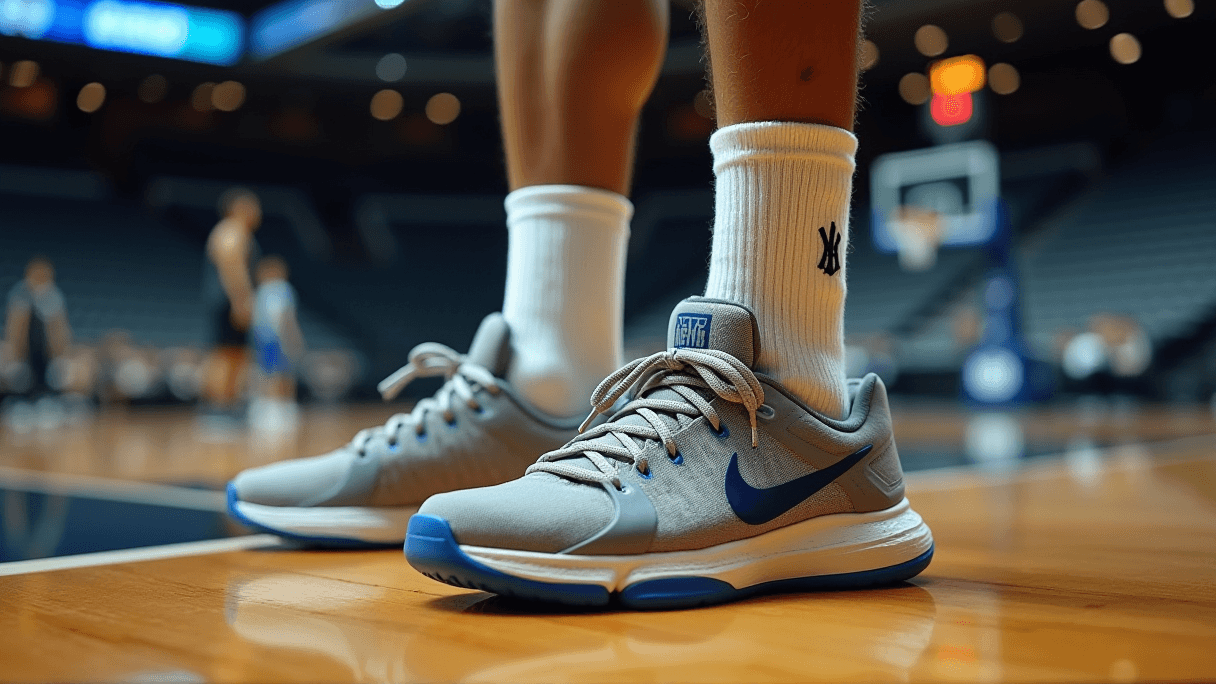
AI-generated image · US National Wire
Opinion: While the league focuses on the roster fit of LeBron James in Philadelphia, the real risk is whether a 41-year-old frame can survive the physical load of a championship push.
The sports world is currently obsessed with the chemistry of the Philadelphia 76ers' new-look roster. The headlines are rightfully focused on the basketball fit: pairing the NBA's all-time leading scorer, LeBron James, with Joel Embiid, Tyrese Maxey, VJ Edgecombe, and the recently acquired Jaylen Brown. But as a columnist focused on the science of the game, I find the roster construction secondary to a much more precarious variable.
We are not talking about a tactical fit. We are talking about mechanical load.
According to reporting from The Guardian, LeBron James is 41 years old and is preparing to enter a record 24th NBA season. In the world of sports medicine, 41 is not just a number; it is a biological state. When you combine that age with the high-usage role James has maintained throughout his legendary career, the primary concern isn't whether he can still play—it's whether his soft tissues can withstand the torque and stress of a high-stakes environment without a catastrophic failure.
James himself admitted the fragility of this moment. In a post on X, as reported by The Guardian, James revealed that he strongly considered retirement and was "pretty sure" he had played his last game before deciding to sign with Philadelphia. He noted that he needed time to decide if he still loved the game and if he had more to give. From a medical perspective, that internal struggle is often the body's way of signaling that the recovery windows are closing and the risk of injury is expanding.
Despite these concerns, James is stepping back into the grind. He told fans on X that he still wants to "sacrifice," "work," "grind," and "compete" for another championship. But the "grind" is where the danger lies. For a player of James's age and size, the cumulative wear and tear of over two decades in the league creates a precarious balance. The mechanical load required to remain a primary offensive engine—even in a supporting role alongside stars like Brown and Embiid—places immense stress on the tendons and ligaments that no longer possess the elasticity of a younger athlete.
Philadelphia is clearly betting on James's longevity, though they are doing so with a calculated financial hedge. As reported by CBS Sports and The Guardian, James has agreed to a two-year, $8 million deal that includes a player option. This structure, confirmed by Klutch Sports Group CEO Rich Paul to ESPN, limits the 76ers' long-term financial exposure while giving James the flexibility to exit after one season. While the front office is protecting its cap space, there is no way to protect a 41-year-old's ligaments from the physics of an NBA game.
The stakes for Philadelphia are high. The team went 45-37 last season and suffered a second-round playoff sweep at the hands of the New York Knicks. They haven't advanced past the second round since 2001. By adding James to a core that already includes the 2024 Finals MVP Jaylen Brown, the 76ers are positioning themselves for a deep run. However, the medical reality is that the older the athlete, the thinner the margin for error. A single soft-tissue failure—a calf strain, a hamstring tear, or a tendon rupture—could not only sideline James but derail the entire season's momentum.
Last season with the Los Angeles Lakers, James averaged 20.9 points, 6.1 rebounds, and 7.2 assists. Those are elite numbers for any player, let alone the NBA's oldest active player. But the cost of maintaining that production increases exponentially with age. The recovery time between games lengthens, and the risk of a non-contact injury grows.
In my opinion, the narrative that this is a "blockbuster" move ignores the inherent medical volatility of the deal. We are watching a biological experiment in real-time. James is not playing for money—as he stated on X—but for the feeling of winning another championship. But the physical cost of that pursuit is the only metric that truly matters now.
Philadelphia has the talent. They have the star power. But they are betting that a 41-year-old frame can endure the mechanical load of a championship pursuit. In the battle between legendary will and biological decay, the latter usually wins. The question isn't whether LeBron James can help the 76ers win; it's whether his body will allow him to stay on the court long enough to do it.