
The Maker's Gamble: Can the Kode Dot Prove the Premium Hardware Exit?

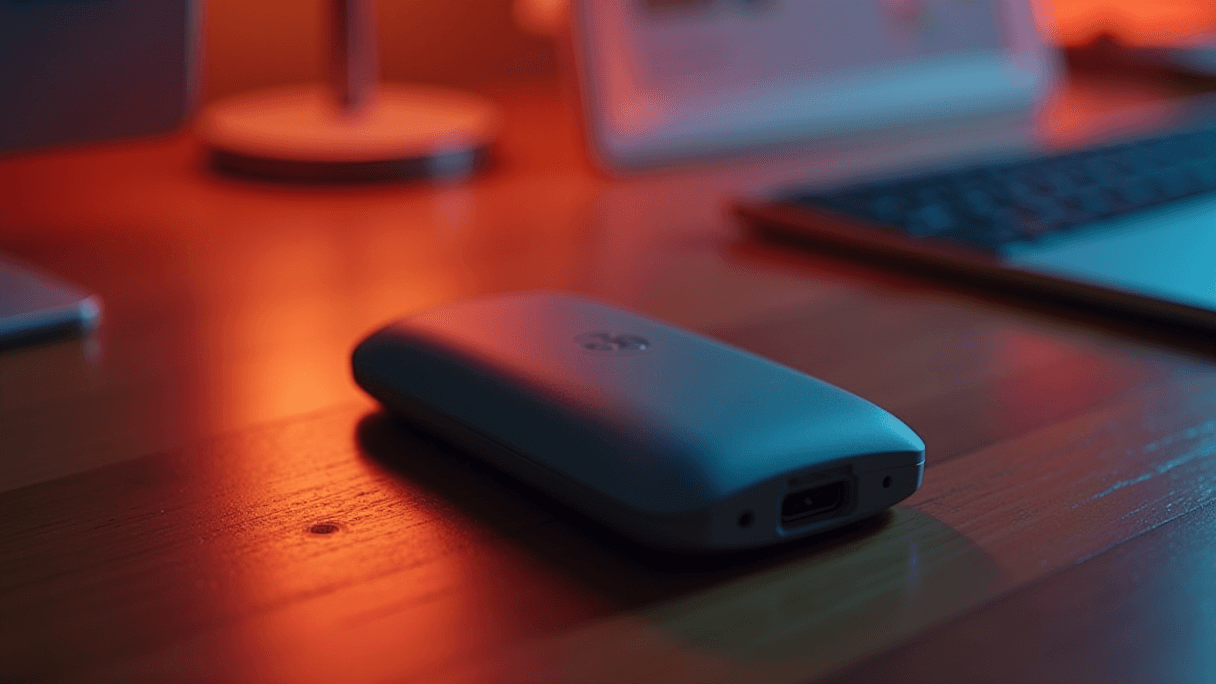
AI-generated image · US National Wire
Opinion: In a saturated handheld market, the Kode Dot's bet on a 'finished platform' for geeks tests whether enthusiast utility can translate into a scalable business model.
The handheld hardware market is currently a crowded theater of gaming consoles and niche productivity tools. Into this fray steps the Kode Dot, a programmable pocket device designed by founders Manuel Quero and Luismi Collado. While the device presents itself as a tool for 'makers, pentesters and geeks,' from a deals perspective, the Kode Dot is less about the hardware itself and more about a critical test of the 'maker' enthusiast market: can a premium, integrated hardware play sustain a viable exit in an ecosystem defined by DIY fragmentation?
To understand the risk and the potential, one must look at the value proposition detailed by the company on its website, kode.diy. The Kode Dot is positioned as a solution to the 'setup' problem. According to the company, most hobbyist projects fail during the initial assembly phase—the tedious process of wiring screens, buttons, power sources, and sensors. By offering a finished platform that requires no assembly, Quero and Collado are betting that the maker community is willing to pay a premium to skip the basics and move straight to the ideation phase.
Technically, the device is an ambitious integration of components. As reported by kode.diy, the unit utilizes a dual MCU architecture, pairing an ESP32-P4 to run operations with an ESP32-C5 handling wireless connectivity. The hardware stack is dense: a 2.13-inch AMOLED touchscreen (502×410) driven by a CO5300 driver, 32 MB of PSRAM, and 32 MB of flash. For the 'pentester' demographic, the device includes an ST25R3916B for 13.56 MHz NFC and a discrete analog front-end for 125 kHz RFID, alongside an infrared transceiver for capturing and blasting remote signals.
From a business lens, the inclusion of a 20-pin GPIO header (featuring 14 programmable pins and 5V/3.3V rails) is the most strategic move. It transforms the device from a closed consumer product into an extensible platform. By allowing users to wire in their own sensors and motors, the Kode Dot attempts to capture both the 'plug-and-play' consumer and the 'hard-core' engineer. This duality is essential if the company hopes to scale beyond a one-off hardware release.
However, the path to a successful exit in the hardware space is notoriously treacherous. The Kode Dot has already cleared the first hurdle of market validation: it was backed by 16,000 individuals via Kickstarter. This provides a significant initial user base and proof of concept. But as any analyst of M&A in the tech sector knows, a successful crowdfunding campaign is not a sustainable business model; it is a launchpad. The real question is whether the community-driven app ecosystem—where users share games, tools, and toys—can create enough 'stickiness' to make the platform attractive to a larger acquirer.
If the Kode Dot can foster a robust library of community-shipped applications, it ceases to be just a piece of hardware and becomes a proprietary ecosystem. In that scenario, the value shifts from the bill of materials (which includes the LSM6DSV/LIS2MDL 9-axis IMU and the BQ25896 PMIC) to the network effect of its developer base.
Yet, the risks remain high. The handheld market is saturated, and the 'maker' segment is notoriously fickle, often preferring to build their own solutions from scratch rather than buying a pre-assembled one. The Kode Dot is betting that the desire for efficiency—'start with your idea instead of rebuilding the basics'—outweighs the DIY purist's urge to solder every connection.
In my opinion, the Kode Dot is a high-stakes experiment in luxury utility. If Quero and Collado can prove that 16,000 backers are just the beginning of a loyal, contributing developer class, they may have found a blueprint for a premium hardware exit. If the device remains a novelty for a small circle of geeks, it will be another cautionary tale of the 'hardware is hard' mantra. The success of the Kode Dot will not be measured by its AMOLED screen or its NFC capabilities, but by whether it can turn a hobbyist's curiosity into a scalable commercial moat.