
The LFA Play: Global Sports Capital Partners Bets on Scalable IP Over Distressed Assets

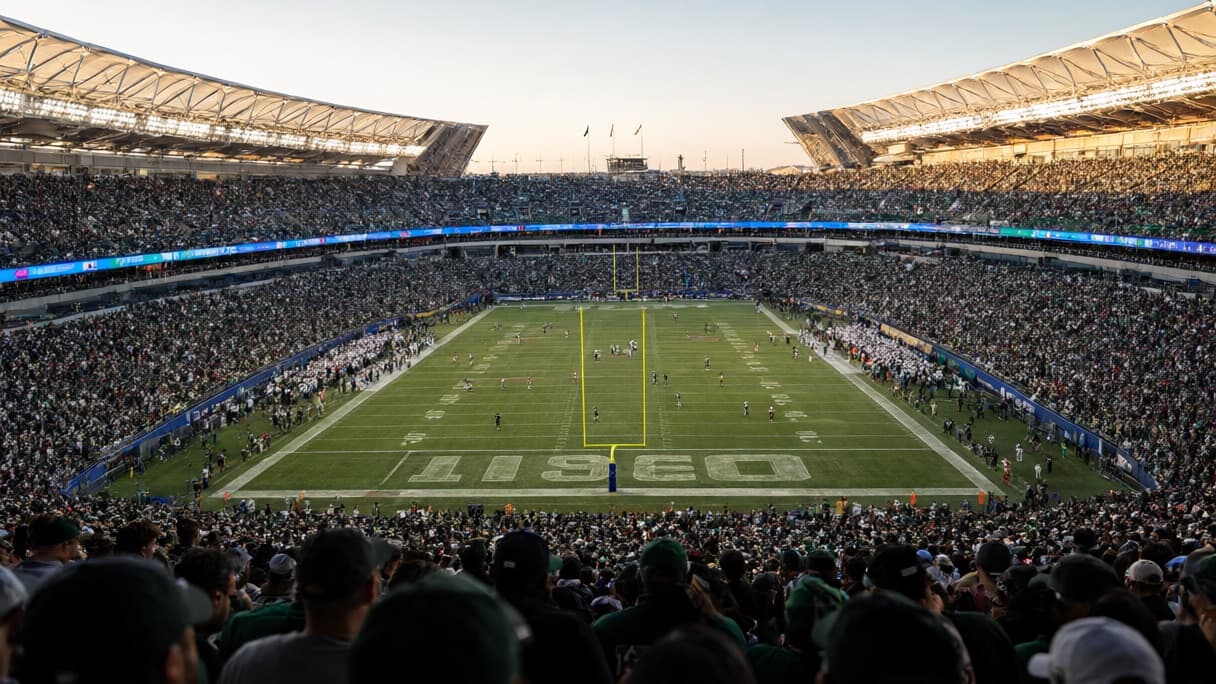
AI-generated image · US National Wire
A $100 million commitment to Mexico's professional football league suggests a strategy to monetize existing NFL demand through professionalization and media rights.
On paper, the investment in the Liga de Futbol Americano (LFA) looks like a gamble on a distressed asset. As Sports Illustrated first reported, the league has struggled since its 2016 inception, plagued by financial losses, a lack of infrastructure, and instances where teams failed to pay providers and employees. Yet, the entry of the investment fund Global Sports Capital Partners signals a shift from mere survival to a scalable intellectual property play.
In November 2025, Global Sports Capital Partners announced a $100 million investment, shared with team owners, to be deployed over seven years. While some viewed the figure as excessive for a league consisting of eight teams, LFA General Director and Commissioner Gonzalo Sevilla frames the move as a necessary step to professionalize the organization and move past "old customs."
From a business perspective, the fund isn't betting on the creation of a new market, but rather the monetization of an existing one. Sevilla notes that the NFL already boasts 40 million fans in Mexico, making it the second-largest market for the sport globally after the United States. The thesis is simple: the demand exists; the delivery mechanism is broken. By professionalizing the league and creating a platform for sustainable passion, the LFA aims to transform that demand into diversified investor opportunities and revenue.
***OPINION***: This is a classic IP disruption play. Rather than building a league from scratch, Global Sports Capital Partners is acquiring a foothold in a high-demand market at a distressed valuation, then applying a professional corporate structure to scale the product's value.
Central to this scaling strategy is the elevation of the media product. For the first time in the LFA's 10-year history, ESPN broadcasted games, including the 2026 final between the Caudillos and the Osos de Monterrey. Sevilla emphasizes that the goal is to provide a television production with high-quality narration and broad reach, which in turn drives the commercial viability of the league.
Operational improvements are also targeting the "fan experience" to drive stadium attendance. Jorge Ginther, president of the Caudillos de Chihuahua, describes a "180-degree" change in organization and marketing strategy. The LFA is modeling its approach after the Liga Mexicana de Beisbol (LMB), led by Horacio de la Vega, focusing on the spectacle surrounding the game—such as halftime shows and pre-game family gatherings—to attract both football fans and general entertainment seekers.
Despite these ambitions, the fund is avoiding capital-intensive infrastructure projects. Most teams currently rent stadiums, primarily from universities. While the Caudillos rent the 20,000-capacity Estadio Olímpico de la Universidad Autónoma de Chihuahua (UACH), Sevilla clarifies that building new stadiums is not the current priority. Instead, the focus remains on financial discipline and incremental growth. Attendance data reflects this upward trend: average attendance rose from 10,000 in the 2025 season to between 12,000 and 13,000 in the subsequent season.