
The Jordan Davis Trade and the Devaluation of the First-Round Asset

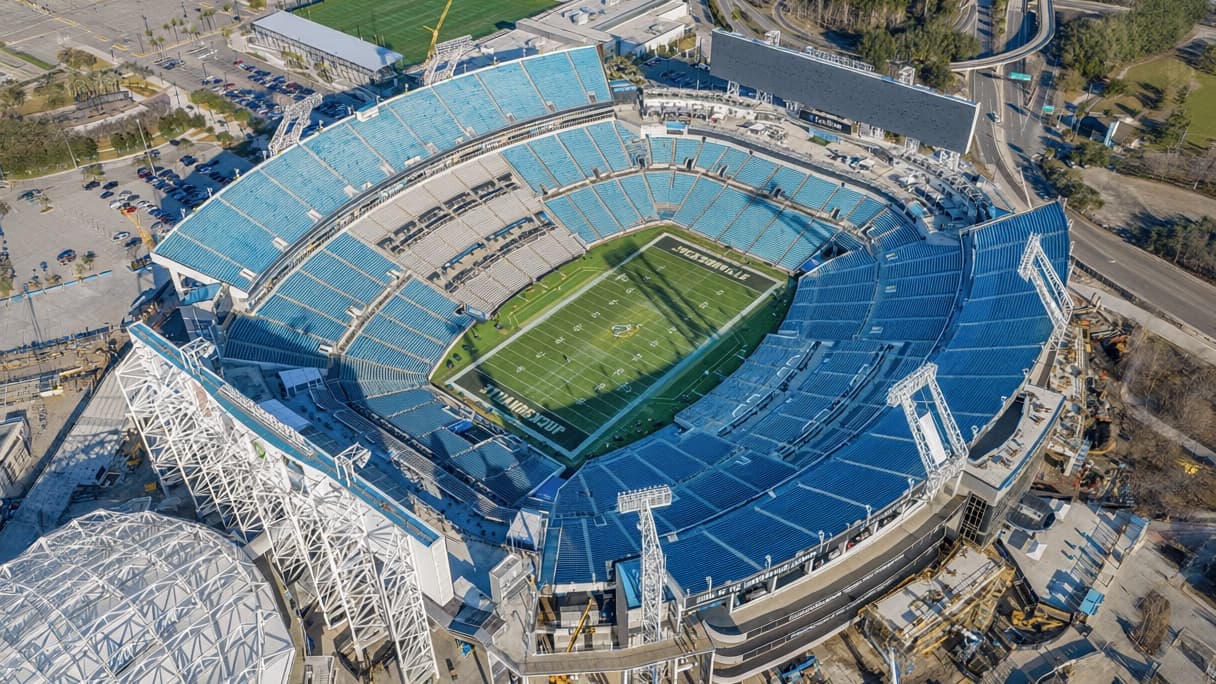
AI-generated image · US National Wire
While analysts debate the immediate merits of the Jaguars' move for Jordan Davis, the broader shift in the NIL landscape is rewriting the ROI on draft capital and rookie contracts.
The sports world is currently preoccupied with the grade of the Jacksonville Jaguars' trade for Jordan Davis. But for those of us tracking the business of the game, as Sports Illustrated first reported, the Davis transaction is merely a footnote to a much larger, systemic shift in how NFL front offices must value draft capital in the era of Name, Image, and Likeness (NIL).
In a recent Sports Illustrated segment, Conor Orr and Albert Breer examined the Jaguars' aggressive approach at the deadline. While the immediate focus remains on the player acquisition, Orr posed a fundamental question regarding the 'sacred' nature of the first-round pick. For decades, the first-round selection has been viewed as the ultimate currency—not just for the player it secures, but as a liquid asset that can be leveraged to acquire a franchise quarterback.
However, the mechanism that drove that valuation is breaking. As Orr noted, the historical playbook for draft accumulation was heavily influenced by a seminal study conducted by Cade Massey and Richard Thaler around 2009. That era operated on a predictable cadence; player development and entry into the professional ranks followed a regimented timeline. Today, that predictability has vanished.
**The NIL Volatility Factor**
According to Sports Illustrated, the explosion of NIL has introduced a level of volatility to the draft pool that renders the old models obsolete. We are no longer seeing a linear progression of talent. Instead, the landscape is 'scattershot.'
One of the primary drivers of this instability is the financial incentive for players to remain in college. Orr highlighted a new reality where players may choose to forgo the draft to make sums as high as $8 million in the collegiate ranks. This creates a vacuum of predictability: teams can no longer assume the top-tier talent will enter the league on a fixed schedule.
Furthermore, the collegiate experience itself has become fragmented. Orr observed that players are now frequently moving between institutions—citing examples of players spending single years at schools like Grand Valley State, JMU, Toledo, and Nebraska. While this may provide a player with a broader knowledge of various defensive schemes, it complicates the evaluation process and the perceived readiness of the prospect.
**Rethinking the ROI of the First Round**
If the predictability of the draft pool is gone, the premium placed on the first-round pick as a 'stepping stone' to a quarterback may be misplaced. Orr questioned whether the league needs to move away from the idea that these picks are sacred, especially when a pick in the 25-to-32 range offers diminishing returns.
Albert Breer countered by arguing that drafting and developing within a salary cap remains vital to team building. However, he suggested the conversation should shift from the absolute value of a first-round pick to the value of 'volume' versus 'premium' picks.
Breer pointed to the Los Angeles Rams as a case study in this philosophy. Between 2017 and 2024, the Rams utilized only one first-round pick—which Breer identified as Jared Verse (a 'home run' pick during the final year of Jaguars GM James Gladstone's tenure in Los Angeles). Despite this lack of first-round investment, the Rams ranked third in total draft picks over that eight-season span. This suggests a model where volume and late-round value can sustain a roster as effectively as hoarding premium capital.
**The Long-Term Horizon**
The shift is not a temporary trend; it is a permanent restructuring of the talent pipeline. Breer noted that the NIL era began in 2021. By the time a player reaches their fifth year in the NFL, the league will be almost entirely composed of athletes who operated under the NIL system.
From a business perspective, this means the 'return on investment' for a rookie contract is no longer a stable calculation. When the talent pool is volatile and the entry points are unpredictable, the traditional strategy of accumulating first-round picks as a hedge against the future becomes a riskier bet. The Jaguars' willingness to move for Jordan Davis reflects a broader trend: the realization that in a scattershot environment, a proven asset in hand may be more valuable than a theoretical lottery ticket in a disrupted system.