
The Invisible Toll: Why Arm Care, Not Standings, Will Decide the 2026 Postseason

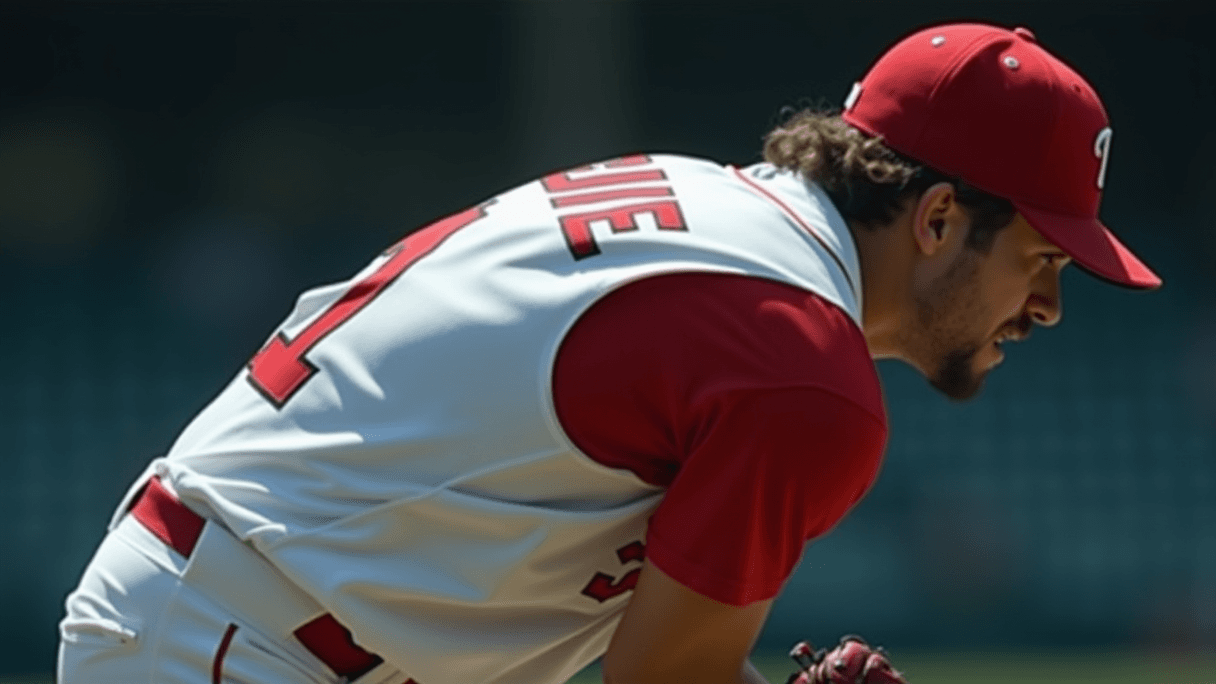
AI-generated image · US National Wire
Opinion: As the playoff bracket takes shape, the real battle isn't found in the tiebreaker math, but in the physiological sustainability of pitching rotations facing a grueling October grind.
As the 2026 postseason looms, the baseball world is consumed by the mathematics of the standings. As MLB first reported, the conversation is dominated by clinch scenarios, head-to-head tiebreakers, and the frantic scramble for Wild Card berths. We are tracking whether the Red Sox can clinch a spot with a win against the Rays combined with either a Rangers loss to the Blue Jays or an Astros loss to the Braves, or if the White Sox can leapfrog the Guardians for the AL Central crown.
But as a columnist focused on the intersection of sports medicine and performance, I find this focus on the leaderboard dangerously reductive. While MLB.com outlines a bracket where the Rays, Brewers, Dodgers, Yankees, and Braves have already secured their positions, the standings are a lagging indicator of success. They tell us who survived the 162-game marathon, but they offer zero insight into the physiological state of the arms required to survive the sprint.
In my opinion, the real story of the 2026 playoffs isn't the tiebreaker math—it is the cumulative physiological load on pitching rotations. The teams that will actually survive the postseason grind are not necessarily those with the lowest ERAs or the highest seeds, but those with the most sustainable arm-care protocols.
Consider the sheer intensity of the schedule ahead. MLB.com reports that the best-of-three Wild Card Series begin on Sept. 29, followed immediately by the best-of-five Division Series starting Oct. 3. This is a condensed window of maximum effort. For a starting pitcher, the transition from the regular season to this high-leverage environment is not merely a mental shift; it is a biological one. The torque, the velocity, and the recovery demands of a postseason game are exponentially higher than a standard September outing.
When we look at the current contenders, the physiological risk is everywhere. In the AL West, the Astros and Rangers are locked in a tie for the division lead, with Houston currently holding the tiebreaker. In the NL Wild Card race, the Cubs, Phillies, and Padres are tied for three spots. The narrative focuses on who wins the tiebreaker, but the medical narrative should be: who has the freshest arms?
A rotation that has been pushed to the brink to secure a seed is a rotation prone to catastrophic failure in October. If a team's success is built on over-leveraging their starters—ignoring the warning signs of fatigue in favor of a few more wins in the standings—they are walking into a trap. The difference between a dominant postseason performance and a sudden, season-ending ulnar collateral ligament (UCL) tear is often found in the invisible margins of arm-care: the load management, the personalized recovery modalities, and the courage of a coaching staff to pull a starter one pitch too early in September to ensure they are available in October.
MLB.com notes that the Dodgers have claimed the NL West title 13 times over the last 14 seasons. Such sustained dominance often suggests a systemic approach to player health, but even the most successful franchises are not immune to the laws of biology. As the Braves hold a five-game lead over the Phillies in the NL East, and the Rays maintain a four-game cushion over the Yankees in the AL East, the question isn't whether they can win a game, but whether their pitchers can maintain peak output over a series of games with minimal recovery time.
We see this tension in the tightest races. The Guardians lead the White Sox by a single game in the AL Central, while the White Sox lead the Astros and Rangers by one game for a final AL Wild Card berth. In these high-pressure scenarios, the temptation to overwork a pitcher to secure a clinch is immense. However, the cost of that short-term gain is often a long-term physiological deficit. A pitcher who enters the Wild Card Series on Sept. 29 with a depleted shoulder or an inflamed elbow is a liability, regardless of how many tiebreakers their team owns.
To be clear, this is an argued position. The traditionalists will tell you that 'will' and 'clutch performance' drive the postseason. But the evidence of modern sports science suggests otherwise. Performance is a byproduct of physical capacity. When the pressure mounts in a best-of-three or best-of-five series, the body does not care about the standings; it cares about the structural integrity of the tendons and the efficiency of the neuromuscular system.
As we watch the Red Sox fight for a berth or the Blue Jays and Orioles battle for Wild Card implications at Camden Yards, we should stop asking who is 'hot' and start asking who is 'healthy.' The teams that prioritize sustainable arm-care over the vanity of a high seed are the ones who will actually be standing when the dust settles in October.
In the end, the bracket is just a map. The physiological load is the terrain. You can have the best map in the world, but if your athletes are broken, you aren't going anywhere.