
The High Cost of 'Smart' Toast: Why Optical Sensors Are Over-Engineering

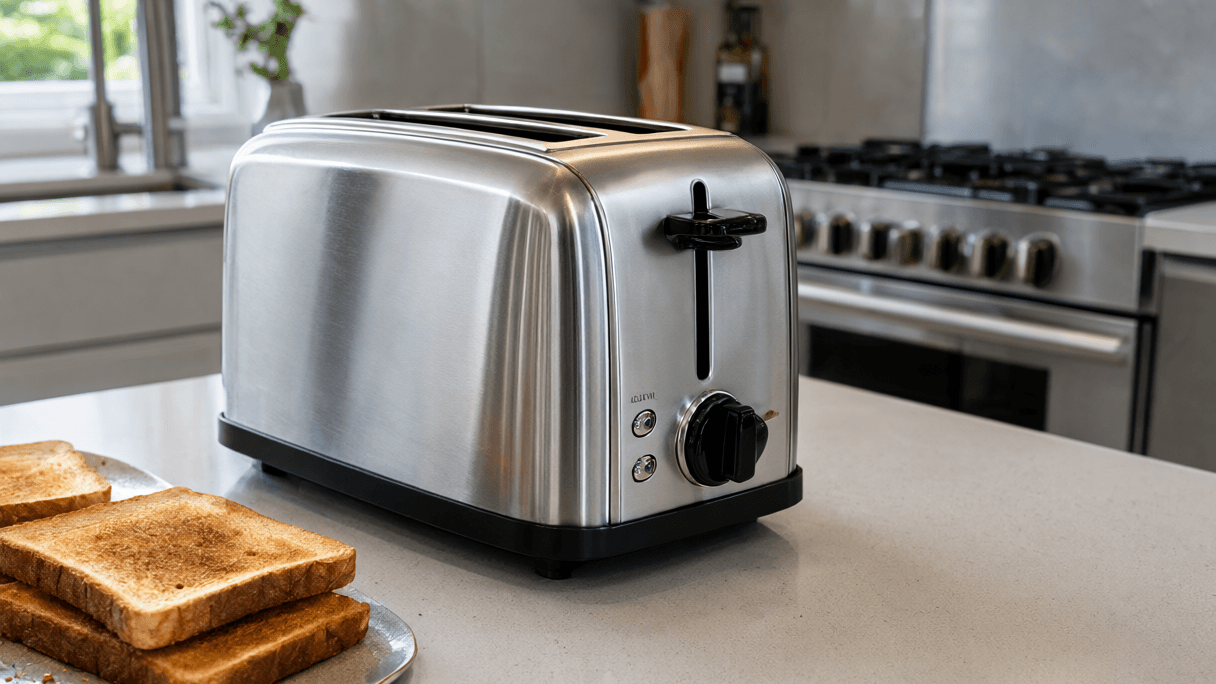
AI-generated image · US National Wire
Opinion: Breville's Eye Q toaster proves that adding expensive tech to a basic appliance is meaningless if the core product doesn't outperform the competition.
In the world of retail tech, there is a dangerous temptation to solve problems that don't exist with hardware that costs too much. The Breville Eye Q toaster is a textbook example of this fallacy. By replacing a traditional timer with optical sensors that scan bread 10 times per second, Breville has created a piece of equipment that is technically impressive but fundamentally flawed in its value proposition.
From an operator's perspective, the unit economics of a toaster are simple: the consumer pays for the quality of the toast. When a product enters the market at $300 for the two-slot model and $400 for the four-slot version, the performance must justify the premium. However, as Wired first reported, the Eye Q's toasting quality is merely comparable to a regular toaster, not superior.
When the core utility of a product—the actual toasting—is uneven, the high-tech bells and whistles become expensive noise. Wired notes that the toast can be uneven from front to back, and the top of the slice often emerges darker than the bottom. If the primary function of the device is not delivering a superior result, then the 'laser-green lights' and sensor arrays are nothing more than a disco show for the kitchen counter.
Breville has attempted to build a moat of features around this sensor tech. They offer seven levels of doneness, a 'sourdough mode' to protect edges from burning, and a 'A bit more' button for those who want a darker finish. While these additions are intuitive, they don't mask the inconsistency of the output. In a test conducted by Wired, setting six was found to be mysteriously lighter than setting four, and setting seven resulted in toast that was burnt.
This is the classic trap of over-engineering. Breville has focused on the *process* of monitoring the toast rather than the *quality* of the heat application. The sensors can monitor the darkness of the bread with precision, but they cannot fix a heating element that produces uneven results.
To be clear, there are elements of the Eye Q that are genuinely well-executed. Wired highlights the 'dark noir' brushed steel aesthetic, the ceramic-coated top, and a thoughtful power cord design that keeps countertops neat. There is even a crumb tray with the company's patent schematic etched into the bottom. But these are cosmetic and ergonomic wins, not functional ones.
Ultimately, the Eye Q is a reminder that tech for tech's sake is a losing strategy in the home appliance market. If you are charging $300 for a toaster, the result should be objectively better than the competition. When the high-tech version delivers the same—or even slightly more inconsistent—results as a basic timer-based model, the sensors aren't an innovation; they are an unnecessary expense.