
The Great Runtime Consolidation: Why Cloudflare is Buying the Architect to Own the Pipeline

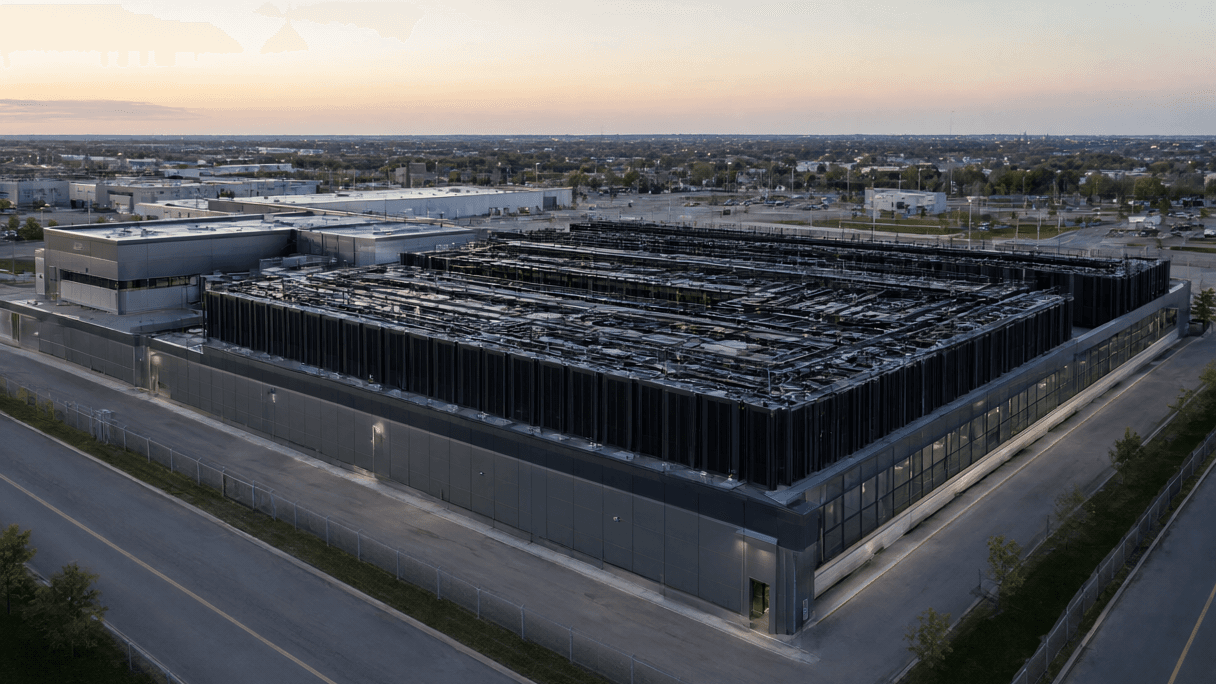
AI-generated image · US National Wire
Opinion: By absorbing Ryan Dahl and the remains of Deno, Cloudflare isn't just hiring talent—it's aggressively positioning itself to replace the Node.js era with a proprietary, high-margin serverless future.
In the world of cloud infrastructure, the most valuable real estate isn't the server—it's the runtime. For over a decade, that territory has been dominated by Node.js. But as I look at Cloudflare's recent acquisition of Deno, as first reported by The Register, it becomes clear that we are witnessing more than a simple talent grab. This is a strategic strike to consolidate the developer pipeline and lock in the next generation of serverless monetization.
Let me be clear: this is an opinion piece. From where I sit at the intersection of platforms and monetization, Cloudflare is playing a long game that renders the traditional server model obsolete.
To understand the gravity of this move, you have to look at the players. Ryan Dahl is the architect of the modern web's backend. He created Node.js in 2009 to solve the memory inefficiencies of the Apache web server, utilizing the Google V8 JavaScript engine to serve thousands of requests per second. Node.js became an unstoppable force, powering roughly 30 million websites and racking up 130 million downloads.
When Dahl launched Deno in 2018—backed by a $21 million investment from Sequoia in 2022—it was an attempt to rewrite the rules. Deno sought to fix Node's flaws with native TypeScript support, a permission model, and built-in fetch. Yet, as reported by The Register, Deno struggled to achieve escape velocity because it couldn't deviate far enough from the gravity of Node.js. Dahl admitted to The Register that Deno eventually became little more than an alternative Node.js implementation.
Now, Cloudflare has stepped in to buy Deno. But here is the critical detail: Cloudflare has no intention of keeping Deno alive. According to The Register, the company will maintain the runtime for only one more year before ending development.
This isn't a product acquisition; it's an acquihire of Dahl and 12 colleagues. But the goal isn't just to add headcount. The mission is to pivot the very nature of how servers operate. Dahl told The Register that if you are still choosing Node.js to build servers, you are "doing it wrong," arguing that most servers are still operating at the Linux VM layer—a paradigm Cloudflare is actively trying to dismantle.
Cloudflare is betting on a distributed micro-server architecture. The centerpiece of this strategy is the Workers platform, which uses Google V8 isolates—lightweight sandboxes within a single OS process—rather than the heavy runtimes required by Node or Deno.
Specifically, Cloudflare is doubling down on Durable Objects, a technology created by Kenton Varda. Durable Objects allow for stateful, real-time distributed applications where each instance acts as a single-threaded micro-server with its own global ID and a dedicated copy of SQLite for storage. Dahl described this as the "perfect distributed systems abstraction."
Before the acquisition, Dahl was already experimenting with this frontier. In August, he released celld, an open-source implementation of Durable Objects designed to run anywhere, not just on Cloudflare. The Register reports that Dahl's new mission at Cloudflare is to merge the work of celld with workerd (Cloudflare's open-sourced version of the Workers runtime) to create a standalone JavaScript/WebAssembly runtime.
Follow the money. The financial incentive here is staggering. While Node and Deno require hundreds of megabytes of memory, this new direction could offer a runtime requiring only 300 KB of memory per instance. For a cloud provider, those savings scale exponentially. As the market for "agentic" AI applications grows—which are notoriously resource-voracious—the provider that can execute code with the lowest memory overhead wins on margins.
By absorbing the creator of Node.js and the team behind Deno, Cloudflare is effectively clearing the field. With Anthropic recently acquiring and rewriting Bun, and Deno being phased out, the independent runtime market is being squeezed.
Cloudflare isn't just building a tool; they are building a moat. By integrating the capabilities of celld and workerd, they are creating a pipeline where the developer experience is seamless, the deployment is edge-native, and the underlying infrastructure is proprietary. They are moving the goalposts from "where do I host my Node app?" to "why would I use a VM at all?"
Ryan Dahl may be sacrificing the battle of Deno to win the war for server-side computing, but the victory belongs to Cloudflare. They are positioning themselves as the sole gatekeeper of a high-efficiency, low-memory future, ensuring that the next 30 million websites aren't just running on the cloud—they're running on Cloudflare.