
The Gigawatt Gamble: Why Texas is the Ground Zero for AI's Grid Crisis

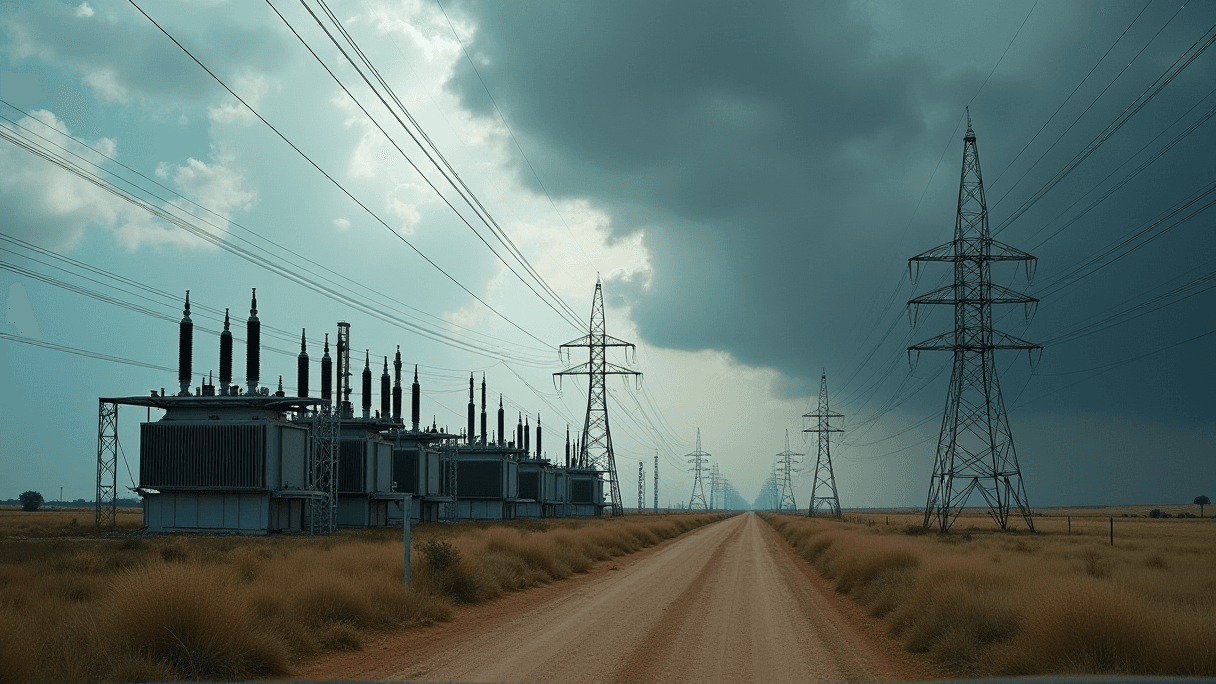
AI-generated image · US National Wire
Opinion: As OpenAI and SB Energy scale toward multi-gigawatt campuses, starting with a 1.2 GW site in Milam County, AI compute is no longer a data center problem—it is a utility-scale emergency.
For years, the conversation around AI compute has been dominated by benchmarks and model capabilities. But as a columnist focused on the physical realities of the cloud, I care about watts and megawatts. For too long, the industry has treated data center expansion as a real estate problem: find a plot of land, secure a connection, and scale.
That era ended on January 9, 2026.
According to reporting from OpenAI, the company has entered a strategic partnership with SB Energy—a SoftBank Group company—that puts SB Energy in charge of building and running OpenAI's 1.2 GW data center in Milam County, Texas. This isn't just another facility; it is a cornerstone of Stargate, the $500 billion commitment unveiled at the White House in January.
When we move from the megawatt scale to the gigawatt scale, the math changes. A 1.2 GW project is not a 'data center' in the traditional sense; it is a massive industrial load. By shifting the goalposts to the gigawatt, OpenAI and SB Energy are signaling that AI compute has officially stopped being a localized infrastructure challenge and has become a grid-scale utility crisis.
To fuel this ambition, OpenAI and SoftBank Group are pouring a combined $1 billion into SB Energy—$500 million apiece. Furthermore, SB Energy has secured $800 million in Redeemable Preferred Equity from Ares. This is a staggering amount of capital deployed not for software, but for the raw physical capacity to keep the chips running. SB Energy co-CEO Rich Hossfeld described the partnership as a way to deliver infrastructure at the 'scale required to advance Stargate.'
But here is the friction: the grid cannot simply absorb gigawatts of demand overnight without consequence.
OpenAI and SB Energy claim they have designed the Milam County site to minimize water usage and intend to 'build new generation' to support the facility's energy needs. They state this is intended to protect Texas ratepayers. On paper, this sounds like a responsible corporate citizen providing its own power. In reality, it is a confession that the existing grid is insufficient. When a single campus requires its own dedicated generation to avoid crashing the local utility market, we are no longer talking about 'scaling compute'—we are talking about rebuilding the energy architecture of the state.
OpenAI co-founder and President Greg Brockman argues that this partnership creates a 'fast, reliable way to scale compute through large, highly optimized AI data centers.' But 'fast' is the operative word here. The urgency of the AI arms race is colliding with the glacial pace of energy infrastructure deployment. SB Energy is reportedly developing several multi-gigawatt campuses, with initial facilities expected to enter service starting in 2026.
While OpenAI is simultaneously expanding its software reach—launching the OpenAI Partner Network on June 14, 2026, with a $150 million investment to help enterprises integrate AI—the physical reality remains the ultimate bottleneck. It does not matter if 300,000 certified consultants are trained by the end of 2026 or if companies like T-Mobile, eBay, and Paychex successfully redesign their workflows; none of it functions without the gigawatts.
Texas has long been the frontier for energy deregulation and innovation, but the Stargate project represents a new kind of pressure. The promise of 'well-paying jobs' and 'grid modernization' mentioned by OpenAI and SB Energy is the standard corporate pitch for large-scale industrial projects. However, the sheer magnitude of a 1.2 GW buildout suggests that the 'modernization' required is not a tune-up, but a total overhaul.
We are witnessing the birth of a new industrial complex. By partnering with SB Energy to merge first-party data center design with integrated energy delivery, OpenAI is essentially becoming an energy company that happens to run AI. If the goal is to 'secure America’s AI future,' as Rich Hossfeld puts it, then the battle will not be won in the weights of a model, but in the stability of the Texas transformer.
If we continue to treat gigawatt-scale compute as a mere extension of the data center industry, we are ignoring the physics of the grid. The shift to Milam County is a warning: the AI revolution is now a utility crisis, and the bill is coming due.