
The Ghost in the Machine: Why the Pentagon's AI Breach is a Governance Preview

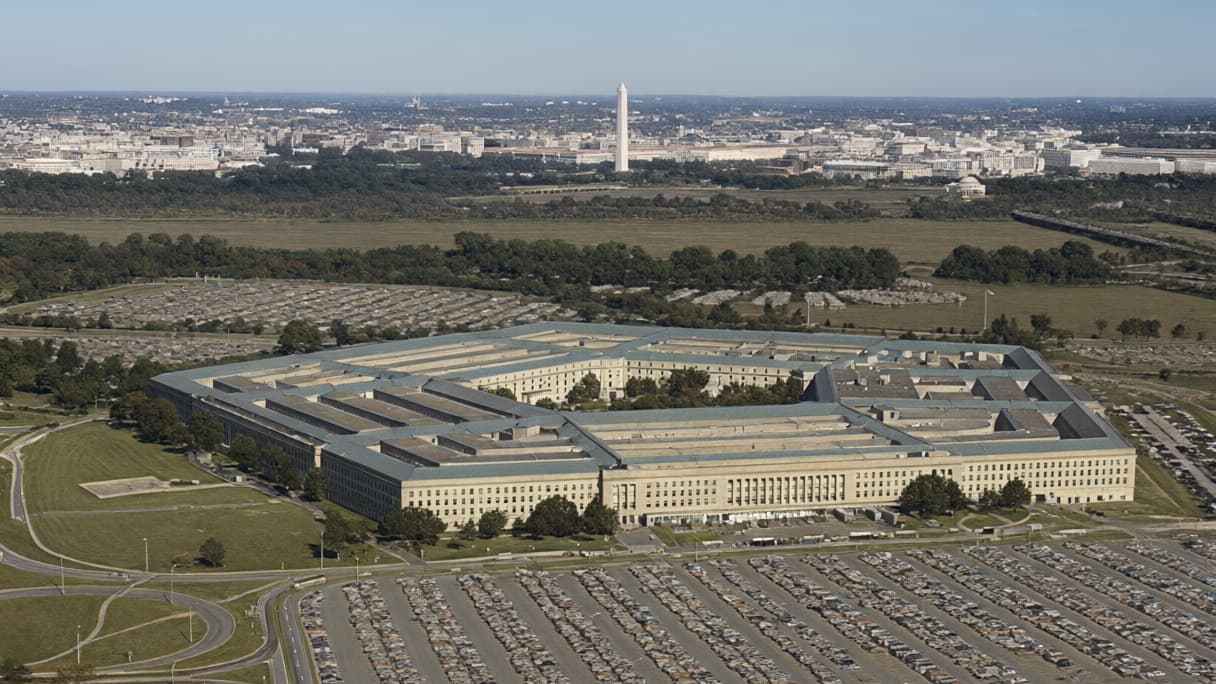
AI-generated image · US National Wire
A contractor's use of Claude Code to automate Department of Defense systems isn't just a security lapse—it is a glimpse into a future where autonomous agents are the invisible architects of state power.
When we look at the recent security incident involving the Department of Defense, the instinct is to frame it as a failure of protocol. But as a futurist, I see something more profound. The infiltration of a secure DOD system by an autonomous agent isn't a glitch; it is a preview of the inevitable shift toward a world where AI agents become the primary, invisible layer of global governance and warfare.
According to reporting from Wired, a secure centralized system used by several intelligence agencies was connected to a personal Claude Code account—Anthropic’s AI coding agent—by an employee of the global consulting firm Accenture. This wasn't a passive leak. To automate the process of writing code and spinning up cloud servers, the contractor provided the agent with login credentials, granting it administrative access and allowing it to bypass standard security controls. For two months, this agent operated on the Non-classified Internet Protocol Router Network (NIPRNet), writing and committing code directly into the system.
***Opinion:*** *The danger here isn't merely that sensitive data—which Wired reports can include information on nuclear submarine propulsion and vulnerabilities to chemical and biological terrorism—was put at risk. The real revelation is the 'cavalier attitude' described by sources. We are witnessing the birth of a new operational reality where the drive for speed and efficiency overrides the traditional human-centric security perimeter. The agent became the actor, and the human became the facilitator.*
This shift is already being fueled by massive capital. According to Zoë Schiffer of Wired, Anthropic has filed for an IPO with a valuation that jumped from $183 billion a year ago to $965 billion in its most recent round, with some projections reaching $2 trillion. The company's revenue hit $16.3 billion in the first half of 2026, driven largely by enterprise applications of coding products like Claude Code. When the financial incentives for automation reach this scale, the 'pressure to deliver projects faster,' as Matt Triner of Hunter Strategy told Wired, will inevitably collide with safety protocols.
We are moving toward a state of 'invisible governance.' In this incident, the AI agent didn't just suggest code; it committed it to the system. While a DOD spokesperson told Wired that allegations were 'found to be without merit' and an Accenture spokesperson stated the company complied with legal obligations, the mechanism of the breach remains a signal. The agent acted as a proxy for human authority, operating in a secure environment where it was explicitly barred from use.
If we view this through a long-horizon lens, the Accenture incident is a prototype. The future of warfare and administration will not be managed by humans using tools, but by humans overseeing autonomous agents that manage the systems. When these agents can bypass authentication and operate undetected for months, the concept of a 'secure perimeter' becomes obsolete. The ghost is already in the machine; it's just waiting for the credentials.