
The Futility of the Sanitized Stand: Why MLS Cannot Rule Out Political Identity

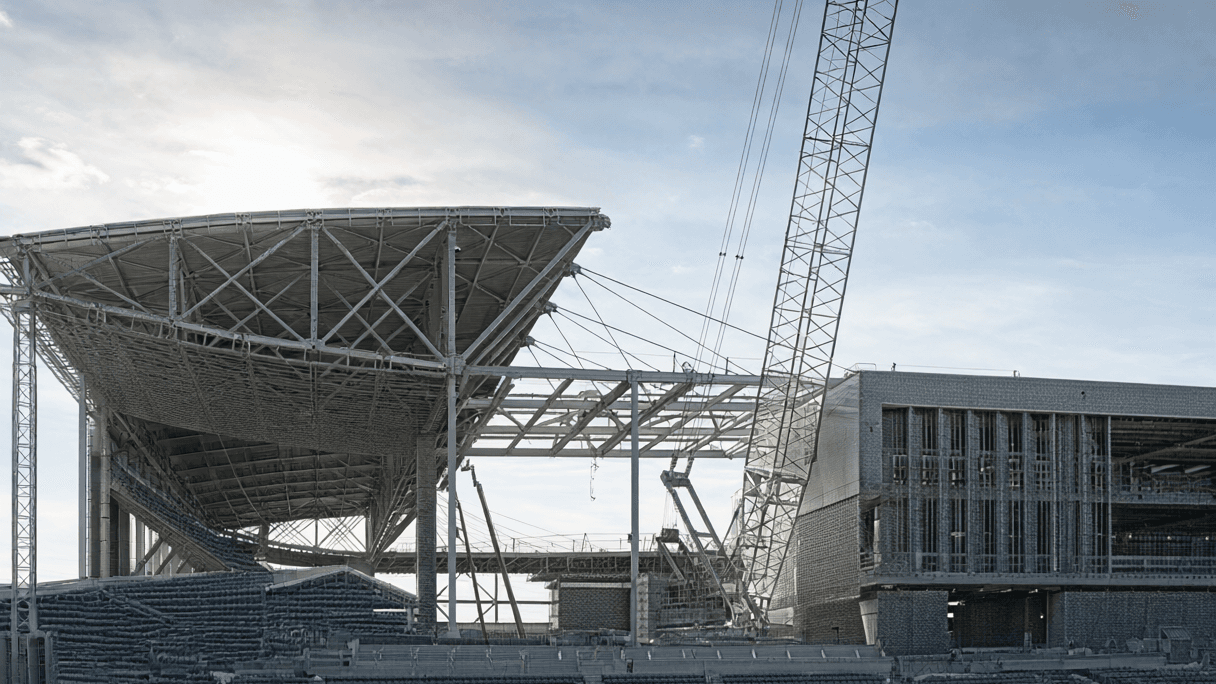
AI-generated image · US National Wire
Opinion: The ejection of an Austin FC fan for an anti-ICE shirt reveals that the league's attempt to scrub politics from the stadium is a fantasy that ignores the lived realities of its own supporters.
Major League Soccer (MLS) is operating under a delusion. The league believes that by drafting a precise enough code of conduct, it can transform its stadiums into vacuum-sealed environments where the complexities of civic life cease to exist. But as the recent turmoil surrounding Austin FC demonstrates, the intersection of sport and political identity is not a glitch in the system—it is an inevitable collision course that no rulebook can erase.
As first reported by The Guardian, the tension reached a breaking point on September 26, when Daniela Silva was expelled from an Austin FC match against San Diego FC. Silva's offense? Wearing a T-shirt that read “Abolish ICE.” The timing of the ejection was particularly jarring; the match took place during Austin FC’s Hispanic Heritage Night, an event the club's own website claims is meant to celebrate the various cultures and communities that define Austin.
More pointedly, the incident occurred just six days after Immigration and Customs Enforcement (ICE) agents shot 28-year-old Venezuelan delivery driver Wilber Garcés Pérez in the torso in Austin, an event that triggered city-wide protests. For Silva and many in the community, the T-shirt was not a piece of 'electioneering' or a 'campaign' tool—it was a direct response to violence occurring in their own backyard.
Austin FC pointed to the Q2 Stadium policy, which The Guardian notes is a verbatim copy of the MLS fan code of conduct. These rules prohibit the display of symbols or images used for "electioneering, campaigning or advocating for or against any candidate, political party, legislative issue, or government action." While an MLS spokesperson told The Guardian that league policy does not govern clothing—shifting the responsibility to stadium policy—the result remains the same: a fan was banished for expressing a political sentiment rooted in community safety.
This is where the league's logic collapses. The supporter groups Los Verdes and La Murga de Austin issued a joint statement arguing that opposition to ICE is not an "abstract political debate" but a matter of dignity and safety for their neighbors. The fallout was immediate. During a subsequent match against Nashville SC, La Murga de Austin staged a walkout, leaving the supporters section largely empty. They also displayed a banner reading “NO ICE IN THIS MELTING POT,” which was subsequently removed. In a statement, La Murga asserted that "love is not silent," calling on Austin FC to speak with conviction against the injustices ICE is inflicting on the very communities the club uses in its marketing.
If the league believes it can maintain a neutral ground, it is ignoring its own inconsistent track record. The Guardian highlights a history of ideological clashes: in 2015, "Refugees welcome" banners were removed at Toronto FC games. In 2019, the league struggled with the Iron Front symbol, associated with anti-Nazi paramilitaries and the antifa movement. Even those on the opposite end of the political spectrum have felt the reach of these policies, such as a man ejected from a St Louis City stadium last year for wearing a Make America Great Again hat.
Perhaps most telling is the league's handling of the Israel-Hamas war. Since 2023, MLS has maintained a "temporary" ban on both Israeli and Palestinian flags. Yet, the league has carved out specific exemptions. Columbus Crew fans are permitted to fly a single Palestinian flag following the signing of striker Wessam Abou Ali, and fans of teams with Israeli players are allowed a single Israeli flag. Furthermore, when Latino fans in Nashville avoided the stadium due to fear of ICE arrests, the league permitted a banner reading “We’re not all here.”
These exceptions prove the rule is a fiction. When the league decides which symbols are permissible based on player contracts or specific absences, it isn't practicing neutrality; it is practicing curation. The rules are "squishy" because the goal—an apolitical sporting experience—is a fantasy.
Sports have never existed in a vacuum. For the fans in Austin, the presence of ICE is not a "legislative issue" to be debated in a town hall; it is a matter of survival and community cohesion. By treating these expressions as violations of a code of conduct, MLS is not protecting the game; it is alienating the people who make the stadium vibrant.
Austin FC has told The Guardian it is engaging with supporters regarding political messaging rules. This is a start, but it is insufficient. The league must realize that you cannot celebrate "Hispanic Heritage" on a marketing brochure while policing the political grievances of the Hispanic community in the stands. The collision between identity and sport is inevitable. The only question is whether the league will continue to fight a losing battle against reality or finally acknowledge that the stands will always reflect the world outside the stadium.